Focus
Your Present Location: HOME> Focus-
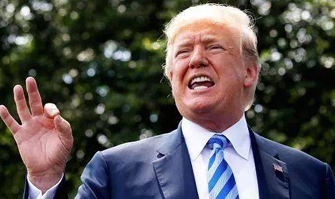
Wang Yiwei: Can US’ Asia Reassurance Initiative Act contain China?
US President Donald Trump signed the Asia Reassurance Initiative Act (ARIA) into law on December 31, 2018, which attempts to "develop a long-term strategic vision and a comprehensive, multifaceted, and principled United States policy for the Indo-Pacific region, and for other purposes." In essence, the purpose of Trump's ARIA resembles the "rebalance to the Asia-Pacific" strategy in the previous Barack Obama administration, but it differs in several ways with the Obama policy.
2019-01-22 -

Chinese, Indian EV manufacturers should travel the long and windy road together
While implementation-specific details may be missing from India's ambitious electric vehicle (EV) goal for 2030, its market potential still represents an opportunity for Chinese EV players as long as the Indian government's incentive policy is favorable enough.
2019-01-21 -
Changing consumption patterns: Chinese Millennials react to Alipay annual account statement
The statement is a digital bill summing up the user's spending and consuming habits on living necessities, transportation, entertainment, food and other occasions in 2018.
2019-01-21 -
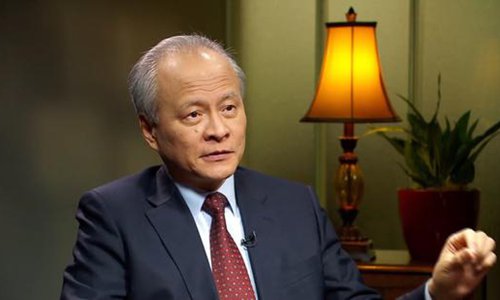
Ambassador Cui: China taking advantage of the US? It's a myth!
An International Symposium to commemorate the 40th Anniversary of establishment of China-US diplomatic relations was held in Atlanta on January 18, 2019. Chinese Ambassador to US Cui Tiankai delivered a speech.
2019-01-19 -
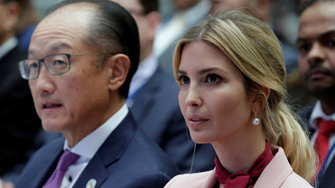
Zhao Minghao: The World Bank should not be a proxy for China-U.S. competition
Who will succeed the abruptly resigned Jim Yong Kim as the next president of the World Bank has drawn much attention from the international community. The White House has recently denied that President Trump's daughter Ivanka is a candidate for the post. Ivanka has been only assisting U.S. Treasury Secretary Mnuchin and White House Acting Chief of Staff Mulvaney in the selection of candidates for the World Bank president.
2019-01-18 -

Why slower population growth should not drive us to press panic button
Latest figures suggest that China's population is set to peak at 1.442 billion in 2029, beginning a steady decline in the following years.
2019-01-17 -
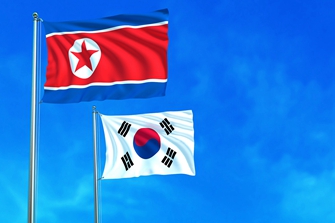
Wang Peng: ROK stops calling DPRK 'enemy'
It's been reported that the Republic of Korea (ROK) has stopped calling the Democratic People's Republic of Korea (DPRK) an “enemy” in its biennial defense document published Tuesday. This has been widely regarded as Seoul's latest effort to continue its reconciliation with Pyongyang.
2019-01-17 -

Ding Gang: What holds back Myanmar’s development?
With the progress of China-Myanmar relations, the resumption of the Myitsone Dam project in northern Myanmar can be placed on the agenda of both parties. The Myitsone Dam is a hurdle in the way of China-Myanmar relations and an obstacle to Myanmar's economic development and attracting foreign investment. Both sides need to work together to resolve this.
2019-01-17 -
Liu Zhiqin: The secrets lie in AIIB's success
The Asian Infrastructure Investment Bank (AIIB) is a multilateral development bank proposed by China and jointly established by 57 countries on December 25, 2015. It began operations on January 16, 2016, and it has now grown to 93 approved members worldwide.
2019-01-17 -
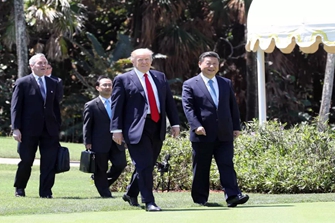
William Jones: U.S. should work with other nations to realize the common aims of mankind
The establishment of US-China relations 40 years ago was at the same time the revitalization of a relationship that stretched back nearly to the founding of the United States. The first American ship to arrive in China, the Empress of China, docked in Guangzhou in 1784, three years after the American Revolution.
2019-01-14 -
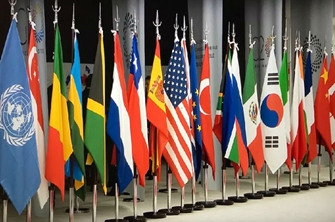
Jin Canrong: Using diplomacy to meet economic needs
The year 2018, among other things, was marked by turbulence, from the China-US trade frictions and the lingering economic downturn in European economies to the increasingly complicated situation in the Middle East and the crises in Latin American countries. Which means 2019 could throw up more uncertainties.
2019-01-14 -

Liu Zhiqin: Is Uncle Sam going to be the catalyst to another multifaceted global crisis?
It was 10 years ago when the US triggered the world financial crisis, which is still affecting the global economy. So, the question now is, will the US usher in another hazardous and dreaded political crisis?
2019-01-14 -
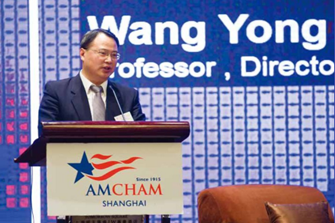
Wang Yong: The U.S. and China domestic adjustment and trade relations crisis
The year 2018 has witnessed the celebration of the 40th anniversary of China’s reform and opening up, as well as the 40th anniversary of the establishment of diplomatic relations between China and the United States.
2019-01-11 -
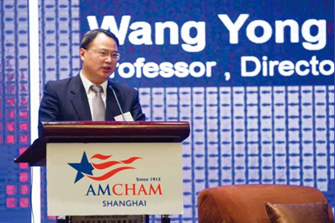
Wang Yong: The U.S. and China domestic adjustment and trade relations crisis
The year 2018 has witnessed the celebration of the 40th anniversary of China’s reform and opening up, as well as the 40th anniversary of the establishment of diplomatic relations between China and the United States.
2019-01-11 -
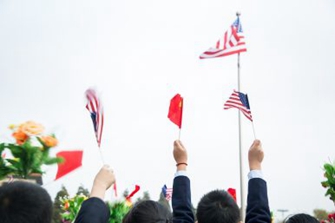
Chen Dingding: Challenges for the US-China Trade War ‘Truce‘
China and the United States agreed on a 90-day ceasefire in the trade conflict at the G-20 summit in Buenos Aires in December last year. Since then, roughly half of that 90 day period has come and gone. At the meeting, Chinese President Xi Jinping aimed to persuade Donald Trump, his American counterpart, to abandon plans to raise tariffs on $200 billion in Chinese goods to 25 percent starting in January 2019.
2019-01-10 -

Ding Gang: The Chinese dream discovered on TV
A three-part documentary, How China Made It, airing on the Discovery Channel and the Chinese streaming platform Youku, reveals that the moving story of China's 40 years of reform and opening-up is the story of the Chinese people.
2019-01-10 -

Ding Gang: The Chinese dream discovered on TV
A three-part documentary, How China Made It, airing on the Discovery Channel and the Chinese streaming platform Youku, reveals that the moving story of China's 40 years of reform and opening-up is the story of the Chinese people.
2019-01-10 -
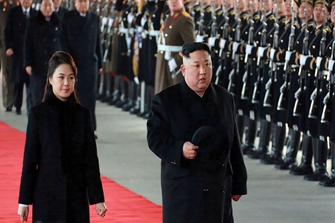
Wang Peng: Xi-Kim summit reinvigorates the deadlocked Peninsula issue
Kim Jong Un, chairman of the Workers' Party of Korea and chairman of the State Affairs Commission of the Democratic People's Republic of Korea (DPRK), is visiting China at the invitation of Xi Jinping, Chinese president and general secretary of the Central Committee of the Communist Party of China.
2019-01-10 -
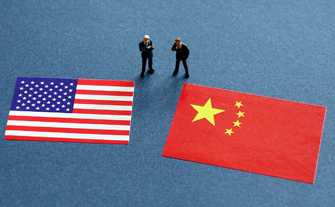
What has caused the U.S. to shift strategy on China?
2018 will be remembered as a tumultuous year in the history of China-U.S. relations. Now, that it has drawn to an end, we have entered another year of historical significance for bilateral relations as 2019 marks the 40th anniversary of the establishment of China-U.S. diplomatic ties.
2019-01-04 -

Ding Gang: Rebuilding Asian order and reconfiguring Asian history
A fresh round of negotiations on the code of conduct (COC) in the South China Sea between China and ASEAN will be held in the first quarter of 2019. Chinese Premier Li Keqiang has appealed to complete the negotiations before 2021.
2019-01-04





































































 京公网安备 11010802037854号


