Focus
Your Present Location: HOME> Focus-

Wu Xiaoqiu: Critical stage of development
China should apply what it has learned from 40 years of reform and opening-up so that it can successfully overcome the present challenges
2019-05-27 -
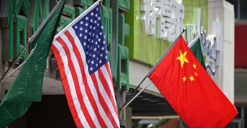
Wang Wen: Time is on China’s side in trade talks with US
The US recently acted unilaterally to impose tariffs on Chinese exports. The international community generally believes that imposing tariffs will not solve problems and will have a negative impact on the world economy.
2019-05-24 -
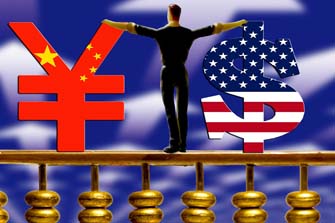
Zhao Minghao: Better to stop the trade conflict before it's too late
In addition to announcing a 25-percent tariff on almost all Chinese exports to the U.S., Washington has gone all out to campaign against China's Huawei and tried to cut off U.S. companies' supply of high-tech products to China.
2019-05-24 -
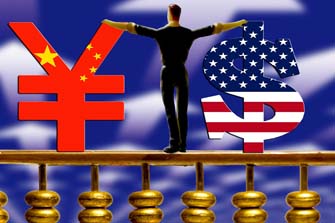
Zhao Minghao: Better to stop the trade conflict before it's too late
In addition to announcing a 25-percent tariff on almost all Chinese exports to the U.S., Washington has gone all out to campaign against China's Huawei and tried to cut off U.S. companies' supply of high-tech products to China.
2019-05-24 -
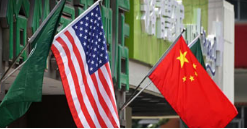
Wang Wen: Time is on China’s side in trade talks with US
The US recently acted unilaterally to impose tariffs on Chinese exports. The international community generally believes that imposing tariffs will not solve problems and will have a negative impact on the world economy.
2019-05-24 -

Chen Dingding: 3 Ways China Can Make the Belt and Road Initiative More Successful
As a midsize European country, Italy is keeping a subtle balance between the European Union and China since its signing of a memorandum of understanding on joining Beijing’s Belt and Road Initiative (BRI). Understandably, this member of the G-7 might bear a great amount of multidimensional pressure and skepticism from outside due to the divided interpretations of the BRI within Europe, as well as the fact that Italy’s participation could somehow dilute the U.S. influence in the region.
2019-05-23 -

Ding Gang: Dubai shows openness is key to success
Economics observers always doubt the development of Dubai. They would keep asking questions about sustainability, even though the most open and prospering city in the Middle East, which has used energy to continue developing, has showcased strong momentum for development.
2019-05-23 -

US accusation against Chinese-made drones groundless
China's largest drone-maker DJI said on Tuesday its customers have full and complete control over how their data is collected, stored and transmitted, in response to US government accusations of the company sending sensitive data to China.
2019-05-22 -
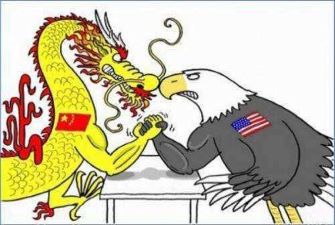
China hits back at US threats, vowing ‘necessary’ countermeasures
China on Wednesday night hit back at repeated threats by US officials to slap higher tariffs on billions of dollars' worth of Chinese goods, vowing that it will take "necessary" countermeasures if forced.
2019-05-21 -

Rare earth minerals excluded from U.S. latest tariff list on China
Rare earth and other critical minerals launched by the U.S. are excluded from the additional tariff list on imports from China, reflecting its reliance on the world's top producer of rare earth elements.
2019-05-20 -
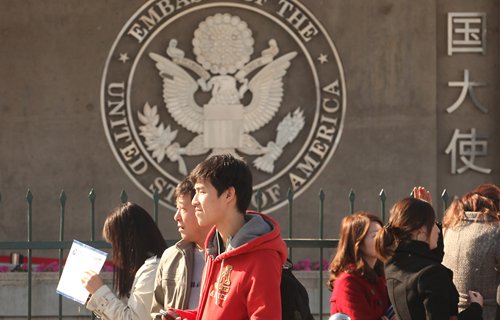
US scraps scholar’s lecture, Chinese academics urge continuous unofficial exchanges
The US Embassy in China confirmed on Wednesday that a US scholar's speech on economic matters to a think tank in Beijing was canceled due to the incorrect description of his title, while Chinese observers called for stable and continuous non-official ties in times of tensions.
2019-05-16 -
Jin Canrong: China has three trump cards to win trade war with US
China is not afraid of the US on trade issues. It is better for the trade war not to happen since it will hurt both sides. But if the trade war happens, China will win. It may be an unexpected outcome even for US President Donald Trump who, like other US elites, believes the US has advantages.
2019-05-16 -

Ding Gang: Self-sufficiency helps Iran counter sanctions
Foreign tourists who visit Iran the first time will be surprised at the calm of the Iranian people who are living under US sanctions. In Iran, there is a wide variety of food in supermarkets. All kinds of local cuisine, at bargain prices, fill Iran's restaurants.
2019-05-16 -
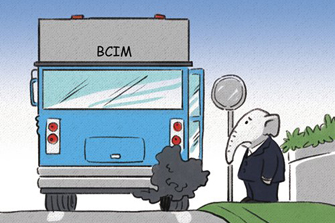
Liu Zongyi: BCIM devt awaits India’s participation
In the late 1990s, the academic community in China's Yunnan Province proposed economic cooperation with Bangladesh, India, and Myanmar. The idea was embraced by academics from the three neighboring countries.
2019-05-15 -

John Ross: With few weapons to fight an economic slowdown, the US faces dilemma
Current US administration actions on trade make it important to carry out a calm objective comparison of the economic situation of China and the US. This is particularly necessary because the US administration engages in inaccurate boasting while China tends to present its economic situation in a calm, even modest, way. But, in very serious matters, there is no virtue in exaggeration -- there is only virtue in realism.
2019-05-14 -
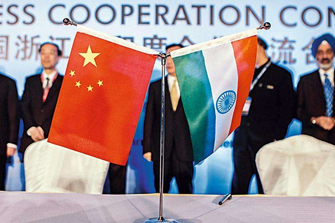
Gap between China and India widens under Modi
As the 2019 Indian general election gets underway, there has been discussion about whether India has lagged further behind China over the past five years under the Modi government.
2019-05-14 -
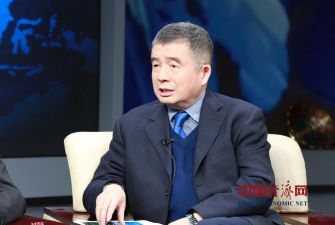
Zhou Rong: Xinjiang is safe & stable, in harmony with all ethnic groups
BEIJING, May 13 (China Economic Net) - Many Pakistani friends are concerned about the issue of Xinjiang in China. However, the recent report on Xinjiang by some Pakistani media is not fair and contrary to the facts and truth. We would like to clarify the facts of Xinjiang to our Pakistani friends, and prove that Xinjiang is safe and stable with good momentum for development.
2019-05-13 -
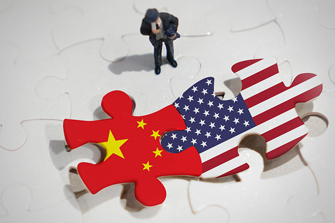
Liu Dian: Facing uncertainty in trade talks with rationality
According to information released by the U.S., Trump's "backpedaling" is directly caused by Beijing's attempt to renegotiate a trade deal. In addition, Trump feels pretty confident in threatening new tariffs, emboldened by promising economic data and a well-performing stock market at home.
2019-05-13 -
Zhao Minghao: Think tank's role in avoiding civilization clash
Kiron Skinner, director of policy planning at the U.S. Department of State, said at the Future Security Forum last week that the Donald Trump administration is dealing with a "clash of civilizations" with China.
2019-05-10 -
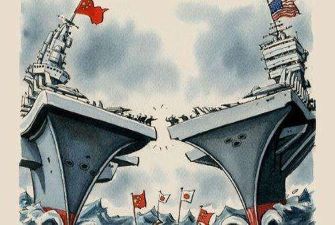
Chen Dingding: There Is No US-China ‘Clash of Civilizations’
The world has changed dramatically over the past few decades and is trending today toward greater complexity and diversity. The popular “clash of civilizations” theory proposed by Samuel P. Huntington is somewhat too simple for modern society. However, this thought is now coming back to life, and might even be unilaterally implemented into policy practice in the United States toward China. Kiron Skinner, the U.S. State Department’s policy planning head, has reignited this discussion with her recent observation that China is “not Caucasian” at a recent event. Her broader remarks made clear that the U.S. State Department taking pains to prepare for a “clash of civilizations” with China.
2019-05-10





















































 京公网安备 11010802037854号


