Focus
Your Present Location: HOME> Focus-
Long Xingchun: India's demographic dividend may risk turning into a time bomb
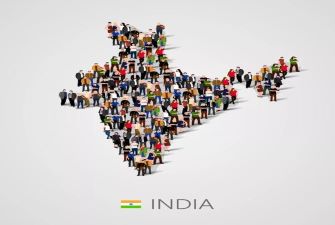
In recent years, quite a number of authoritative international forecasts have been bullish on India's economic development prospects. They generally predict that India will become the world's third largest economy after the US and China around 2030, citing its "demographic dividend" as one of the major reasons. Of the 1.3 billion people in India, there are about 800 million young and middle-aged people, with the average age of its labor force at around 27. About 65 percent of the country's population is under the age of 35.
2019-04-12 -
Wang Peng: Aggressiveness and militarization dominate Trump administration’s new space policy
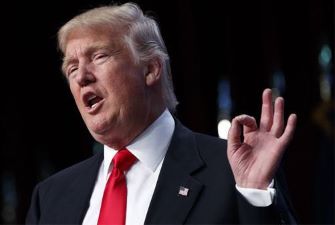
US Vice President Mike Pence announced in late March the administration's plans for Americans to return to the moon within the next five years as the 50th anniversary of the first manned mission to the earth's satellite approaches. President Donald Trump nominated Air Force General John Raymond to lead the recently created US Space Command that was confirmed by Pence in his speech. The US vice president pointed to Russia and China's advancements in the space realm as evidence that the US is in a "space race."
2019-04-12 -
Yang Fanxin: G7 economies have split views on the BRI
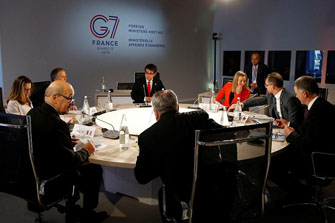
Foreign ministers from the Group of Seven (G7) concluded their two-day annual meeting in Dinard, western France, on April 6 with a joint communique acknowledging China's capacity to make important contributions to global public goods. This could be an indicator of the split among G7 powers on views towards the Belt and Road Initiative (BRI), which some developed countries demonize as a sign of China's economic orbit and as an obstacle to their own alliances.
2019-04-11 -

Ding Gang: Can Indian elections bring good governance?
India's general election, to be held from Thursday to May 19, is regarded as the largest democratic exercise in the world. More than 900 million voters aged over 18 will elect 543 members to the Lok Sabha, India's lower house of parliament, from candidates belonging to hundreds of political parties.
2019-04-11 -
Wang Wen: Pragmatic Cooperation, China and Europe's Best Choice
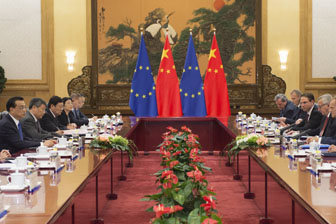
At present, China and Europe are facing similar global challenges: protectionism, populism, separatism, terrorism, and unilateralism. Global stability and the international order are suffering from the greatest threats since World War II. If we can maintain our national interests despite instability and continue world peace, China and Europe could play an indispensable international role.
2019-04-09 -
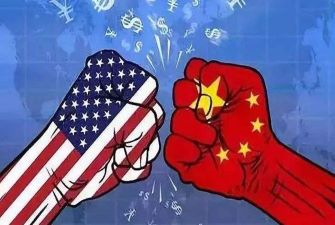
John Ross: US is losing the battle for world public opinion to China
Gallup carries out an annual international poll on approval of the leadership of major countries. This year’s poll, covering 134 countries, had a striking conclusion – China’s leadership has overtaken the US in approval not only globally but in every continent surveyed outside North America and possibly Australasia.
2019-04-08 -
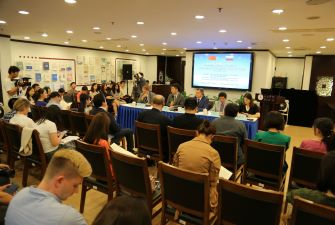
Sergey Glaziev: Current International Partnership Model
At present, Russia and other member states of the Eurasian Economic Union (EEU) as well as China and the participants in the Belt and Road Initiative (BRI) are forming a harmonious system of international economic cooperation based on strict enforcement of international law, respect for national sovereignty and non-interference in other states’ internal affairs.
2019-04-08 -
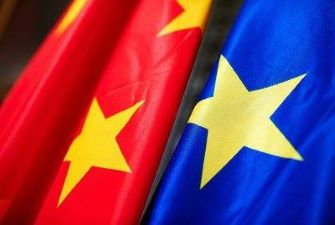
Wang Peng: China-Europe ties to be further promoted
China has attracted businesses from different countries around the world; the EU wants to develop even strong ties with China, and vice versa. The EU plays the role of an indispensable trade partner and technological cooperation stakeholder of China. As a result of their friendly cooperation, China and the EU have experienced increasingly closer economic and trade ties over the past few years.
2019-04-08 -

Wang Peng: Understanding 'Reiwa' through the perspective of the 'Asian civilization dialogue'
The term "Reiwa" draws from a shared East Asian cultural history, demonstrating the long shared history between China and Japan and should spur both nations to build a "community with a shared future."
2019-04-04 -

Ding Gang: India’s school system flunks quality test
The Times of India on March 30 published an article saying though India has more schools than China, its quality of school education is far poor than China's.
2019-04-04 -
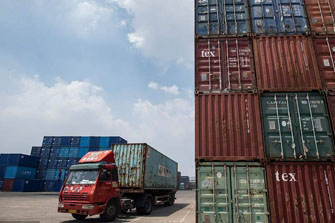
Liu Dian: We need to look at trade talks with optimism and caution
China and the U.S. are continuing their trade talks. Officials from both the Chinese and the U.S. sides are cautiously optimistic about the outcome. On March 28, when the talks were held between China and U.S. negotiation teams in Beijing, the spokesman for the Chinese Ministry of Commerce Gao Feng said at a regular press conference, "The two sides have made some progress, but there is still a lot of work to be done."
2019-04-02 -
Zhao Minghao: In Pursuit of 'Re-engagement'
In 2018 the Trump administration released a number of papers on national security policy, such as its National Defense Strategy, Nuclear Posture Review, and National Intelligence Strategy. All these papers shared a common feature: defining China as a strategic competitor of the United States, a characterization that the administration has since tried hard to prove, even calling for a “whole-of-government” response. We have heard the word “decoupling” mentioned repeatedly in the discussion of economic relations with China — in particular, we have witnessed the coming of a tech cold war between the two countries.
2019-04-01 -

He Weiwen: Competitive Neutrality to Further Energize the Private Economy
The just-concluded 2nd Session of the 13th National People's Congress (NPC) sent an explicit signal of stronger support for private industry. Premier Li Keqiang announced a series of policies and measures for boosting China's private economy in his Government Work Report to the NPC Session which opened on March 5, 2019.
2019-04-01 -
Li Wei: Time ripe for China-UK FTA
With the world still undergoing an economic downturn and austerity, China should attach greater importance to deepening bilateral relations and building a network of free trade agreements with higher standards. As the world's sixth-largest economy, the United Kingdom is a key partner for China to explore the building of a high-level free trade agreement and deepen cooperation with developed countries.
2019-03-29 -
Ding Gang: How will Brexit reshape China-EU relations?
Two major happenings have been reverberating in European media. First, the UK is in deep trouble over Brexit, which has caused political instability in the country. Second, this week's visit of Chinese President Xi Jinping to Italy and France has drawn headlines.
2019-03-28 -

Liu Zongyi: On key Tibet anniversary, India needs to see reason on Dalai question
This year marks the 60th anniversary of democratic reforms in Southwest China's Tibet Autonomous Region. It is also the 60th anniversary of the 14th Dalai Lama fleeing from China into India. As an old issue between Beijing and New Delhi, the dispute over the 14th Dalai Lama has lasted for six decades. It was caused by a series of mistakes made by Indian politicians and strategists, including first prime minister Jawaharlal Nehru, in cultural, political, historical and defense contexts.
2019-03-28 -

Long Xingchun: The US only hurts itself by pointing fingers at China-proposed BRI
The United Nations Security Council extended the mandate assistance mission in Afghanistan on March 15. Unlike before, it only gave a six-month extension rather than one year. The reason for the shorter extension is that the US opposed China's attempt to write the Belt and Road Initiative (BRI) into the resolution. Wu Haitao, China's Deputy Permanent Representative to the UN, described the smear by the US regarding the BRI as "contrary to the facts and fraught with prejudice."
2019-03-26 -
Wang Peng: What leads to Brexit's chaos?
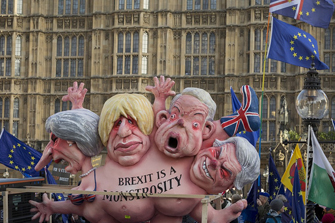
The Brexit process is seen as a total "mess" in many people's words. Some have blamed Theresa May and her poor negotiating strategy for the current impasse in Brexit, and some blame the EU. What has caused this Brexit chaos?
2019-03-26 -

Liu Yushu: Fight against extremism in Xinjiang includes improving lives of residents
Some Western media outlets have been notoriously spreading rumors about Xinjiang Uyghur Autonomous Region for a long time. On March 18, China's State Council Information Office published a white paper titled "The Fight against Terrorism and Extremism and Human Rights Protection in Xinjiang," which shows how the country has tried to prevent separatist activities in Xinjiang.
2019-03-26 -

Li Wei: Closer Vietnam relations will eliminate uncertainties
Last year was marred by a series of economic shocks. In 2018, the World Trade Organization faced an unprecedented crisis, and the global trade order suffered clashes because of a tariff war launched by the US.
2019-03-26













































































 京公网安备 11010802037854号


