Focus
Your Present Location: HOME> Focus-

What's behind China's improved business environment?
China's business environment is perhaps the hottest topic in the annual meetings of the 13th National Committee of the Chinese People's Political Consultative Conference (CPPCC) and the 13th National People's Congress (NPC). The issue has attracted a great deal of attention especially as the world's largest two economies are mired in a trade war.
2019-03-07 -
India needs to seize opportunity in RCEP talks
On Saturday, trade ministers from 16 Asia-Pacific countries gathered in the Cambodian city of Siem Reap to resume negotiations over the Regional Comprehensive Economic Partnership (RCEP). The proposed RCEP, which aims to create one of the world's largest trading blocs encompassing 45 percent of the world's population and 40 percent of global trade, is now at a critical moment. While the participating countries generally hope to reach a final deal by the end of this year, uncertainties should not be overlooked.
2019-03-07 -

Ding Gang: Nepal refuses to drift between China and India
International relations observers are more likely to see Nepal as a piece of bread sandwiched between China and India. The metaphor is often used by Western media in terms of geopolitics of the region.
2019-03-07 -
Chen Dingding: Trade War Truce Will Relieve the U.S., for now
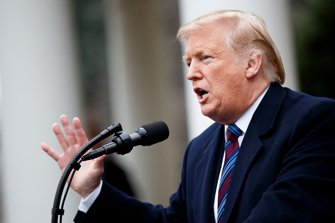
On February 24, U.S. President Trump twitted that he would delay the tariffs increase due to progress in negotiations with China, indicating that the possibility of reaching an agreement increases. The Sino-US trade friction in the past few months has confirmed that continued confrontation can only hurt China and the United States and even endanger the global economy. According to Reuters, the trade war has caused billions of dollars in losses to both sides. After announcing the above decision, Trump made a speech at the White House and expressed his hope to reach a trade agreement with China that is beneficial to both countries. In fact, if the issue gets properly resolved, it will be positive news not only for China and the United States but also for the whole world.
2019-03-07 -
Wang Peng: SK not mauled by failure of Hanoi summit
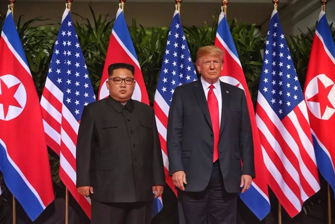
The high-profile summit between North Korean leader Kim Jong-un and US President Donald Trump ended without an agreement in Hanoi, Vietnam. Some observers believe that South Korea has been the biggest loser as the Hanoi summit fell apart. In their opinion, South Korean President Moon Jae-in had been eyeing major diplomatic achievements from the summit. But the Moon administration, observers say, was disappointed.
2019-03-06 -
Chen Dingding: How Does China Really Think About WTO Reform?
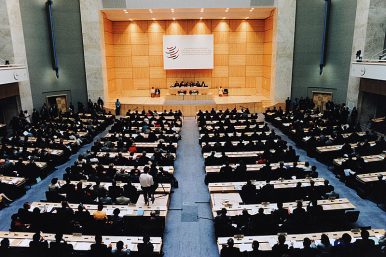
It has been roughly two decades since China was permitted to join the World Trade Organization (WTO) in 2001. Prior to its accession, there was one economic metric on which it already ranked first. China, by multiple estimates, had the largest economy outside the WTO, ranging from foreign trade to the stock of foreign direct investment. Given the skyrocketing growth of the Chinese economy during that time, it takes very little imagination to foresee that China’s leadership came to appreciate membership in the WTO as a watershed for the country to embark on a more promising economic future.
2019-03-06 -
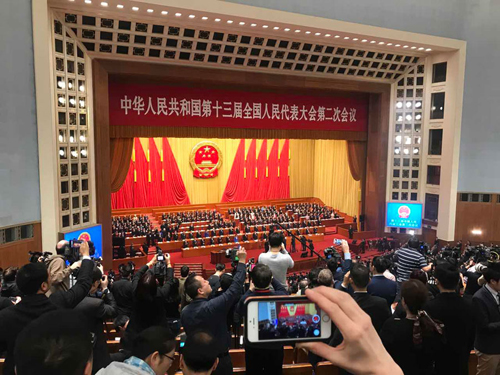
Highlights of 2019 Government Work Report
Premier Li Keqiang delivered the Government Work Report to the second session of the 13th National People's Congress in Beijing on Tuesday morning. Here are the highlights:
2019-03-05 -
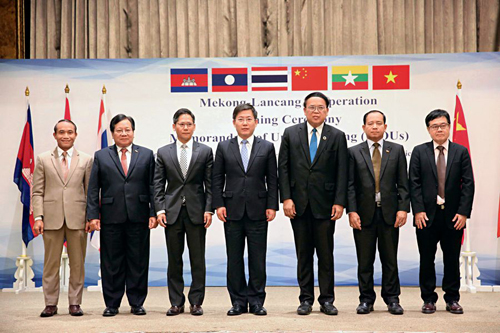
Danilo Türk: Water as an Instrument of Peace
China is in a good position to exercise leadership. Not only has China become the second largest economy in the world, it is already among the most important players in the field of trans-boundary water cooperation. China is a source of several rivers supplying South and South-East Asia with water.
2019-03-05 -

Wang Peng: China to enhance mutual trust between DPRK and US
The 2019 DPRK-U.S. Hanoi Summit was a decisive two-day meeting between DPRK Chairman Kim Jong Un and U.S. President Donald Trump. Media around the world had great anticipation that the two equally strong leaders may find a final solution and practical guideline for the chronic security tensions between the two nations.
2019-03-03 -
World experts expect greater role of China in global governance
BEIJING, March 2 (Xinhua) -- As the annual sessions of China's top legislative and advisory bodies approach, world experts look forward to a greater role of China in improving global governance.
2019-03-02 -
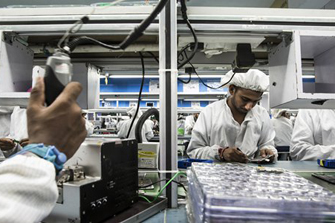
India's slow industrialization shows failure to grasp globalization
While there have been discussions surrounding how India's industrialization will affect China in the future, one realistic question currently faced by India is whether the country can achieve industrialization at all.
2019-02-28 -

Ding Gang: Deindustrialization needs modern governance tools
Over the past two to three decades, almost all developed countries have experienced shakeout in industries, shrinking workforce and the substitution of human labor by machines, especially in manufacturing. The process has been prominent even in economies such as India and Brazil, which have not yet completed their industrialization.
2019-02-28 -

Liu Ying: Economy can resist external pressure
The International Monetary Fund recently lowered its global economic growth outlook amid international trade conflicts. Combined with this, the economic structural adjustment in China has created new and some difficult challenges for the Chinese economy.
2019-02-27 -

Wang Peng: BRI not meant to counter US Indo-Pacific strategy
Since its inception, the "Belt and Road" initiative (BRI) has been gaining partners around the world. The international community's attitude toward the BRI has gradually changed from initial incomprehension, suspicion and fear to one of understanding, acceptance, and participation.
2019-02-26 -

Mastercard JV plan in line with China’s opening-up policy
A reported attempt by Mastercard to form a joint venture (JV) with Chinese online payment clearing house NetsUnion Clearing Corp (NUCC) is in line with China's opening-up effort in the financial market, analysts said.
2019-02-25 -
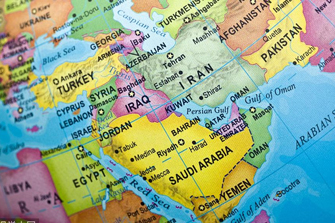
China's ties with Iran and Saudi Arabia are fair and square
2019-02-25 -

Wang Yiwei: Europe must choose wisely on Huawei for digital future
The UK's National Cyber Security Centre recently concluded that any risk posed by using Huawei 5G networks can be managed, according to unnamed sources cited by the Financial Times. Some Western media have said that this shows the UK and other European countries haven't followed the US on the so-called outright ban on Huawei's 5G equipment. Instead, they are cautiously taking a relatively balanced view based on their own interests. The UK is part of the intelligence-sharing group known as Five Eyes, and its approach on the issue is likely to set an example for other European countries to address security concerns involving Huawei and to purchase Huawei's 5G equipment.
2019-02-25 -
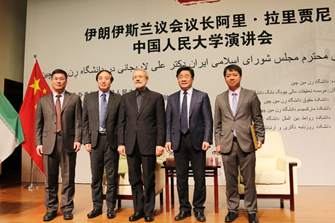
Wang Peng: China-Iran to deepen strategic trust and cultural exchanges
At this strategically meaningful moment, a luxury high-ranking delegation came to Beijing from Teheran directly. This 40-top-official team includes Iranian Islamic Parliamentary Speaker Dr. Ali Larijani, Foreign Minister Mohammad Javad Zarif and a dozen of ministers and vice-ministers in energy, petroleum, transportation, finance, the CEO of Iranian central bank, and so forth.
2019-02-22 -
Ding Gang: Huawei’s uphill battle in going global
Whether Huawei is a Chinese company or a global corporation is a question worth pondering. Started as a Chinese company, Huawei aimed to go global, but never lost its national identity. Being global means the company's investments, technology, human resources, products and services as well as profits are derived from the international market.
2019-02-21 -
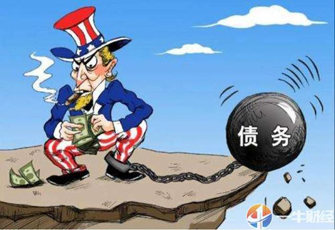
Wang Wen: The US can’t let debt cast shadow on its economy
In the long run, debt expansion propels favorable policies that stimulate the economy. The fiscal deficit is a persistent problem with a protracted history. Since former president Ronald Regan, US presidents have all adopted expansive fiscal policy. The US government has to borrow new debt to pay back the old, creating rollover risks. The country's low savings and high consumption model has also driven the US to keep large amounts of debt.
2019-02-21
































































 京公网安备 11010802037854号


