Focus
Your Present Location: HOME> Focus-
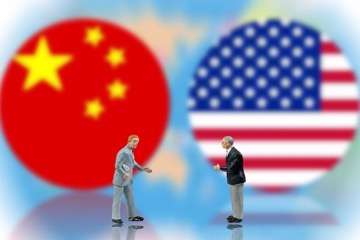
Dong Ximiao: Trade war will harm all global players
Since the beginning of this year, trade frictions between China and the United States have significantly escalated. And with additional US tariffs on $34 billion worth of Chinese goods taking effect on Friday, the US has now launched a full-blown trade war against China.
2018-07-11 -
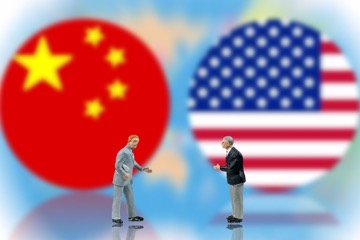
Dong Ximiao: Trade war will harm all global players
Since the beginning of this year, trade frictions between China and the United States have significantly escalated. And with additional US tariffs on $34 billion worth of Chinese goods taking effect on Friday, the US has now launched a full-blown trade war against China.
2018-07-11 -
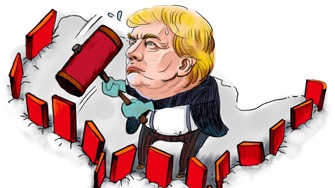
Wen Yang: How should the world react to Trump’s obstinacy?
The Sino-US trade war officially started on July 6 as the Trump administration’s decision to impose a 25 percent tariff on goods from China worth 34 billion dollars came into force, followed by the Chinese government’s announcement that it would “counter against the United States through comprehensive measures of quantity and quality.”
2018-07-09 -
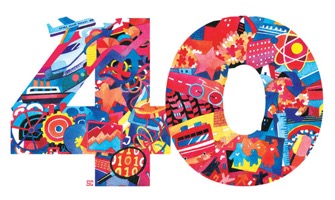
Jean-Guy Carrier: The real heroes of China story
What stands out in the transformation that has come about over the past 40 years since China began to open its doors is not only the degree of change but also how the rise of China has transformed the world.
2018-07-09 -
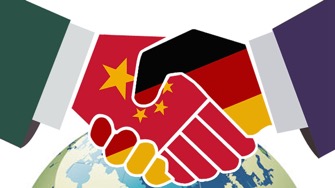
Wang Yiwei: When the world`s second-largest economy shakes hands with the fourth
“If Europe does not want to become the periphery of the world, it has to culturally and economically engage with Asia following the ancient silk road”, Robi Ronza (an Italian journalist and writer) predicted in 1984, which has been proved by the Belt and Road Initiative.
2018-07-09 -
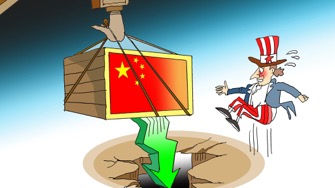
Zhang Jingwei: The United States is taking its trade hegemony to the extreme
On July 6, China and the US, the two largest economies across the globe, will enter "trade war mode". In light of the trade war, which was provoked by the US, the spokesman of China`s Ministry of Commerce said at a news conference on July 5 that although China does not intend to take part in the trade war, we will have to fight back when it becomes necessary, in order to maintain the interests of the country and the people.
2018-07-06 -
John Ross: China and the EU can jointly safeguard the WTO
The World Trade Organization (WTO) is by far the most important organization regulating world trade. In light of recent unfortunate unilateral impositions of tariffs outside the framework of the WTO by the US administration against a large number of countries, including the EU, China, India, Mexico, Canada and others, it is therefore important to reemphasize the role of this organization-which is crucially important for the economic development of numerous countries.
2018-07-06 -
Ding Gang: Why Western media rush to badmouth BRI
Sri Lanka`s debt problem is a hot topic nowadays. Western media outlets like the New York Times are keen to find fault with the China-proposed Belt and Road initiative (BRI).
2018-07-05 -
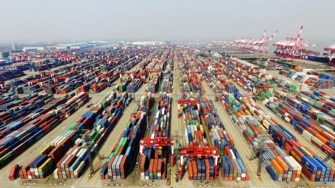
John Ross: Data shows China`s strong support for the WTO
Maintaining the framework of the World Trade Organization (WTO) is a key issue for the prosperity of every country – including China. In developing countries well over a billion people have been lifted out of poverty by economic growth underpinned by globalization, while international trade strongly supports the living standard of advanced countries.
2018-07-03 -
William Jones: Why the “Fire and Fury” on China Trade?
The world is on tenterhooks waiting for the next moves from the Trump Administration in terms of the draconian tariffs he has threatened to place on China as well as on a number of other countries, including our close neighbors Canada and Mexico. And the question remains for most people: Is he really intent on carrying out the threat (the first tariffs are to take effect on July 6) or is this merely an “in-your-face” negotiating tactic to cut a better deal for the United States? We probably won’
2018-07-02 -
Ding Gang: China, Japan can come closer in business
On Tuesday, some Chinese and Japanese scholars along with former officials organized an event in Shanghai to commemorate the 40th anniversary of the signing of the Sino-Japanese Peace and Friendship Treaty. The scale of the activities is rare in recent years, reflecting a thaw in China-Japan relations.
2018-06-28 -
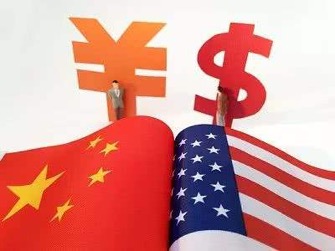
Zhao Minghao: Unfair for US to thwart China’s industrial progress
US President Donald Trump`s first round of tariffs on $34 billion of Chinese goods will take effect from July 6 and Beijing has vowed retaliatory measures. A trade war between the two largest economies in the world may break out at any moment.
2018-06-26 -

Guan Zhaoyu & Yang Yuanhang: China, India should jointly resist US tariffs
After the US government recently decided to impose a 25-percent tariff on $50 billion worth of Chinese imports, China immediately announced additional 25-percent duties on 659 US goods worth $50 billion.
2018-06-25 -
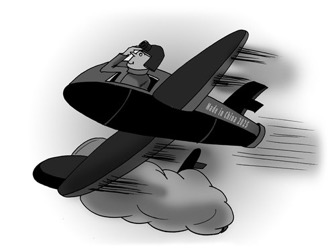
Wang Wen: China’s manufacturing needs to fight a protracted war
Starting at the end of last year, the difficulty of achieving the "Made in China 2025" initiative increased, with pressure from the US trade provocation and the domestic transformation and upgrading upgraded. To get to 2025, eight years lie ahead. In that time, China`s manufacturing sector faces a protracted war that`s similar to the Anti-Japanese War (1937-45) it fought.
2018-06-21 -
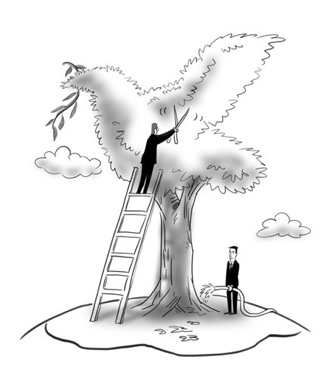
Zhao Minghao: Process of denuclearization remains a sticking point after Singapore summit
The summit between US President Donald Trump and North Korean leader Kim Jong-un in Singapore is an important breakthrough in the history of North Korea-US relations. It brings the nuclear issue closer to resolution. Although more likely to be a consensus, the goal of complete denuclearization of the Korean Peninsula was reaffirmed in the joint statement that the two countries signed. The Trump administration also pledged to halt the annual US-South Korea joint military drill, which fulfills the
2018-06-19 -
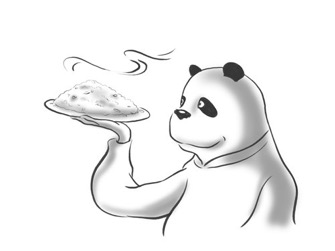
Ding Gang: Chinese food sends message in Kim-Trump meeting
When US President Donald Trump and North Korean leader Kim Jong-un sat together for a working lunch on Tuesday, they saw two Chinese dishes on the menu - Yangzhou fried rice and sweet and sour pork. I wonder how the Singaporean waiters described the food to the statesmen, but they must have used the term Yangzhou.
2018-06-14 -
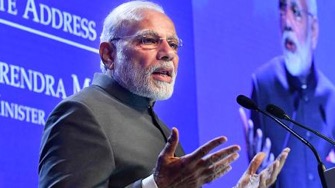
Liu Zongyi: Is New Delhi’s foreign policy biding time and hiding capacity?
In his keynote speech at the 17th Shangri-La Dialogue recently held in Singapore, Indian Prime Minister Narendra Modi emphasized "freedom of navigation" in the South China Sea and "peaceful settlement of disputes," also criticizing the initiatives that place other countries "under impossible debt burden," which were possibly insinuations against Beijing`s South China Sea policy and the Belt and Road initiative.
2018-06-14 -
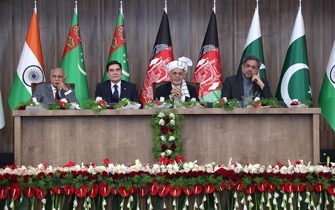
Liu Zongyi: India’s Expectations for the SCO
By joining the SCO, India hopes to strengthen anti-terrorism cooperation, stabilize the situation in Afghanistan and realize connectivity to Central Asia.
2018-06-12 -

Liu Zhiqin: To benefit all mankind, cooperation is needed
Recently US President Donald Trump`s "drunken fist" on trade issues has dazzled the world. Its allies have all been affected. Grievances and anger enshroud the West. Many of Trump`s practices are like "drunk driving," which is destroying the global trade regulations and inviting chaos to the world economy.
2018-06-11 -

Jean-Guy Carrier: SCO, AIIB show China’s evolving world leadership role
The rise of China to the center of the world economy will inevitably influence the shape of the current global order that evolved during the 20th century. To understand how that influence could be deployed, it is instructive to examine some of the significant multilateral measures China has led since it stepped onto the world stage some 40 years ago.
2018-06-11
























































 京公网安备 11010802037854号


