Focus
Your Present Location: HOME> Focus-
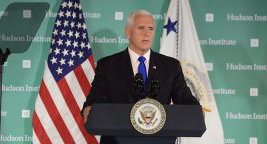
Chen Dingding: 3 Types of Chinese Reactions to Mike Pence’s China Speech
Last week at the Hudson Institute in Washington, D.C., U.S. Vice President Mike Pence delivered the Trump administration’s first major policy speech on China. The speech was highly anticipated in both the United States and China because of its significance and the context in which it was delivered. Indeed, the Trump administration, since it took over in January 2017, has been criticized (rightly) for lacking a coherent China policy or even any China policy.
2018-10-10 -
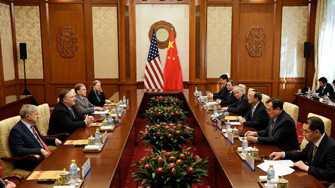
Zhao Minghao: Washington is underestimating East Asian geopolitics
US Secretary of State Mike Pompeo's Asia trip was aimed at promoting the denuclearization of the Korean Peninsula. He conducted a short "shuttle diplomacy" in Japan, the Democratic People's Republic of Korea (DPRK), the Republic of Korea (ROK) and China. Moreover, the trip took place against the background of rising tensions between China and the US. At a time when Washington seems to want to add pressure on Beijing, whether it can continue to cooperate with the Chinese authorities on the DPRK n
2018-10-10 -
Liu Zhiqin: The politicization of IMF is dangerous
Since the establishment of International Monetary Fund (IMF), it has been the main pillar in international economy. Its most important function is to provide necessary financial aid or loans to weaker economies, mainly in developing countries to support various projects. Most of these loans have played positive roles in favor of the receiving nations.
2018-10-10 -
Wang Yongli: What Financial Crashes Teach Us
Erupting in September 2008, the global financial crisis has lasted a decade. After the crisis, the worldwide trend of surplus production capacity and inadequate demand could not be reversed and the world economy has remained sluggish, leading to significant changes in the world and creating serious social problems. We need to analyze the root causes and lessons of the crisis so as to better address any likely new crisis.
2018-10-09 -
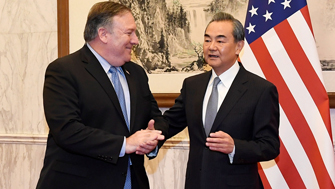
Zhao Minghao: Bamboo curtain will turn iron if US doesn't wise up
Many observers expect the meeting in Beijing between the top diplomats of China and the US to quell tensions amid an escalating trade war and frequent military skirmishes. However, it seems their hopes have fallen through since the talks commenced with deep grievances that leave little room for compromise.
2018-10-09 -
Liu Zhiqin: Chinese yuan must become safer and stronger
The US administration has launched a trade war with China and other major economic powers. We have to realize the fact that the world is changing to a new stage fraught with uncertainties.
2018-10-08 -
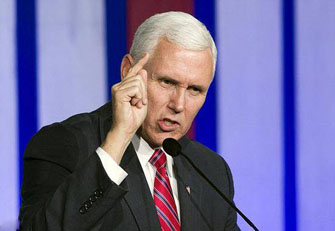
China, US unlikely to engage in a new Cold War
US Secretary of State Mike Pompeo is scheduled to visit China on Monday, following US Vice President Mike Pence's speech which highlighted a more aggressive approach toward China on Thursday.
2018-10-08 -
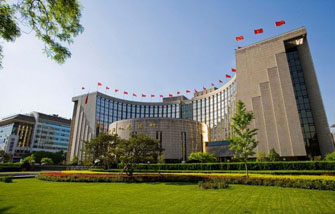
China to cut reserve requirement ratio, with monetary policy unchanged
The People's Bank of China (PBOC) decided on Sunday to cut the reserve requirement ratio (RRR) for RMB deposits by one percentage point starting from Oct. 15, but the stance of China's monetary policy remains unchanged.
2018-10-08 -
Guan Zhaoyu and Zhang haoyun: Macedonia's referendum, What's in a name?
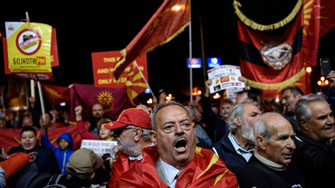
The Republic of Macedonia held a non-binding referendum on September 30 to decide whether to change the name of the constitutional state – which has been used since its independence in 1991 – to the "Republic of North Macedonia". Preliminary results released on October 1 showed that 90 percent of voters said "yes", but the turnout was below 50 percent and the referendum may be invalid.
2018-10-08 -
RDCY Report: Public confident in Chinese economy amid trade war
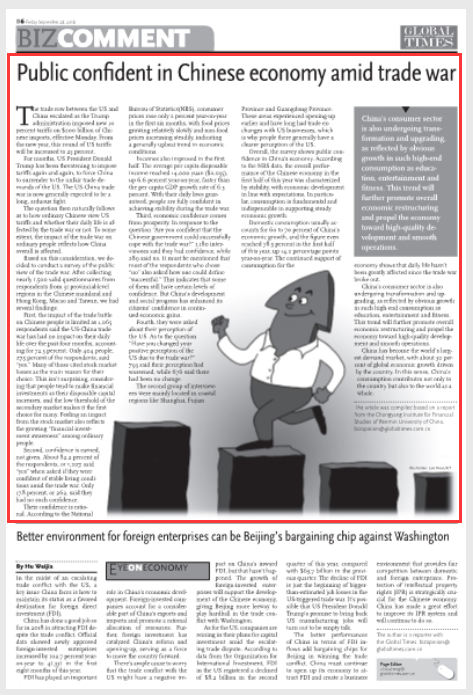
The trade row between the US and China escalated as the Trump administration imposed new 10 percent tariffs on $200 billion of Chinese imports, effective Monday. From the new year, this round of US tariffs will be increased to 25 percent.
2018-09-28 -

Liu Zhiqin: US accusations about technology transfer ring false
Amid all the unfair tariffs and false accusations made by the US to attack China, one claim has been particularly irritating: Western countries have continually accused China of requiring transfer of technology in return for access to its market. The US government has repeated this lie many times to make it sound like the truth. However, it is the Western countries that invented the idea of using technology to gain access to other markets.
2018-09-28 -
Zhao Minghao: How Trumpism will damage global order
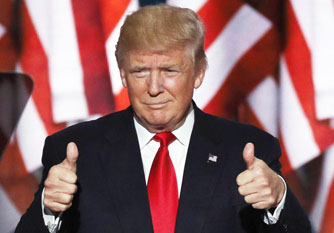
US President Donald Trump's address at the 73rd UN General Assembly (UNGA) has shocked the world again. Trump put it bluntly, "We reject the ideology of globalism and we embrace the doctrine of patriotism." But UN Secretary General Antonio Guterres once said that multilateralism was more vital than ever to tackling dramatic global challenges. French President Emmanuel Macron also addressed the assembly and warned without multilateralism global wars would return.
2018-09-28 -
Ding Gang: China-Japan-SK FTA key to ‘Asia for Asians’
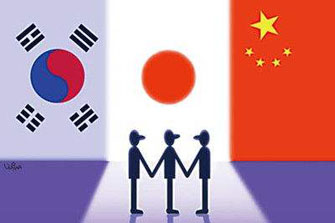
After the US began to replace the multilateral rules-based order with a bilateral one and launched one-on-one offensives against global trading partners, officials from China, Japan and South Korea vowed to speed up negotiations for a trilateral Free Trade Agreement (FTA) at a forum in Beijing last week.
2018-09-27 -
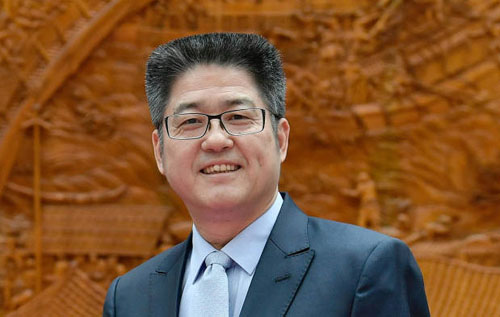
FT interview with Chinese vice-minister for foreign affairs on China’s vision for BRI
In a rare high-level interview on the topic, Le Yucheng, Chinese vice-minister for foreign affairs, has spoken at length to the Financial Times about China’s vision for the BRI.
2018-09-26 -
Full Text: The Facts and China's Position on China-US Trade Friction
China published a white paper on Monday to clarify the facts about China-U.S. economic and trade relations, demonstrate its stance on trade friction with the United States, and pursue reasonable solutions.
2018-09-25 -
China, Russia Capable of Outlasting US’ Economic Attacks
The US continues to sanction other countries’ economies, a senior Chinese university scholar told Sputnik Friday, because its own economic growth has stalled. But countries like Russia and China, which know struggle and hardship, can easily outlast the Trump administration, he said.
2018-09-25 -
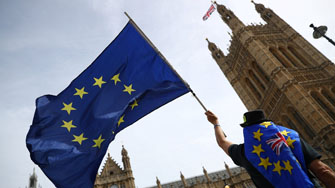
Guan Zhaoyu: Does the UK really mean "no deal Brexit"?
The leaders of EU members met in Salzburg, Austria on September 19 for two days, and Brexit is the major issue of the summit. Although it is not an official summit, the whole Europe pays much attention to it due to its topic.
2018-09-21 -
John Ross: Made in America again? Not just yet
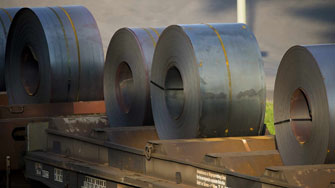
In relation to myths in sections of the Chinese media regarding a (non-existent) expansion of US manufacturing, I remember being contacted by one Chinese media outlet and being asked if I would write an article on, "the implications for China of the expansion of US manufacturing."
2018-09-17 -
Ding Gang: Can Sweden defend European core values?
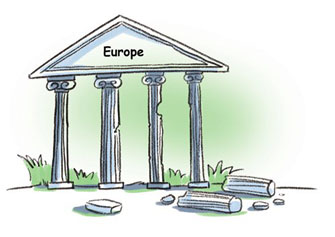
As Swedish elections concluded on September 9, European countries breathed a sigh of relief. Even though the vote for the far-right Sweden Democrats had increased, the Social Democratic Party (SDP) still won the largest number of votes, discounting fears that the nationalists could gain ground in the country considered an epitome of liberal values.
2018-09-13 -

Liu Zongyi: India playing wily game with US, Russia and China
The twice-postponed two plus two ministerial dialogue between the US and India took place on September 6 in New Delhi, during which US Secretary of State Mike Pompeo and Defense Secretary James Mattis held talks with their Indian counterparts - External Affairs Minister Sushma Swaraj and Defense Minister Nirmala Sitharaman, over a string of issues including bilateral security cooperation, US sanctions against Iran and India's purchase of Russian air defense missiles.
2018-09-12
















































 京公网安备 11010802037854号


