Focus
Your Present Location: HOME> Focus-

Wang Yiwei: BRI will help realize 'African Dream'
President Xi Jinping proposed the Belt and Road Initiative five years ago to bridge the development gaps among countries, improve peoples' living standards and promote sustainable, shared development. This makes the initiative a global cooperation network that connects countries by air, land, sea and cyberspace, and extends beyond the Eurasian continent to Africa and Latin America.
2018-09-05 -
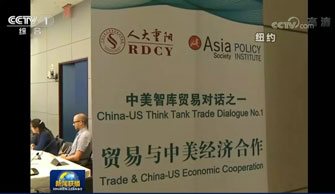
Think tank scholars seek way out of US-China trade disputes
More than 40 think tank scholars and former officials from China and the United States gathered in Washington and New York this week to discuss proper ways to solve current trade disputes and other issues concerning China-US bilateral ties in a constructive manner.
2018-09-03 -
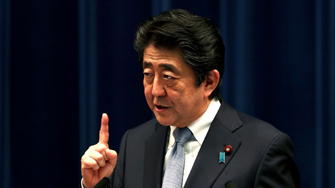
Wang Peng: Japan to seek greater regional autonomy through secret meeting with DPRK
The secret meeting, which has previously not been reported, took place in Vietnam between a top Japanese intelligence official, Shigeru Kitamura, and a senior DPRK official in charge of reunification, Kim Song Hye.
2018-09-03 -
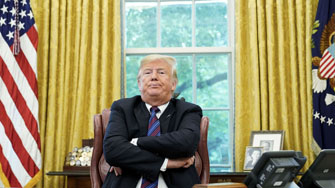
Zhao Minghao: Trump administration should not overestimate its chances of winning the trade war
Recently, the Office of the United States Trade Representative held a hearing on imposing high tariffs on 200 billion US dollars worth of Chinese products. About 360 representatives of various US enterprises and commercial organizations attended. The Trump administration's economic and trade offensive against China has been widely questioned, making American companies and people victims of the trade conflict.
2018-09-03 -

William Jones: Too much 'irrational exuberance' over US recovery
If you put your faith in President Donald Trump's numerous "tweets" you would think that everything is just coming up roses with the US economy. "The US has double the growth rate than it had eight months ago," the President tweeted on August 17.
2018-09-03 -
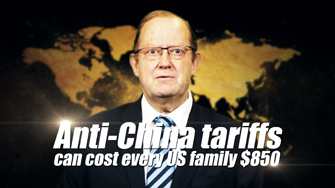
John Ross: Anti-China tariffs: a cost to every US family of $850
The US tariffs against China pose every American family with a stark choice: Do they want to pay 850 US dollars a year to the US tax authorities, to carry out a tax war against China, or do they want to spend that 850 US dollars on their own household? This will significantly affect their living standard.
2018-09-03 -
He Yafei: US-China Relations Transition From Cooperating Rivals to Competing Rivals
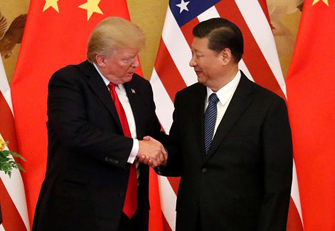
What is the correct way to appreciate a China-U.S. relationship that is undergoing historic change? Will China and the U.S. fall into the trap of confrontation on many fronts? To answer these questions, first we must review the past four decades, when the two were “cooperating rivals.”
2018-08-31 -
What Does a Chinese Superpower Look Like? Nothing Like the U.S.
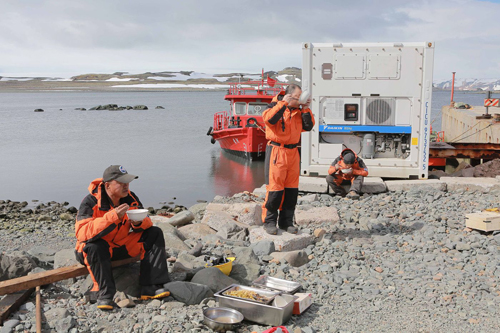
What struck Wang Wen about Antarctica, beyond the brutality of the December cold, was the scale of U.S. operations in such an inhospitable environment and the American flag fluttering by the sign that marks the geographic South Pole. Observing the academic mission of hundreds of U.S. scientists in a region rich in resource potential, he was determined that China must catch up.
2018-08-30 -
Ding Gang: Freeing up the mind for future success
In the modern history of the world, 1978 does not seem to be unique. Wikipedia's memo of the year begins like this: 1978 was a common year starting on Sunday of the Gregorian calendar.
2018-08-30 -
What Does a Chinese Superpower Look Like? Nothing Like the U.S.
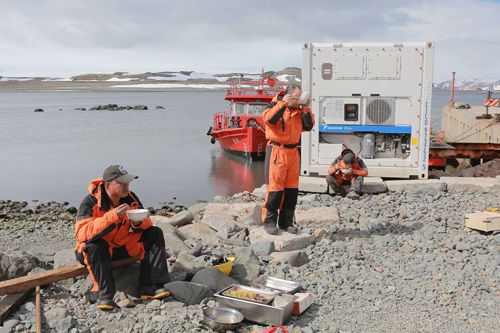
What struck Wang Wen about Antarctica, beyond the brutality of the December cold, was the scale of U.S. operations in such an inhospitable environment and the American flag fluttering by the sign that marks the geographic South Pole. Observing the academic mission of hundreds of U.S. scientists in a region rich in resource potential, he was determined that China must catch up.
2018-08-30 -
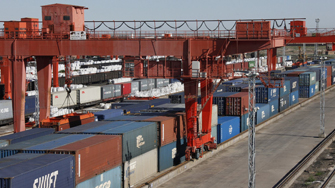
Wang Yiwei: How to evaluate the outcomes of the five-year-old Belt and Road Initiative
As the Chinese saying goes; “the three-year-old child is the father of the man.” Three years after the Belt and Road Initiative (BRI) was proposed, Chinese President Xi Jinping pointed out that “the progress and outcomes of the BRI have exceeded expectations.” Five years later, the outcomes of BRI have exceeded not only the expectations of China but also those of the world.
2018-08-28 -
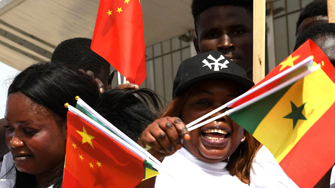
Hisham El-Zimaity: The future of China-Africa cooperation is worth expecting
Together, Africa and China should spare no effort to rebalance economic globalization so as to advance Africa toward the “efficiency-driven” stage where competitiveness depends on higher education, better developed labor and financial markets, and the adoption of new technologies.
2018-08-27 -
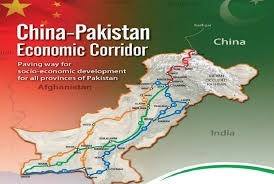
Wang Peng: CPEC key to developing western China and consolidating regional security
The leaders of China and Pakistan reached an agreement in 2013 to jointly promote the construction of China-Pakistan Economic Corridor (CPEC), which is a landmark in the history of bilateral relations. With the implementation of the CPEC project in the last five years, the traditional political and strategic relations between the two countries have transformed into a continuously deepening pragmatic partnership with an economic win-win strategy. The construction of CPEC is of strategic and econo
2018-08-27 -
Cheng Cheng: 5 Facts about Chinese Loans to Africa
Although, most of the international organizations, including the World Bank and IMF, have credited China as the largest investment contributor and the biggest constructor for Africa, Western media and some government officials have misleadingly distorted China's loans to Africa as so-called "debt traps" or "neocolonialism."
2018-08-27 -
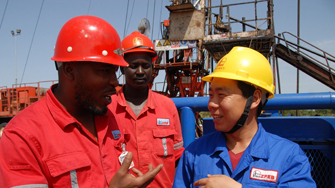
Wang Yiwei: The Belt and Road Initiative helps merge Chinese Dream with African Dream
The Belt and Road Initiative (BRI) was initially intended to establish connectivity throughout the Eurasian continent but has now gone beyond to reach Africa and Latin America. The network is a powerful global cooperation platform through the air, land, sea, and the Internet.
2018-08-27 -

Ding Gang: Can globalization still override political tensions?
Sino-South Korean relations have plunged since the deployment of the US' Terminal High Altitude Area Defense (THAAD) anti-missile system in South Korea last year, which affected communication between the countries. It's understandable that seminars involving political and diplomatic relations between the two countries were affected.
2018-08-23 -
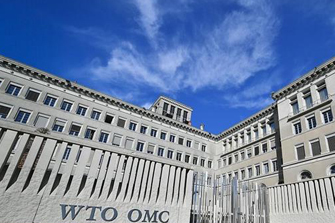
Danilo Türk: Why and how reform the world trading system?
The world is threatened by tariff hikes and prospects of a trade war, accompanied by improvised suggestions for abrupt changes in the international trading system. This is not only frightening but also paradoxical in light of the fairly consistent and positive developments in the global trade system over the past decades.
2018-08-23 -

Wang Peng: China’s countermeasures to US Indo-Pacific strategy
The US Indo-Pacific strategy seeks to use political (emphasizing democratic values), economic (exclusive institutional economic and trade arrangements), diplomatic (strengthening bilateral alliances and sowing discord between China and other countries), military (joint military exercises and arms sales) and other means to co-opt China’s neighboring countries to undermine China, contain China’s rise, and ultimately maintain US hegemony.
2018-08-23 -

Zhao Minghao: Southeast Asia not a stage for Washington’s game
Malaysian Prime Minister Mahathir Mohamad's China visit that began on Friday is the most important high-level exchange since the new Malaysian government took office. The trip depicted a blueprint for bilateral cooperation and gave an answer to those pessimistic about China-Malaysia relations.
2018-08-22 -
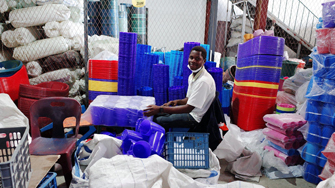
Wang Yiwei: How the Belt and Road Initiative is changing Africa?
I once asked my African friends two questions: first, why can't Africa bring in Western capital and technology like China did in its reform and opening-up to supplement various factors of economic development and realize modernization? Second, why can’t the integration of Africa’s former colonizers in Europe bring about the integration of Africa?
2018-08-21












































































 京公网安备 11010802037854号


