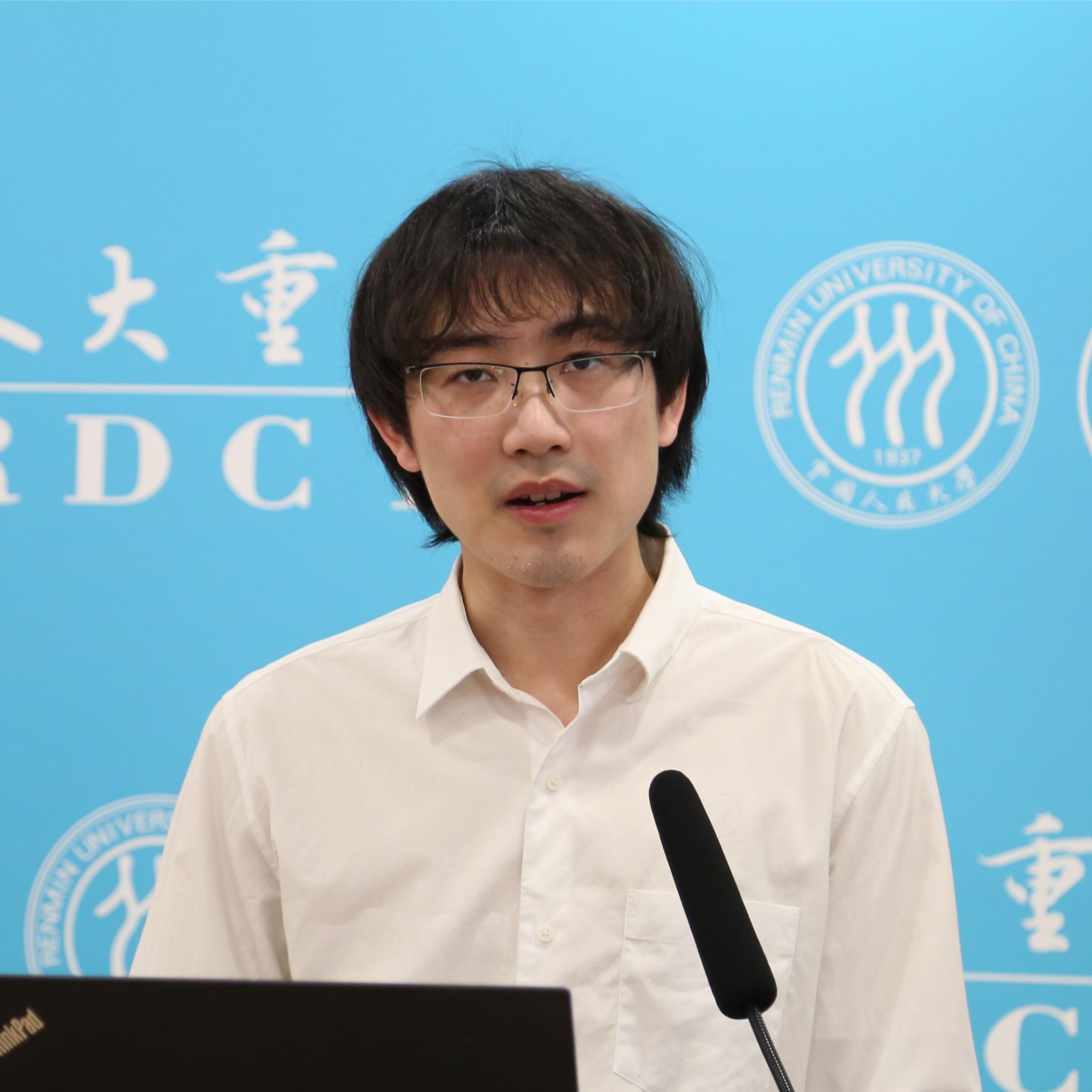
发布时间:2026-11-16 作者: 王文 李菡
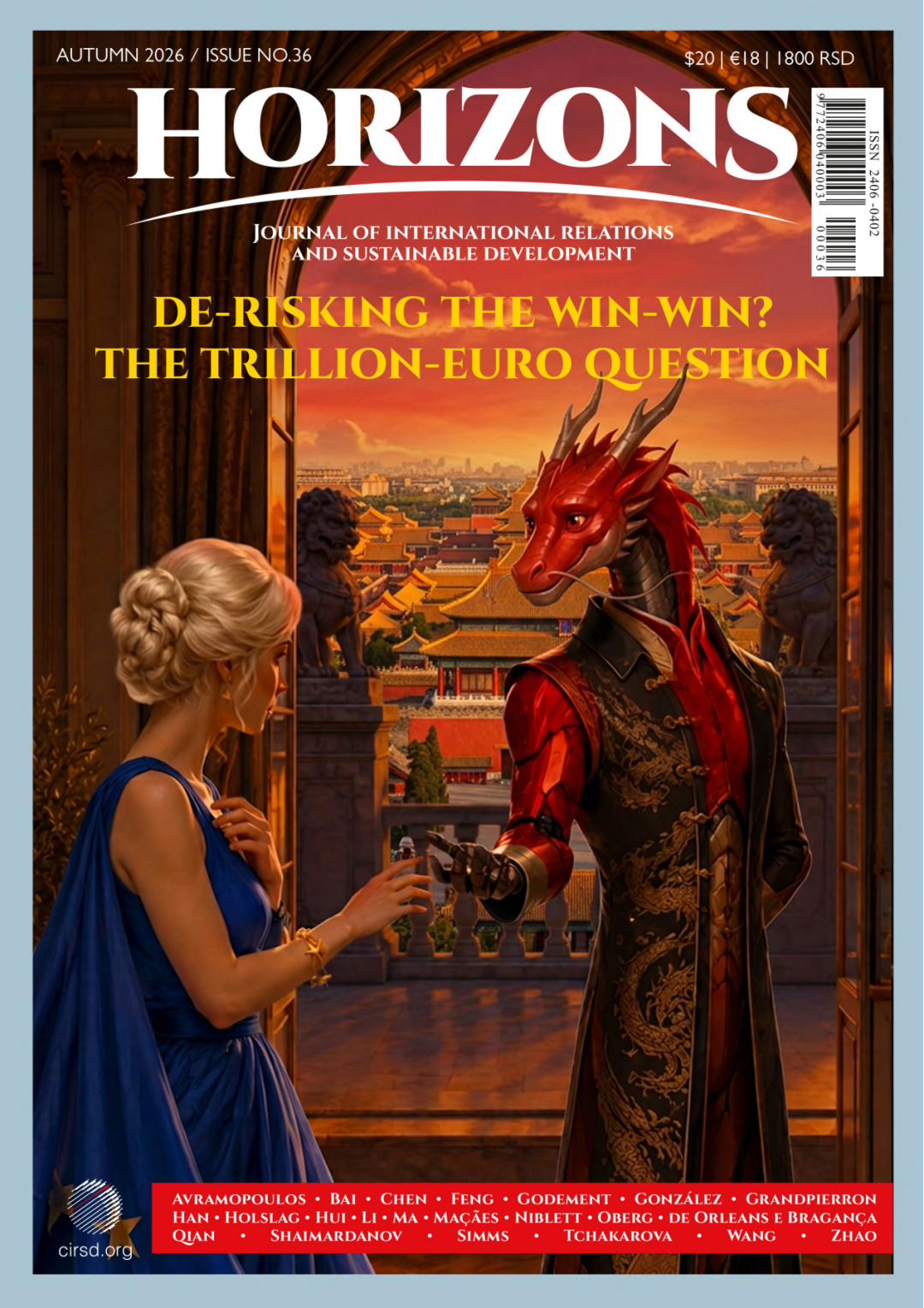
近日,中国人民大学重阳金融研究院院长、全球领导力学院院长王文与国际关系学院外语学院讲师李菡在欧洲知名期刊《地平线》2026年秋季号第36期刊发长文《竞争并非冷战:中国、欧洲与叙事边界》。文章认为:中欧关系当前正处于调整期,分歧与摩擦明显增多,竞争的一面日益突出。但分歧并不等于对抗,竞争更不意味着冷战。
编者按:近日,中国人民大学重阳金融研究院院长、全球领导力学院院长王文与国际关系学院外语学院讲师李菡在欧洲知名期刊《地平线》2026年秋季号第36期刊发长文《竞争并非冷战:中国、欧洲与叙事边界》。文章认为:中欧关系当前正处于调整期,分歧与摩擦明显增多,竞争的一面日益突出。但分歧并不等于对抗,竞争更不意味着冷战。现将中文译文及英文原文发布如下:(中文译文约7300字,预计阅读时间19分钟)
●摘要
近年来,“中欧新冷战”这一说法频繁出现在布鲁塞尔、柏林、巴黎等欧洲各国首都智库界与舆论界的讨论中。一些评论者把欧盟的“去风险”政策、产业与贸易壁垒以及价值观政治化等因素混为一谈,描绘出一幅中欧之间阵营对抗、全面脱钩的图景。这种叙事在双方商界和公众中引发了广泛焦虑。
必须承认,中欧关系当前正处于调整期,分歧与摩擦明显增多,竞争的一面日益突出。但分歧并不等于对抗,竞争更不意味着冷战。
中欧地处亚欧大陆两端,既不存在根本性的地缘政治冲突,也不存在不可调和的利益冲突;相反,双方有着深度交融的经贸联系和全球治理领域的广泛共同利益。
本文力求客观呈现中欧分歧的实际表现,剖析“新冷战”叙事的逻辑缺陷,并提出双方走出当前困局的可行路径。中国对欧始终保持着战略耐心,既有信心也有能力管控分歧,通过调整与磨合的过程推动中欧关系重回稳定、务实的轨道。
中国如何看待中欧分歧
“中欧新冷战”叙事并非毫无依据。过去几年,欧盟在贸易、价值观和安全等领域的一系列政策调整,确实带有明显的竞争与对抗色彩。这些举措不断侵蚀双边互信的基础,也为阵营对抗叙事的扩散提供了土壤。在中国学者看来,这些带有“新冷战”特征的分歧至少包括三大领域。
第一,经贸领域“去风险”演变为一套贸易壁垒。2022年,欧盟正式提出对华“去风险”战略。该战略名义上区别于美国全面“脱钩断链”的做法,强调“减少依赖而非切断联系”,但在实践中已演变为系统性产业保护与贸易限制的工具,对华构筑起多维度的经贸壁垒。
以碳边境调节机制(CBAM)的实质落地为例。作为欧盟绿色转型的核心政策工具,CBAM于2023年10月进入过渡期,并于2026年1月启动征税阶段,覆盖水泥、钢铁、铝、化肥、电力、氢六大高碳行业。欧盟2025年12月公布的隐含排放核算规则进一步细化了核算标准,并扩大了覆盖的下游产品范围。中国是欧盟钢铁和铝的主要进口来源地之一,业界估计,CBAM全面实施后,中国相关产品对欧出口成本将上升约30%。该机制名义上是为了应对气候变化,实际上却发挥着绿色贸易壁垒的作用,给中国企业增加额外的合规成本。
再如贸易救济与产业调查工具的频繁使用。欧盟《外国补贴条例》(FSR)生效后,中国新能源产业成为重点审查对象。2023年10月,欧盟正式对中国产纯电动汽车(BEV)发起反补贴调查,2024年10月作出终裁,对比亚迪、吉利、上汽分别加征17.0%、18.8%、35.3%的反补贴税,对其他合作企业统一适用20.7%的税率。尽管后续谈判达成了部分替代高额关税的“价格承诺”机制,但该案仍开创了欧盟对中国战略性新兴产业发起大规模贸易调查的先例。与此同时,欧盟《净零工业法案》对电池、光伏、氢能等八大净零产业提出本地含量要求,实质上迫使中国企业在欧盟境内投资建厂,否则将被排除在欧盟公共采购和补贴项目之外——这本质上是以行政手段推动供应链转移。
此外,公共采购和技术领域还存在隐性排他做法。在5G、数字基础设施、能源项目等领域,多个欧盟成员国以“国家安全”为由限制中国企业参与投标。部分中东欧国家追随美国立场,将华为、中兴等企业排除在核心电信基础设施之外。欧盟网络安全指令的修订扩大了“高风险供应商”的定义,进一步压缩了中国科技企业在欧洲的市场空间。
第二,价值观领域的问题政治化侵蚀了互信基础。把意识形态价值观注入经贸问题、把国内事务国际化,已成为欧洲近年对华政策的突出特征;新疆尤其成为欧洲“价值观外交”的核心抓手。
2024年11月,欧盟理事会正式通过《欧盟市场禁止强迫劳动产品条例》,该条例将于2027年12月全面实施,禁止使用所谓“强迫劳动”的产品进入欧盟市场,覆盖所有行业和供应链。条例虽未点名中国,但欧盟官方文件和公开讨论反复将新疆列为“高风险地区”,其针对对象不言而喻。随着欧盟委员会在2025年全年陆续发布实施指引和风险数据库,中国具有竞争优势的光伏、纺织、电子、汽车制造等行业被列为优先审查对象,从而施压欧洲企业开展与新疆“脱钩”的供应链审查。
与此同时,欧洲议会持续通过涉疆、涉港、涉台政治决议。仅2024年至2025年间,欧洲议会就通过了关于新疆的两份报告;这些报告缺乏具体事实证据,却构建出“人权问题”叙事,并呼吁欧盟采取进一步针对性措施。一些欧洲议会议员频繁对中国台湾地区进行挑衅性窜访,挑战一个中国原则,粗暴干涉中国内政。此类政治操弄不断煽动认知对立,使中欧关系被价值观议题绑架,偏离务实合作的主航道。
第三,安全领域的安全化话语扩张使欧盟对华战略定位发生偏移。早在2019年,欧盟委员会在《欧中战略展望》中就以“伙伴、经济竞争者、制度性对手”三重框架界定中国。这是欧盟首次将中国定位为“制度性对手”,把安全话语延伸至技术、经济、供应链等非传统领域。
此后,欧盟对华安全政策的外延不断扩大。在技术领域,它跟随美国推行半导体出口管制,限制部分高端光刻设备和EDA软件对华出口,使中欧技术竞争演变为规则固化、制度对立、长期摩擦的冲突,并成为双方最主要的分歧领域。在印太方向,欧盟发布“印太战略”,支持与日本、韩国、澳大利亚加强安全合作,举行联合军演,意图明显指向制衡中国。在军事层面,欧盟成员国逐步扩大对中国台湾地区的武器相关零部件出口,并加强与中国台湾地区的非官方军事往来。
总体来看,这些政策呈现出欧盟对华转向系统性对抗的图景,为“新冷战”叙事提供了土壤。但必须看到,这些分歧本质上是利益博弈、认知落差与政策调整的混合体,而非冷战式的阵营全面对抗。欧洲的许多政策是对中国产业崛起的被动反应,背后有内部政治博弈、美国压力等复杂因素的交织作用,并非仅出于理性的战略判断。
一种被夸大的叙事
尽管这些分歧客观存在,但从结构性因素、共同利益基础和力量对比来看,所谓中欧“新冷战”既不符合双方根本利益,也不具备实现的现实条件。
冷战的核心特征是经济脱钩、市场割裂和阵营对抗。而中欧之间长期形成的是利益深度交融、相互嵌入的格局,这是对抗叙事难以逾越的现实。据中国海关统计,2025年中国与欧盟进出口总额达5.93万亿元人民币,同比增长6%,约占中国外贸总额的13%;欧盟多年保持中国第二大贸易伙伴地位。欧方数据显示,对华贸易约占欧盟进出口总值的15%,中国同样是欧盟第二大贸易伙伴。如此庞大的贸易规模,绝非政治话语可以轻易切断。
这种相互依存在具体国家和产业层面表现得更为明显。德国是中国在欧洲最大的贸易伙伴,2025年中德双边贸易额约1.51万亿元人民币,其中机电产品占70.8%,仅汽车及零部件的贸易额就达1315亿元人民币。对德国三大车企——大众、宝马、奔驰而言,在华销量各占其全球总销量的25%左右,中国市场是其全球利润的核心来源。
此外,化工巨头巴斯夫在湛江一体化生产基地投资100亿欧元,是德国企业在华最大单笔投资,凸显欧洲产业界对中国市场的长期信心。在消费品领域,欧盟是中国最大的进口来源地;中国自欧盟进口的箱包、医疗保健品、乘用车、化妆品等,各自占同类产品进口总额的40%以上。
对法国路威酩轩(LVMH)、开云等奢侈品集团而言,中国市场贡献了其全球约三分之一的营收。除贸易之外,中欧产业链、供应链深度交织。欧洲的高端装备、精密仪器和核心零部件是中国制造业升级的重要支撑;中国的中低端制造、新能源产品和完整供应链体系,则为欧洲的物价稳定和绿色转型提供了关键保障。数据显示,欧洲进口的光伏组件98%来自中国,储能产品进口的80%以上也来自中国。与中国“断链”,将使欧洲能源转型成本至少上升30%,并导致居民电价大幅上涨。此外,截至2026年上半年,中欧班列累计开行已突破13万列,运送货物货值超过5200亿美元,成为连接亚欧大陆的主要物流动脉,带动中国与中东欧国家贸易额连年实现两位数增长。
冷战的另一个核心前提是地缘战略对抗与军事集团对峙,而这一基础在中欧关系中完全不存在。从地理上看,中欧分处亚欧大陆两端,相隔数千公里,彼此没有领土或边界争端。从战略重心看,欧洲的核心安全关切在东欧,俄乌冲突直接影响其地缘与能源安全;中国的核心安全关切在亚太,首要目标是维护国家主权和领土完整、维护周边和平稳定。双方战略优先方向基本错位,不存在直接的地缘权力争夺。
从军事角度看,中国奉行不结盟政策,没有在欧洲周边建立军事同盟,也没有在欧洲部署军事力量。欧洲虽是北约的骨干,但北约的核心功能是集体防御,其向亚太扩张主要由美国推动,多数欧洲国家并不愿把北约变成对华军事工具。中国从未将欧洲视为安全威胁,欧洲也无法把中国界定为直接军事对手——这与冷战时期美苏两大军事集团的紧张对峙有着本质区别。
而且,冷战态势需要阵营内部高度统一的意志和协调行动,但欧盟内部对华政策的深刻分歧,使其根本无法形成统一的对华“冷战阵线”。首先是成员国立场分化。匈牙利长期在欧盟内部主张对华务实合作,曾三次行使否决权阻止欧盟发表涉港声明(认为这是干涉中国内政),并将欧盟对华制裁称为“毫无意义、傲慢且有害”。即便在2026年政府更迭后,新政府也明确欢迎中国投资,表示愿深化与比亚迪、宁德时代等企业的合作,同时强调相关工作须在合规框架内推进。欧盟候选国塞尔维亚则一贯对华友好,在核心问题上坚定支持中方立场。
即便是西欧主要国家,立场也并不一致。德国企业界强烈反对对华脱钩;德国政府虽提出“去风险”,但反复强调“不脱钩、不对抗”,并同中国保持高层沟通。法国更强调欧洲战略自主,主张对华政策独立,不愿完全追随美国的遏制战略。只有少数北欧和中东欧小国出于安全和意识形态考虑,倾向于对华强硬;但其经济体量小、政治影响力有限,无法左右欧盟整体政策。
欧盟机构之间同样存在明显分歧。受选举政治驱动,欧洲议会倾向于通过强硬涉华决议以迎合民粹情绪;欧盟委员会相对务实,优先考虑欧盟产业利益和全球竞争力;欧盟理事会则更多反映成员国集体立场,总体趋于谨慎。这种多层次、多主体的博弈,使欧盟对华政策在强硬与务实之间不断摇摆,难以形成一贯、统一的对抗战略。
中国自身的发展实力和战略定力,是防止中欧关系滑向冷战的又一道屏障。中国有韧性和信心应对欧洲的政策调整,不会在外部压力下改变发展轨迹,也不会主动挑起对抗。
从经济规模看,2025年中国国内生产总值约19.6万亿美元,稳居世界第二大经济体,拥有14亿人口的庞大市场和超过4亿的中等收入群体。内需已成为中国经济增长的主要引擎,经济对外贸易的依赖度持续下降,能够有效抵御外部贸易摩擦的冲击。
从产业实力看,中国在新能源、人工智能等新兴领域已形成全球竞争优势。2025年,中国新能源汽车产销量均超过1600万辆,连续11年位居全球第一,占全球总产量60%以上;太阳能电池产量达8.3274亿千瓦,占全球总量80%以上;宁德时代动力电池全球市占率达39.2%,连续九年位居第一。人工智能领域,2025年中国人工智能核心产业规模超过1.2万亿元人民币,企业数量超过6200家;智能算力总规模达1590 EFLOPS,工业机器人产量达77.3万台,多项指标远超欧洲。这些产业优势使欧洲“去风险”政策难以达到预期效果,反而可能推高欧洲自身的转型成本。
更重要的是,中国对欧政策始终保持连贯稳定。中国始终视欧洲为重要合作伙伴,坚持互利共赢的开放战略,不会因欧洲政策波动而改变合作大方向。这种战略定力是中欧关系的稳定器。
破解困局:中欧关系的未来路径
要破解当前困局,中欧关系既不能依靠单方面让步,也不能依靠对抗叙事主导,而须双方共同努力,回归理性务实,重建互信基础。
中欧许多分歧的根源在于认知偏差和话语误读。部分欧洲精英长期抱有文明优越感,习惯以自身价值标准和制度模式衡量中国,对中国的发展道路和治理模式存在根深蒂固的刻板印象。
欧洲应放下居高临下的说教姿态,学会以平等心态看待中国。以产业政策为例,不少欧洲人将中国新能源产业的崛起归因于“不公平补贴”。事实上,中国光伏和电动汽车产业的竞争力源自完整的供应链生态、激烈的市场竞争、持续的技术创新和庞大的工程技术人才队伍——这些都是市场竞争的结果。欧盟对中国电动汽车发起反补贴调查,却忽视了欧洲车企长期在中国享有的税收优惠和市场准入便利。双重标准只会加深对立,唯有平等对话才能解决问题。
中国方面也应更好地理解欧洲的焦虑与关切。欧洲在绿色转型和产业升级中面临巨大竞争压力,其对供应链安全和产业主权的担忧有其现实依据。中国可以通过进一步开放市场、改善营商环境、加强知识产权保护来回应欧方合理关切。2025年进一步缩减外资准入负面清单、开放制造业和服务业的计划,就是向包括欧洲在内的全球投资者释放的积极信号。
近年来,受疫情和政治因素影响,中欧人文往来大幅收缩,学者互访、青年交流、基层对话明显减少。当面对面沟通被切断,极端观点容易主导舆论场,误解与偏见随之累积。重建人文交流纽带,是中欧关系回暖的社会基础。
应优先恢复教育学术交流。疫情前,中国在欧留学生超过25万人,欧洲在华留学生超过10万人;这种双向交流对增进相互理解至关重要。尽管2025年以来人数逐步恢复,但仍未回到疫情前水平。双方应简化签证程序、扩大奖学金项目、鼓励更多青年学生互访。同时重启智库交流机制:支持欧洲学者来华实地调研,鼓励中国学者赴欧开展学术对话,以客观研究对冲片面的公共叙事。
地方和行业层面的合作是另一个重要抓手。中欧已建立1000多对友好城市,中德生态园、中法武汉生态示范城、中荷人工智能产业合作园等项目是地方务实合作的典范。双方应支持更多省市结好,在绿色低碳、智慧城市、医疗健康等领域开展看得见、摸得着的合作,让合作成果惠及普通民众。
俄乌冲突是中欧之间最突出的分歧点之一,也是影响双边政治互信的关键变量。欧洲普遍将该冲突视为对自身安全的直接威胁,由此产生强烈的集体焦虑;中国则秉持客观中立立场,致力于劝和促谈、推动政治解决。立场差异存在,但不必升级为全面对抗。
中国的立场基于清晰的逻辑与原则:坚持尊重各国主权和领土完整,恪守《联合国宪章》宗旨和原则;反对拱火浇油、推动冲突无限升级的行为;主张通过对话谈判解决争端,推动构建均衡、有效、可持续的欧洲安全架构。冲突爆发以来,中国政府欧亚事务特别代表李辉多次开展穿梭外交,访问俄罗斯、乌克兰、法国、德国、欧盟总部及多个全球南方国家,协调立场、推动停火。中国还与巴西共同发起乌克兰危机“和平之友”小组,凝聚全球南方的促和力量。这些努力表明,中国既不是旁观者,也不是挑动者,而是和平的积极斡旋者。
中欧应建立俄乌冲突专门对话机制,定期交换看法与关切,管控认知分歧。欧洲既不应要求中国选边站队,也不应把中国的中立立场等同于支持俄罗斯。中国的中立实际上是推进和谈的宝贵资源。这样,双方才能在人道援助、战后重建、粮食安全等领域找到共同点并开展务实合作。
中美元俄三方可能举行的会晤——很可能在2026年深圳亚太经合组织领导人非正式会议期间举行——将是当前亚欧地缘政治格局中的重大事件,并对中欧关系产生外溢影响。此类会晤的核心议程将聚焦核不扩散、亚欧安全、地区冲突降温等全球性议题,本质上是主要大国之间管控风险、避免误判的战略沟通,而非针对欧洲结成阵营。大国之间的持续对话总体上有利于降低全球冲突风险,也符合欧洲自身的安全利益。
对欧洲而言,当务之急是坚持战略自主,避免被卷入大国阵营对抗。欧洲不应在中美之间被动选边,而应基于自身利益独立制定对华政策。它可以在气候治理、全球经济治理、多边贸易体制改革等领域与中国广泛合作,同时在安全、价值观等存在分歧的问题上保持对话。真正的战略自主不是倒向一边,而是在大国博弈中保持独立判断、维护自身核心利益。
中欧关系正处于关键的调整期。分歧与竞争是客观现实,但将其定性为“新冷战”,既是对历史的误读,也是对现实的误判。冷战的本质是阵营对抗、全面脱钩和零和博弈——无论中国还是欧盟,都没有这样的意愿,也不具备这样的条件。深度交融的经贸利益、各有侧重的战略关切、欧洲内部的分歧以及中国强劲的韧性,共同构成了中欧关系的“防波堤”。
中国始终是欧洲和平与发展的伙伴,而不是对手。中国有信心管控与欧洲的分歧,也有耐心推动中欧关系重回正轨。作为东西方文明的重要代表和世界两大经济体,中欧有责任走出一条不同制度、不同发展阶段国家和平共处、互利合作的新路。这条路不会平坦,摩擦与挫折在所难免。但只要双方坚持相互尊重、平等对话,管控分歧、扩大合作,中欧关系必将走出当前困境,为动荡的世界注入更多确定性。
图片
英文原文
Competition is Not a Cold War
China, Europe, and the Limits of a Narrative
Wang Wen and Li Han
In recent years, the phrase "China-Europe New Cold War" has appeared frequently in discussions among think tanks and opinion circles in European capitals such as Brussels, Berlin, and Paris. Some commentators have conflated the EU's "de-risking" policies, its industrial and trade barriers, and the politicization of values to paint a picture of bloc-based confrontation and comprehensive decoupling between China and Europe—a narrative that has sparked widespread anxiety within the business communities and general publics on both sides.
It must be acknowledged that China-Europe relations are currently undergoing a period of adjustment; differences and frictions have clearly increased, and the competitive dimension has become increasingly prominent. But differences do not amount to confrontation, and competition certainly does not imply a Cold War.
Situated at opposite ends of the Eurasian continent, China and Europe have no fundamental geopolitical conflict, nor do they face irreconcilable clashes of interest. On the contrary, they share deeply intertwined economic and trade ties, as well as broad common interests in global governance.
This article seeks to set out objectively the actual manifestations of the differences between China and Europe, to analyze the logical flaws in the "New Cold War" narrative, and to propose feasible paths by which both sides might overcome their current predicament. China has consistently maintained strategic patience toward Europe and possesses both the confidence and the capability to manage differences—steering the relationship back toward stability and pragmatism through a process of adjustment and accommodation.
How China Sees its Differences With Europe
The narrative of a "China-Europe New Cold War" is not without foundation. Over the past few years, a series of EU policy adjustments across the realms of trade, values, and security have indeed taken on distinct overtones of competition and confrontation. These moves have steadily eroded the foundation of bilateral mutual trust and provided fertile ground for the spread of narratives about bloc-based confrontation. From the perspective of Chinese scholars, these frictions—which bear the hallmarks of a "New Cold War"—encompass at least three key areas.
First, in the economic and trade sphere, "de-risking" has evolved into a set of trade barriers. In 2022, the European Union formally introduced its "de-risking" strategy toward China. Nominally distinct from the U.S. approach of comprehensive "decoupling and severing supply chains"—and emphasizing "reducing dependency rather than cutting ties"—this strategy has, in practice, evolved into a tool for systemic industrial protection and trade restriction, erecting multi-dimensional economic and trade barriers against China.
An example is the substantive implementation of the Carbon Border Adjustment Mechanism (CBAM). As a core policy instrument of the EU's green transition, the CBAM entered a transitional phase in October 2023 and began its levy stage in January 2026, covering six high-carbon sectors: cement, iron and steel, aluminum, fertilizers, electricity, and hydrogen. The rules for calculating embedded emissions, released by the EU in December 2025, further refined the accounting standards and expanded the scope of downstream products covered. China is one of the EU's largest sources of iron, steel, and aluminum imports; industry estimates suggest that, once the CBAM is fully implemented, the export costs for the relevant Chinese products to Europe will rise by approximately 30 percent. While ostensibly designed to address climate change, the mechanism effectively functions as a green trade barrier, imposing additional compliance costs on Chinese enterprises.
Another example is the frequent use of trade-remedy and industrial-investigation tools. Following the entry into force of the EU's Foreign Subsidies Regulation (FSR), China's new-energy industry became a primary target for scrutiny. In October 2023, the EU formally launched an anti-subsidy investigation into Chinese-made battery electric vehicles (BEVs). A final ruling, issued in October 2024, imposed anti-subsidy duties of 17.0 percent, 18.8 percent, and 35.3 percent on BYD, Geely, and SAIC respectively, with a uniform rate of 20.7 percent applied to other cooperating companies. Although subsequent negotiations led to a "price undertaking" mechanism that partially substituted for the high tariffs, the case nonetheless set a precedent for large-scale EU trade investigations into China's strategic emerging industries. Meanwhile, the EU's Net-Zero Industry Act introduces local-content requirements for eight key net-zero industries—including batteries, photovoltaics, and hydrogen—effectively compelling Chinese enterprises to invest and establish factories within the EU. Failure to do so would bar them from participating in EU public procurement and subsidy programs; in essence, this constitutes an administrative push to shift supply chains.
There are, furthermore, implicit exclusionary practices in public procurement and the technology sector. In areas such as 5G, digital infrastructure, and energy projects, several EU Member States have restricted Chinese companies from bidding, citing "national security" concerns. Certain Central and Eastern European nations have aligned with the U.S. position, excluding companies such as Huawei and ZTE from core telecommunications infrastructure. Amendments to the EU's cybersecurity directives have expanded the definition of "high-risk vendors," further squeezing the market space available to Chinese tech firms in Europe.
Second, in the realm of values, the politicization of issues has eroded the foundation of mutual trust. Infusing economic and trade issues with ideological values and internationalizing domestic affairs have become hallmarks of Europe's recent policy toward China; the issue of Xinjiang, in particular, has served as a central instrument of Europe's "values-based diplomacy."
In November 2024, the Council of the European Union formally adopted the Regulation on Prohibiting Products Made with Forced Labour on the Union Market. Set for full implementation in December 2027, the regulation bans products made using "forced labor" from entering the EU market, covering all industries and supply chains. Although it does not explicitly name China, official EU documents and public discourse repeatedly designate Xinjiang as a "high-risk region," making clear who the target of the measure is. As the European Commission has released implementation guidelines and risk databases throughout 2025, it has singled out sectors in which China holds a competitive advantage—such as photovoltaics, textiles, electronics, and automotive manufacturing—for priority scrutiny, thereby pressuring European companies to conduct supply-chain reviews aimed at "de-linking" from Xinjiang.
Concurrently, the European Parliament has continued to pass political resolutions concerning Xinjiang, Hong Kong, and Taiwan. Between 2024 and 2025 alone, the Parliament adopted two reports on Xinjiang; lacking concrete factual evidence, these reports constructed narratives of "human rights issues" and called on the EU to implement further targeted measures. Some Members of the European Parliament frequently make provocative visits to the Taiwan region, challenging the one-China principle and grossly interfering in China's internal affairs. Such political maneuvers constantly stoke perceptual antagonism, holding China-EU relations hostage to questions of values and causing them to veer away from the primary track of pragmatic cooperation.
Third, in the security domain, the expansion of security discourse has shifted the EU's strategic positioning toward China. As early as 2019, in its "EU-China: A Strategic Outlook," the European Commission characterized China through a tripartite framework: partner, economic competitor, and systemic rival. This marked the first time the EU had designated China a "systemic rival," extending security discourse into non-traditional areas such as technology, the economy, and supply chains.
Since then, the EU has steadily broadened the scope of its security policy toward China. In the technology sector, it has followed the U.S. lead on semiconductor export controls—restricting the export of certain high-end lithography equipment and EDA software to China—thereby transforming China-EU technological competition into a conflict characterized by entrenched rules, systemic rivalry, and long-term friction, and making it a primary area of disagreement. With regard to the Indo-Pacific, the EU released its "Indo-Pacific Strategy," which supported strengthening security cooperation and conducting joint military exercises with Japan, South Korea, and Australia—moves clearly intended to counterbalance China. In the military realm, EU Member States have gradually expanded their exports of arms-related components to Taiwan and stepped up unofficial military exchanges with the region.
Collectively, these policies paint a picture of the EU making a systemic shift toward confrontation with China, providing fertile ground for narratives about a "New Cold War." It is crucial to recognize, however, that these differences are essentially a mix of interest-based bargaining, perceptual disparity, and policy adjustment, rather than a Cold War-style, all-out confrontation between blocs. Many European policies are reactive responses to China's industrial rise, driven by a complex interplay of factors—including internal political maneuvering and U.S. pressure—rather than resting on rational strategic judgment alone.
An Exaggerated Narrative
Despite the objective existence of these differences, an analysis of structural factors, the foundation of shared interests, and the balance of power reveals that a so-called "New Cold War" between China and Europe neither aligns with the fundamental interests of either side nor possesses the realistic conditions required to materialize.
The core characteristics of the Cold War were economic decoupling, market fragmentation, and bloc confrontation. China and Europe, by contrast, have long established a pattern of deeply intertwined interests—a state of mutual integration—which stands as a reality that narratives of confrontation struggle to overcome. According to Chinese customs statistics, the total volume of China's imports and exports with the EU reached CN¥5.93 trillion in 2025, a year-on-year increase of 6 percent, accounting for approximately 13 percent of China's total foreign trade; the EU has for years maintained its position as China's second-largest trading partner. Data from the European side shows that trade with China accounts for about 15 percent of the EU's total import and export value, making China the EU's second-largest trading partner as well. So massive a volume of trade cannot easily be severed by mere political rhetoric.
This interdependence becomes even more apparent at the level of specific countries and industries. Germany is China's largest trading partner in Europe; in 2025, bilateral trade between the two reached approximately CN¥1.51 trillion. Mechanical and electrical products accounted for 70.8 percent of this total, with trade in automobiles and auto parts alone amounting to CN¥131.5 billion. For the three major German automakers—Volkswagen, BMW, and Mercedes-Benz—sales in China each account for around 25 percent of total global sales, making the Chinese market a core source of their global profits.
Furthermore, the chemical giant BASF's €10 billion investment in its Zhanjiang integrated production base represents the largest single investment by a German company in China, underscoring the long-term confidence European industry places in the Chinese market. In the consumer-goods sector, the EU is China's largest source of imports; imports from the EU—including luggage and bags, healthcare products, passenger vehicles, and cosmetics—each account for over 40 percent of China's total imports in their respective categories.
For luxury groups such as France's LVMH and Kering, meanwhile, the Chinese market contributes roughly one-third of global revenue. Beyond trade, the industrial and supply chains of China and Europe are deeply intertwined. Europe's high-end equipment, precision instruments, and core components serve as vital pillars for the upgrading of China's manufacturing sector; conversely, China's mid-to-low-end manufacturing, new-energy products, and comprehensive supply-chain systems provide a crucial guarantee for Europe's price stability and green transition. Data shows that 98 percent of the solar panels imported by Europe come from China, as do over 80 percent of its energy-storage product imports. Severing supply-chain ties with China would raise the cost of Europe's energy transition by at least 30 percent and lead to a sharp rise in residential electricity prices. Furthermore, as of the first half of 2026, the cumulative number of China-Europe freight-train trips had surpassed 130,000, carrying goods valued at over $520 billion; these trains have become a major logistics artery connecting the Eurasian continent, driving double-digit growth in trade between China and the countries of Central and Eastern Europe for years.
Another core premise of the Cold War was geostrategic confrontation and a standoff between military blocs—a foundation entirely absent in the relationship between China and Europe. Geographically, China and Europe sit at opposite ends of the Eurasian continent, separated by thousands of kilometers, with no territorial or border disputes between them. As for strategic focus, Europe's core security concerns center on Eastern Europe, where the Russia-Ukraine conflict directly affects its geopolitical and energy security; China's core security concerns center on the Asia-Pacific, its primary goals being the preservation of national sovereignty and territorial integrity, and the maintenance of peace and stability in its neighborhood. The strategic priorities of the two sides are essentially misaligned, which precludes any direct struggle for geopolitical power.
From a military perspective, China adheres to a policy of non-alignment; it has neither established military alliances in Europe's vicinity nor deployed military forces within Europe. While Europe forms the backbone of NATO, the alliance's core function is collective defense, and its expansion into the Asia-Pacific is driven primarily by the United States; most European nations are unwilling to transform NATO into a military instrument for confronting China. China has never viewed Europe as a security threat, nor can Europe define China as a direct military adversary—a situation fundamentally different from the tense standoff between the U.S. and Soviet military blocs during the Cold War.
Moreover, a Cold War scenario requires a high degree of unified will and coordinated action within a bloc; yet the deep divisions within the EU over policy toward China make it fundamentally impossible to form a unified "Cold War front" against the country. To begin with, there is a divergence of positions among Member States. Hungary has long been a proponent of pragmatic cooperation with China within the EU; it has exercised its veto on three separate occasions to block EU statements on Hong Kong—which it viewed as interference in China's internal affairs—and has described EU sanctions against China as "meaningless, arrogant, and harmful." Even after the change of government in 2026, the new administration has clearly welcomed Chinese investment and expressed a desire to deepen cooperation with companies such as BYD and CATL, while emphasizing that such efforts must proceed within a framework of regulatory compliance. Serbia, an EU candidate country, has consistently maintained a friendly stance toward China and firmly supports China's position on core issues.
Positions are inconsistent even among the key Western European nations. The German business community strongly opposes decoupling from China; and while the German government has proposed "de-risking," it consistently emphasizes "no decoupling, no confrontation" and maintains a high-level communication with China. France places greater emphasis on European strategic autonomy, advocating independence in its China policy and showing reluctance to align fully with the U.S. strategy of containment. Only a few small Northern and Central-Eastern European nations—driven by security and ideological considerations—favor a tougher stance toward China; but given their small economic size and limited political influence, they are unable to dictate the EU's overall policy.
There are, furthermore, clear divisions among the EU institutions themselves. Driven by electoral politics, the European Parliament tends to pass hardline resolutions on China to cater to populist sentiment; the European Commission is relatively pragmatic, prioritizing the EU's industrial interests and global competitiveness; and the European Council largely reflects the collective position of the Member States, generally leaning toward caution. This multi-level, multi-actor dynamic causes the EU's China policy to oscillate constantly between a hardline stance and pragmatism, making it difficult to establish a consistent, unified strategy of confrontation.
China's own development strength and strategic resolve serve as a further safeguard against China-EU relations sliding into a Cold War. China possesses the resilience and the confidence to navigate Europe's policy adjustments; it will not alter its development trajectory under external pressure, nor will it initiate confrontation.
In terms of economic scale, China's GDP stood at approximately $19.6 trillion in 2025, firmly securing its position as the world's second-largest economy, backed by a vast market of 1.4 billion people and a middle-income group exceeding 400 million. Domestic demand has become the primary engine of China's economic growth, and the economy's reliance on foreign trade has steadily declined, enabling it to withstand the impact of external trade frictions effectively.
In terms of industrial strength, China has established a globally competitive edge in emerging sectors such as new energy and artificial intelligence. In 2025, China's production and sales of new-energy vehicles both exceeded 16 million units—ranking first globally for the eleventh consecutive year and accounting for over 60 percent of total global output. Solar-cell production reached 832.743 million kilowatts, representing more than 80 percent of the global total, while CATL's global market share for power batteries reached 39.2 percent, holding the top spot for the ninth consecutive year. In the AI sector, the scale of China's core AI industry surpassed CN¥1.2 trillion in 2025, with over 6,200 enterprises; total intelligent computing capacity reached 1,590 EFLOPS, and industrial-robot production hit 773,000 units—figures that place China far ahead of Europe. These industrial advantages make it difficult for Europe's "de-risking" policy to achieve its intended effect, and may, on the contrary, drive up Europe's own transformation costs.
More important still, China's policy toward Europe has remained consistent and stable. China consistently regards Europe as a key partner and adheres to an open strategy of mutual benefit; it will not alter the overall direction of cooperation simply because of policy fluctuations in Europe. This strategic resolve acts as a stabilizing force for China-EU relations.
Breaking the Impasse: The Future Path for China-EU Relations
To break the current impasse, China-EU relations can rely neither on unilateral concession nor on the dominance of confrontational narratives. Instead, both sides must work together to return to a rational and pragmatic approach, and to rebuild the foundation of mutual trust.
The root causes of many of the differences between China and the EU lie in cognitive bias and discursive misunderstanding. Certain European elites have long harbored a sense of civilizational superiority, habitually judging China against their own value standards and institutional models, while holding deep-seated stereotypes about China's development path and governance model.
Europe should abandon its condescending, preachy attitude and learn to view China as an equal. Take industrial policy. Many Europeans attribute the rise of China's new-energy sector to "unfair subsidies." In reality, the competitiveness of China's photovoltaic and electric-vehicle industries stems from comprehensive supply-chain ecosystems, intense market competition, continuous technological innovation, and a vast pool of skilled engineering talent—all outcomes achieved through market-based competition. The EU's initiation of anti-subsidy investigations into Chinese electric vehicles overlooks the tax incentives and market-access privileges that European automakers have long enjoyed in China. Double standards only deepen antagonism; only dialogue grounded in equality can resolve problems.
China, for its part, should better understand Europe's anxieties and concerns. Europe faces immense competitive pressure during its green transition and industrial upgrading, and its worries about supply-chain security and industrial sovereignty are grounded in fact. China can address Europe's legitimate concerns by further opening its market, improving the business environment, and strengthening intellectual-property protection. The plan to further shorten the negative list for foreign-investment access in 2025—opening up the manufacturing and service sectors—sends a positive signal to global investors, Europe's included.
In recent years, owing to the pandemic and to political factors, people-to-people exchanges between China and Europe have contracted sharply, with a marked decline in scholarly visits, youth exchanges, and grassroots dialogue. When face-to-face communication is cut off, extreme opinion easily comes to dominate the narrative landscape, allowing misunderstanding and prejudice to accumulate. Rebuilding the bonds of people-to-people exchange is the social foundation for any warming of China-Europe relations.
Priority should be given to restoring educational and academic exchange. Before the pandemic, there were over 250,000 Chinese students in Europe and more than 100,000 European students in China; such two-way exchange is vital to fostering mutual understanding. While the numbers have been recovering gradually since 2025, they have yet to return to pre-pandemic levels. Both sides should streamline visa procedures, expand scholarship programs, and encourage more reciprocal visits by young students. At the same time, mechanisms for think-tank exchange should be relaunched: this means supporting European scholars in conducting field research in China and encouraging Chinese scholars to engage in academic dialogue in Europe, so that objective research may counter one-sided public narratives.
Cooperation at the local and sectoral levels is another key lever. China and the nations of Europe have established over 1,000 pairs of sister cities, and projects such as the China-Germany Eco-Park, the China-France Wuhan Ecological Demonstration City, and the China-Netherlands AI Industry Cooperation Park stand as exemplary models of practical cooperation at the local level. Both sides should support more provinces and cities in establishing sister-city ties and engage in tangible cooperation in areas such as green and low-carbon development, smart cities, and healthcare. Thus, ensuring that the fruits of this cooperation reach ordinary people.
The Russia-Ukraine conflict is one of the most significant points of divergence between China and Europe—and a critical variable affecting bilateral political trust. Europe generally views the conflict as a direct threat to its own security, which has produced intense collective anxiety; China, meanwhile, maintains an objective and neutral stance, committed to facilitating peace talks and promoting a political resolution. Differences of position exist, but they need not escalate into total confrontation.
China's position rests on clear logic and principle: upholding respect for the sovereignty and territorial integrity of all nations and adhering to the purposes and principles of the UN Charter; opposing actions that add fuel to the fire or drive an endless escalation of the conflict; and advocating the resolution of disputes through dialogue and negotiation, while promoting the construction of a balanced, effective, and sustainable European security architecture. Since the outbreak of the conflict, Li Hui, China's Special Representative for Eurasian Affairs, has engaged in multiple rounds of shuttle diplomacy—visiting Russia, Ukraine, France, Germany, EU headquarters, and various Global South nations to coordinate positions and press for a ceasefire. China has also co-initiated, with Brazil, the "Friends of Peace" group on the Ukraine crisis, rallying the Global South in support of peace. These efforts demonstrate that China is neither a bystander nor an instigator, but an active mediator for peace.
China and Europe should establish a dedicated dialogue mechanism on the Russia-Ukraine conflict, to exchange views and concerns regularly and to manage differences of perception. Europe should neither demand that China take sides nor equate China's neutral stance with support for Russia. China's neutrality is, in fact, a valuable asset for advancing peace negotiations. This would allow the two sides to find common ground and cooperate on practical terms in areas such as humanitarian aid, post-war reconstruction, and food security.
A potential trilateral meeting among China, the U.S., and Russia—likely to take place at the 2026 APEC summit in Shenzhen—would be a significant event in the current Eurasian geopolitical landscape, with external implications for China-Europe relations. The core agenda of such a meeting would focus on global issues such as nuclear nonproliferation, Eurasian security, and the de-escalation of regional conflicts. Fundamentally, it would constitute strategic communication between major powers to manage risk and avoid miscalculation, rather than the formation of a bloc directed against Europe. Sustained dialogue among major powers generally helps reduce the risk of global conflict and aligns with Europe's own security interests.
For Europe, the priority is to uphold its strategic autonomy and avoid being drawn into bloc-based confrontations between major powers. Europe should not passively choose sides between China and the U.S., but should instead formulate its China policy independently, on the basis of its own interests. It can cooperate extensively with China in areas such as climate governance, global economic governance, and the reform of the multilateral trading system, while maintaining dialogue on matters where differences exist, such as security and values. True strategic autonomy does not mean leaning to one side; it means maintaining independent judgment and safeguarding one's core interests amid the interplay of the major powers.
China-EU relations are currently in a critical period of adjustment. While difference and competition are objective realities, to frame the situation as a "New Cold War" is both a misreading of history and a misjudgment of the present. The essence of the Cold War lay in bloc confrontation, comprehensive decoupling, and zero-sum competition—scenarios for which neither China nor the EU has the desire or the conditions. Deeply intertwined economic and trade interests, divergent strategic concerns, internal divisions within Europe, and China's robust resilience serve collectively as a "breakwater" for the China-EU relationship.
China remains a partner for Europe's peace and development, not an adversary. It is confident in its ability to manage differences with Europe, and patient in its efforts to steer the relationship back onto the right track. As key representatives of Eastern and Western civilization, and as two of the world's major economies, China and Europe bear a responsibility to forge a new path of peaceful coexistence and mutually beneficial cooperation between nations of different systems and at different stages of development. The path will not be smooth. Friction and setbacks are inevitable. However, provided that both sides uphold mutual respect and equal dialogue, manage their differences, and expand their cooperation, the China-EU relationship will surely overcome its current difficulties—and inject greater certainty into a turbulent world.




















 京公网安备 11010802037854号