发布时间:2025-12-11 作者: 人大重阳
12月10日,第三份《中国对拉丁美洲和加勒比政策文件》发布。在此之前,由阿根廷大都会教育与工作大学、中国人民大学重阳金融研究院共同主办的“中拉人权研究合作网络首届国际研讨会——暨纪念《世界人权宣言》发表77周年活动”于12月9日成功举行,向所有为人类尊严奋斗的同行者致敬。
人大重阳网综合报道:据新华社报道,12月10日,第三份《中国对拉丁美洲和加勒比政策文件》发布。在此之前,由阿根廷大都会教育与工作大学、中国人民大学重阳金融研究院共同主办的“中拉人权研究合作网络首届国际研讨会——暨纪念《世界人权宣言》发表77周年活动”于12月9日成功举行,向所有为人类尊严奋斗的同行者致敬。
来自中国、阿根廷、玻利维亚、巴西、智利、哥伦比亚、多米尼加、厄瓜多尔、萨尔瓦多、格林纳达、牙买加、墨西哥、巴拿马、巴拉圭、乌拉圭、委内瑞拉16国近40位学者参加会议,人民日报、新华社、中国新闻社、CGTN、外文局美洲传播中心、阿根廷dangdai等中外媒体参与报道此次会议。
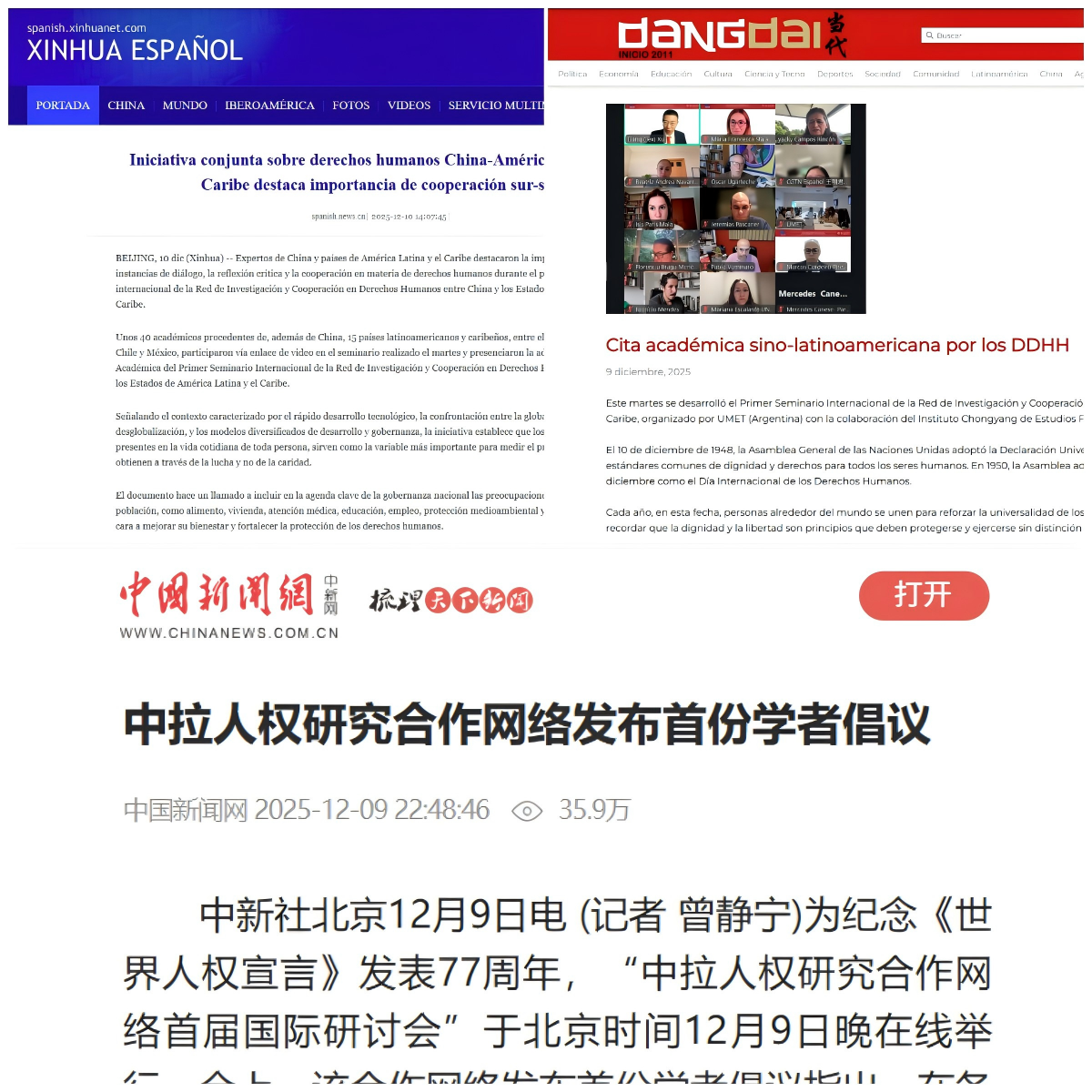
▲部分报道截图如上
会上,中国人民大学重阳金融研究院院长、全球领导力学院院长王文发布了中、西、英三语《中拉人权研究合作网络首届国际研讨会学者倡议》(以下简称“倡议”)。聚焦中拉人权合作实践,发布十项学者倡议。
倡议认为人权非抽象口号,而是社会发展水平的最重要衡量标准;人权应该体现在所有人的日常生活中,倡导共同奋斗而非施舍,履行社会责任。
倡议呼吁各国将食物、住房、医疗、教育、就业、环保与社会保障等人民日常生活最关切问题纳入国家治理核心议题,以着力改善民生提升人权保障。
倡议针对数智鸿沟、气候变化等挑战,提出“数智包容”,呼吁加强对人工智能应用场景的审核与限制,立法要求在人工智能训练、智能算法中增设“人权影响”标签。加大中拉控制气候变化领域合作,为受到气候变化灾难性影响的人群及早提供社会帮助方案。
倡议反对以人权为幌子遏制别国发展、干涉他国内政,支持建立立足国情、基于客观数据和透明方法的学术同行评审机制。建议政、商、学等各领域融入人权视角,高校设置“跨文化人权”实践项目学分、推动学历互认。提议启动青年学者交流项目,聚焦脱贫、人工智能时代人权、数据隐私等议题,以期待推动中国与拉美世界的人权共识,引导全球树立正确人权理念。
倡议认为,人权保障同样需要与时俱进与开放包容。中拉人权研究合作网络将继续做链接中拉人权交流合作的学术桥、政策桥与民心桥,让研究成果走出书斋,总结、提炼和体现中拉20亿人生活实际的人权保障经验。
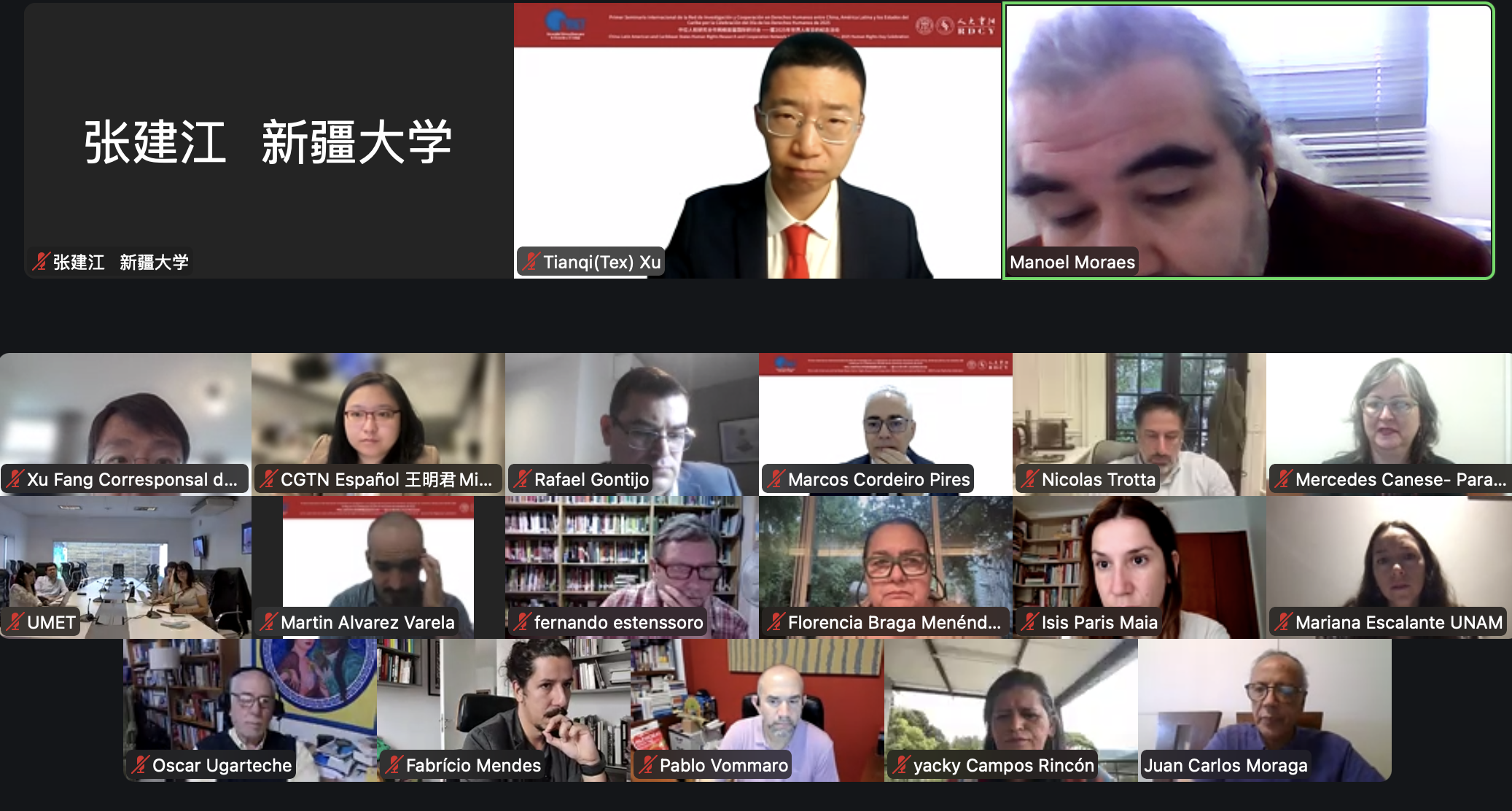
“中拉人权研究合作网络”于2025年7月25日在第二届中拉人权圆桌会上启动,旨在建立信息共享机制、创新推动联合研究、加强人权政策研修、建立案例数据库,以学术交流为纽带,搭建中拉人权研究领域的常态化合作平台。通过信息共享、联合研究、人才培养、经验互鉴等方式,推动中拉人权事业的共同发展,并为全球人权治理体系的进一步完善和发展提供新的智慧与路径。
附《中拉人权研究合作网络首届国际研讨会学者倡议》中文版、西班牙语版及英文版全文:
中文版:
中拉人权研究合作网络首届国际研讨会学者倡议
1948年12月10日,联合国大会通过了《世界人权宣言》,确立了有关人的尊严和基本权利的共同标准。1950年联大通过第423(V)号决议,正式认定12月10日为世界人权日。每年的这一天,世界各地共同纪念,以期坚定人权普遍性的理念、推动世界人权事业不断进步发展。
对于中国、拉丁美洲和加勒比国家而言,尽管发展阶段、历史语境、社会结构有所差异,但面临诸多相似的人权挑战。例如,发展权实现不充分、环境权面临威胁、人权法治保障有待完善等。因此,我们认为,在科技快速发展、全球化与逆全球化交锋、国家发展与治理模式多元化等时代背景下,中拉各方在人权议题上的对话、批判性反思与合作,具有更为迫切的现实意义。
值此2025年世界人权日暨《世界人权宣言》发表77周年之际,中拉人权研究合作网络举办研讨活动,谨向所有为人类尊严奋斗的同行者致敬,并提出如下倡议:
一、我们坚信,人权绝不是抽象或空洞的口号,绝不仅是文本上的法律条文或国际公约宣示,而是现实中集体命运、个体尊严、社会正义与制度责任的交织。在各国追求现代化过程中,人权从不是牺牲品,而是社会发展水平的最重要衡量标准,是中拉各界进行决策行动时需要予以充分考虑的重要事项。
二、正如今年世界人权日主题所示“人权,日常所需”。我们由此认为,人权应体现在所有人的日常生活中。这包括但不限于:获得营养充足的食物、必要的住所、绿色的生态环境,以及获得医疗保健和教育的机会。在目前的社会环境下,应该通过创造更多工作岗位、提升每个人的工作技能、提供必要的社会保障等方式维持上述生活所需。
三、我们认为,“人人充分享有人权”是人类社会的伟大梦想。伟大梦想只有通过各界共同付诸艰辛努力,通过长期奋斗才能够实现。正如《世界人权宣言》第二十九条所强调,“人人对社会负有义务,因为只有在社会中他的个性才可能得到自由和充分的发展。”人人充分享有人权并非唾手可得,也绝非靠他人施舍,而是需要人人共同为之努力奋斗才能够实现。
四、当前,全球面临数智鸿沟对实现普遍与平等人权的风险。我们呼吁各国提高对“数智包容”重视程度,加强对人工智能应用场景的审核与限制,在人工智能训练、智能算法中增设“人权影响”标签,尤其是防止年长者、青少年等群体在情感咨询、投资理财推荐等高风险场景应用中的数字人权保障缺失。
五、全球气候变化持续加速对环境权的威胁。我们建议加大中拉控制气候变化领域合作,加大频率开设中拉应对气候变化能力建设研讨班,加大双方绿色产业的产业链对接。建议各国借鉴彼此经验,根据本国发展实际务实加强环境保护;为受到气候变化灾难性影响的人群及早提供社会帮助方案。
六、当前,一些国家以人权为幌子,企图遏制别国发展、干涉别国内政,我们对此表示反对。人权不应沦为个别国家谋求私利的工具。有尊严的生活、繁荣的社会是所有国家人民在人权领域的共同追求。我们支持建立立足国情、基于客观数据和透明方法的学术同行评审机制。
七、为有效将人权保障融入日常生活中,我们建议,本网络成员在各自的研究、教学、行政管理、企业运营中融入人权视角,在重大议题、重大项目、重大政策建议中坚持对日常生活和弱势群体的权利关注。
八、我们建议本网络中的高校或其他教育机构,在人权相关专业设置“跨文化人权”实践项目学分,加快学生了解其他国家人权观念与主张、人权制度、人权实践。建议推动中拉高校人权相关学分学历互认,共同制订田野调查、人员交流、联合学位等项目与课程设计。
九、今天,我们倡议启动“中拉青年人权学者交流项目”,计划未来三年,鼓励各方派遣30名青年人权学者前往对方区域开展1—6个月的驻地研究,优先主题包括:摆脱绝对贫困与防止返贫、城市灵活就业人员社会保障、人工智能时代下的人权、跨境数据流动与隐私权、生态补偿与当地社区权利等。
十、我们坚信,人权保障需要与时俱进、开放包容。我们承诺,中拉人权研究合作网络将继续做链接中拉人权交流合作的学术桥、政策桥与民心桥,让研究成果走出书斋,总结提炼体现中拉20亿人生活实际的人权保障经验。
让我们携手,以学术与行动并重的方式,以今天的倡议为新起点,把“以人为本、包容共享、可持续”写进每一项公共政策、每一个项目实践、每一堂课堂讨论、每一次算法迭代。让我们共同努力,持续推动彼此人权事业发展,推动“人人充分享有人权”得以实现。
中拉人权研究合作网络
2025年12月9日
西班牙语版:
Iniciativa Académica del Primer Seminario Internacional de la Red de Investigación y Cooperación en Derechos Humanos de China y los Estados Latinoamericanos y Caribeños
El 10 de diciembre de 1948, la Asamblea General de las Naciones Unidas adoptó la Declaración Universal de los Derechos Humanos (DUDH), estableciendo estándares comunes de dignidad y derechos para todos los seres humanos. En 1950, la Asamblea adoptó la Resolución 423 (V), designando formalmente el 10 de diciembre como el Día Internacional de los Derechos Humanos. Cada 10 de diciembre, personas de todo el mundo conmemoran esta ocasión juntas, con el objetivo de reforzar el principio de universalidad de los Derechos Humanos y avanzar en esta causa.
A pesar de las diferencias en las etapas de desarrollo, contextos históricos y estructuras sociales, China y los países de América Latina y el Caribe enfrentan numerosos desafíos similares en materia de derechos humanos: la insuficiencia en el acceso al desarrollo, las amenazas a los derechos medioambientales y la necesidad de mejorar el Estado de Derecho para la protección de los Derechos Humanos. Ante el contexto de rápido avance tecnológico, el choque entre globalización y desglobalización, y la diversificación de los modelos nacionales de desarrollo y gobernanza, creemos que el diálogo, la reflexión crítica y la cooperación en materia de Derechos Humanos entre China y sus socios latinoamericanos tienen una importancia práctica aún más urgente.
Con motivo del Dia Mundial de los Derechos Humanos 2025 y del 77° aniversario de la adopción de la DUDH, la Red de investigación y Cooperación en Derechos Humanos de los Estados Latinoamericanos y del Caribe extienden su más profundo respeto a todos los que defienden los Derechos Humanos y luchan por la dignidad. Y juntos proponemos las siguientes iniciativas:
1. Creemos firmemente que los Derechos Humanos no son ni eslóganes abstractos, ni vacíos, ni meras disposiciones legales en papel o declaraciones en convenciones internacionales. Son la unión del destino colectivo, la dignidad individual, la justicia social y la rendición de cuentas institucional. En la búsqueda de la modernización los Derechos Humanos no deben ser abandonados; más bien, deberían servir como la variable más importante para medir el progreso social y ser considerados principalmente en la toma de decisiones de todos los sectores de China, América Latina y los Estados del Caribe.
2. Como dice el tema de este año, "Derechos Humanos, Esenciales en la Vida Cotidiana" entendemos que los derechos humanos están presentes en la vida cotidiana de todas las personas. Esto significa que los Derechos Humanos son, entre otros: el acceso a una alimentación nutricionalmente adecuada, viviendas dignas, un entorno ecológico verde y el acceso a la salud y la educación de calidad. En el contexto actual del desarrollo social, estas necesidades de la vida cotidiana deben mantenerse creando más empleos, mejorando las habilidades profesionales de los individuos y proporcionando una seguridad social esencial.
3. Creemos que "el pleno disfrute de los Derechos Humanos por parte de todas las personas" representa una gran aspiración para la sociedad humana. Tal visión requiere esfuerzos concertados y arduos de toda la sociedad, y sólo puede realizarse mediante el compromiso y la acción sostenida. Como enfatiza el artículo 29 (1) de la DUDH, "Todos tienen deberes hacia la comunidad en los que solo es posible el desarrollo libre y pleno de su personalidad." El pleno disfrute de los derechos humanos para todas las personas no es fácilmente alcanzable ni una cuestión de caridad; requiere los esfuerzos concertados de cada individuo, pero, sobre todo, políticas públicas orientadas a salvaguardar la dignidad humana.
4. Actualmente, el mundo se enfrenta a riesgos derivados de la brecha de Inteligencia Artificial (IA) y digital, así como de la manipulación de la información, que amenazan la realización de Derechos Humanos universales e igualitarios. Instamos a todos los países a priorizar la "IA e inclusión digital", a reforzar la supervisión y las restricciones sobre los escenarios de aplicación de la IA, y a exigir la declaración de 'impacto en Derechos Humanos' en la formación de los algoritmos de IA. Debe prestarse especial atención a prevenir la pérdida de las protecciones de derechos digitales para grupos vulnerables — como los mayores y jóvenes — en aplicaciones de alto riesgo en pos de brindar un acompañamiento emocional y asesoramiento para inversiones.
5. El mundo también enfrenta amenazas crecientes a los derechos medioambientales derivadas del cambio climático. Recomendamos intensificar la cooperación entre China, América Latina y los Estados del Caribe en la mitigación del cambio climático, aumentar la frecuencia de talleres de fortalecimiento de capacidades sobre respuesta climática y reforzar la integración de la cadena industrial en industrias verdes. Sugerimos que los países contemplen las experiencias de otros para fortalecer pragmáticamente la protección medioambiental basándose en las realidades del desarrollo nacional y proporcionar asistencia social temprana a las poblaciones afectadas por catástrofes ambientales.
6. Dentro de la gobernanza global de los Derechos Humanos, persisten ciertas prácticas problemáticas cuando estos se instrumentalizan para frenar el desarrollo de otras naciones o interferir en su política interna. Nos oponemos firmemente a tales prácticas. Los valores comunes y universales de los Derechos Humanos son el respeto a una vida digna y la búsqueda de la prosperidad para todas las personas en el mundo. Apoyamos y promovemos mecanismos académicos de revisión e investigación del cumplimiento de los Derechos Humanos que den cuenta de contextos específicos de cada país, aceptando la multiculturalidad y garantizando la transparencia metodológica.
7. Para integrar eficazmente la protección de los Derechos Humanos en la vida cotidiana, recomendamos a los miembros de esta Red que incorporen esta perspectiva en su investigación, docencia, gestión administrativa, operaciones empresariales, etc. En pos de priorizar la atención en el cumplimiento de los derechos humanos en la vida cotidiana de los grupos vulnerables en grandes cuestiones sociales a través de proyectos y recomendaciones para políticas públicas
8. Recomendamos que las universidades y otras instituciones educativas dentro de esta Red establezcan proyectos sobre "Derechos Humanos Transculturales" con créditos dentro de programas académicos relacionados a los Derechos Humanos. Esto acelerará la comprensión de los estudiantes sobre las ideas, sistemas y prácticas de derechos humanos de otros países. Sugerimos promover el reconocimiento mutuo de créditos y títulos relacionados con los Derechos Humanos entre universidades chinas, latinoamericanas y realizar conjuntamente diseños de programas y cursos para investigación de campo, intercambio a distancia y títulos conjuntos.
9. Hoy proponemos la creación del "Programa de Intercambio de Jóvenes Investigadores en Derechos Humanos China-América Latina." Durante los próximos tres años, planeamos animar a los miembros de la Red a intercambiar a 30 académicos para realizar investigaciones de residencia de 1 a 6 meses en los países de cada uno. Los temas prioritarios incluyen: erradicar la pobreza absoluta y prevenir la recaída en la pobreza; seguridad social para trabajadores urbanos informales; Derechos Humanos en la era de la IA; los flujos de datos transfronterizos y derechos de privacidad; compensación ecológica y Derechos Humanos de la comunidad local.
10. Afirmamos que la protección de los Derechos Humanos debe evolucionar con los tiempos y abrazar la apertura y la inclusión. Nos comprometemos a que nuestra Red de Investigación y Cooperación en Derechos Humanos entre China, América Latina y el Caribe siga sirviendo como puente académico, puente político y puente entre pueblos para los intercambios de derechos humanos entre nuestras regiones. Nos comprometemos a traducir los hallazgos de la investigación en sistemas y prácticas tangibles de Derechos Humanos que mejoren la vida de 2.000 millones de personas en China, América Latina y el Caribe.
Unamos esfuerzos para profundizar el vínculo entre la teoría y la práctica, y tomemos la “Iniciativa” de hoy como un nuevo punto de partida. Adoptemos juntos los principios de "enfoque centrado en las personas, intercambio inclusivo y sostenibilidad" en cada política pública, cada implementación de proyecto, cada discusión en el aula y cada diseño algorítmico. Trabajemos colectivamente para avanzar en nuestros respectivos esfuerzos en materia de Derechos Humanos y hacer realidad la visión de su pleno disfrute para todas las personas.
Red de Investigación y Cooperación en Derechos Humanos China-Estados de América Latina y el Caribe
9 de diciembre de 2025
英文版:
Joint Initiative of the China-Latin American and Caribbean States Human Rights Research and Cooperation Network 1st International Seminar Scholars
On December 10, 1948, the United Nations General Assembly adopted the Universal Declaration of Human Rights(UDHR), establishing a common standard of dignity and rights for all human beings. In 1950, the Assembly adopted Resolution 423(V), formally designating December 10 as International Human Rights Day. Every year on this day, people around the world celebrate this occasion together, with the purpose of reinforcing the principle of the universality of human rights, and advancing human rights worldwide. On the occasion of World Human Rights Day 2025, and the 77th anniversary of the adoption of UDHR, the China-Latin American and Caribbean States Human Rights Research and Cooperation Network extends its deepest respect to all those who stand guard for human rights, and fight for all human beings dignity!
For China and Latin America and the Caribbean countries, despite differences in stages of development, historical contexts, or social structures, all face numerous similar human rights challenges. These include but not limited to the inadequate realization of the right to development, threats to environmental rights, and the need to improve the rule of law in protecting human rights. We believe that against the backdrop of rapid technological advancement, the clash between globalization and de-globalization, and the diversification of national development and governance models, dialogue, critical reflection, and cooperation on human rights issues among China and Latin American partners hold even more urgent practical significance.
Today, we partner institutions of the China-Latin America Human Rights Cooperation Research Network celebrate International Human Rights Day, and it is also the first formal activity of the Network since its foundations on 2nd China-Latin America Human Rights Roundtable. This year's Human Rights Day theme, "Human Rights, Our Everyday Essentials," inspires us to propose the following shared values, recommendations, and action plan:
1. We firmly believe that human rights are neither abstract nor hollow slogans, nor merely legal provisions on paper or declarations in international conventions. They are the intertwining of collective destiny, individual dignity, social justice, and institutional accountability in reality. In the pursuit of modernization, human rights must not be abandoned; rather, human rights should serve as the most crucial benchmark for measuring societal progress, and the paramount consideration in decision-making across all sectors in China and Latin America and Caribbean States.
2. As this year's Human Rights Day theme states, "Human Rights, Our Everyday Essentials." We thus understand that human rights intrinsically live in quotidian everyday life of all human-beings. These encompass but are not limited to: access to nutritionally adequate food, essential housing, a green ecological environment, and opportunities for healthcare and education. Within the current social developing context, these necessities of life need to be sustained through creating more jobs, enhancing individuals' vocational skills, and providing essential social security.
3.We believe that "the full enjoyment of human rights by all people" represents a grand aspiration for human society. Such a vision requires concerted, arduous efforts from whole society, and can only be realized through sustained commitment and action. As Article 29(1) of the UDHR emphasizes, "Everyone has duties to the community in which alone the free and full development of his personality is possible." The full enjoyment of human rights for all people is neither readily attainable nor a matter of charity; it requires the concerted efforts of every individual but, above all, public policies oriented toward safeguarding human dignity.
4. The world currently faces risks posed by the AI and digital divide and information manipulation, that threaten the realization of universal and equal human rights. We call on all countries to prioritize "AI and digital inclusion," to strengthen oversight and restrictions on AI application scenarios, and require the 'human rights impact' statement in AI training and AI algorithms. Particular attention must be paid to preventing the erosion of digital rights protections for vulnerable groups—such as the elderly and youth—in high-risk applications like emotional counseling and investment recommendations.
5. The world also faces accelerating threats to environmental rights from climate change. We recommend intensifying China-Latin America and Caribbean States cooperation in climate change mitigation, increasing the frequency of capacity-building workshops on climate response, and enhancing industrial chain integration in green industries. We suggest countries draw on other's experiences to pragmatically strengthen environmental protection based on national development realities, and provide early social assistance for populations catastrophically affected by climate change.
6. Within global human rights governance, certain problematic practices persist where human rights are instrumentalized to stifle other nations' development or interfere in their domestic politics. We will jointly oppose such practices. We support academic peer-review mechanisms grounded in country-specific contexts, multilingual data, and transparent methodologies. Human rights cannot function as a facade in the pursuit of universalizing particularistic values. The common and universal values of human rights are respect for dignified life and the pursuit of the prosperity for all people around the world.
7. To effectively integrate human rights protection into daily life, we recommend members of this Network to incorporate a human rights perspective into their respective research, teaching, administrative management, and business operations etc. To prioritize attention to human rights in the daily life, and that of vulnerable groups in major social issues, projects, and policy recommendations. Promote awareness of human rights and broaden the public influence of correct human rights ideology; actively prepare for, participate in, and promote commemorative events such as International Human Rights Day.
8. We recommend that universities and other educational institutions within this Network to establish credit-bearing "Cross-Cultural Human Rights" practical projects within human rights-related programs. This will accelerate students' understanding of other countries' human rights ideas, systems, and practices. We suggest to promote mutual recognition of human rights-related credits and degrees between Chinese and Latin American universities, and to jointly do program and course designs for field research, distance exchange, and joint degrees.
9. Today we propose the creation of the "China-Latin America Young Human Rights Scholars Exchange Program." Over the next three years, we plan to encourage members of the Network to exchange 30 scholars to conduct 1-6 month residency research in each other's countries. Priority themes include: eradicating absolute poverty and preventing relapse into poverty; social security for urban informal workers; human rights in the era of AI; cross-border data flows and privacy rights; ecological compensation and local community human rights.
10. We affirm that human rights protection must evolve with the times and embrace openness and inclusiveness. We pledge that we China-Latin American and Caribbean States Human Rights Research and Cooperation Network will continue to serve as an academic bridge, policy bridge, and people-to-people bridge for human rights communication and cooperation between our regions. We commit to translating research findings into tangible human rights systems and practices that improve the lives of 2 billion people across China and Latin America and the Caribbean.
Let us join hands, balancing academy with action, and take today's "Initiative" as a new starting point. Together, we will embed the principles of "people-centeredness, inclusive sharing, and sustainability" into every public policy, every project implementation, every classroom discussion, and every algorithmic design. Let us work collectively to advance our respective human rights endeavors and realize the vision of the full enjoyment of human rights for all people.
China-Latin American and Caribbean States Human Rights Research and Cooperation Network
December 9, 2025





















 京公网安备 11010802037854号