LATEST INSIGHTS
Your Present Location: LATEST INSIGHTS-
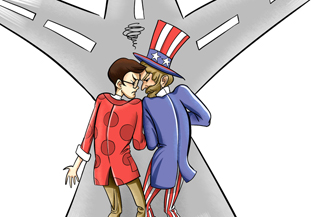
Does Pence's speech signal a new 'Cold War' ?
US Vice-President Mike Pence delivered a speech on Thursday in which he criticized China on multiple fronts. Among other things, Pence accused China of meddling in the US' midterm elections in a bid to undermine the Donald Trump administration. Some have claimed his speech indicates the start of a new "Cold War". What does the speech mean for bilateral ties? Three experts share their views with China Daily's Liu Jianna. Excerpts follow:
2018-10-09 -
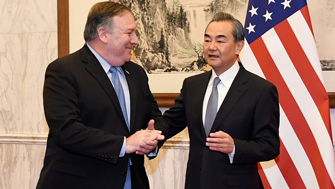
Zhao Minghao: Bamboo curtain will turn iron if US doesn't wise up
Many observers expect the meeting in Beijing between the top diplomats of China and the US to quell tensions amid an escalating trade war and frequent military skirmishes. However, it seems their hopes have fallen through since the talks commenced with deep grievances that leave little room for compromise.
2018-10-09 -
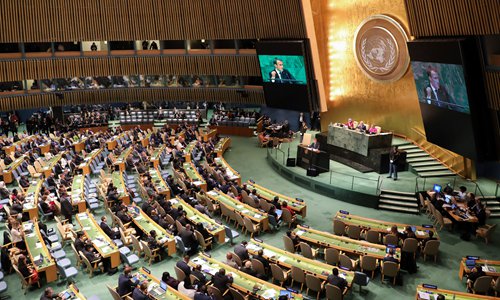
Special payment system to counter US sanctions
China fully supports the EU's proposal to set up a "special payments system" to facilitate trade with Iran and safeguard the Iranian nuclear deal, a move experts say will reduce reliance on the US dollar in global trade and further isolate it from the international community.
2018-10-08 -
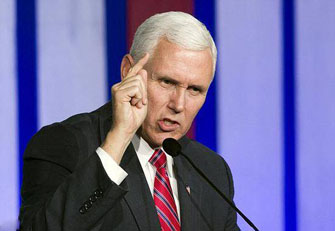
China, US unlikely to engage in a new Cold War
US Secretary of State Mike Pompeo is scheduled to visit China on Monday, following US Vice President Mike Pence's speech which highlighted a more aggressive approach toward China on Thursday.
2018-10-08 -
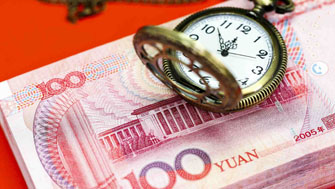
Liu Zhiqin: Chinese yuan must become safer and stronger
The US administration has launched a trade war with China and other major economic powers. We have to realize the fact that the world is changing to a new stage fraught with uncertainties.
2018-10-08 -
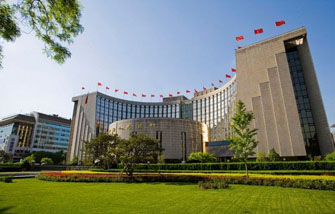
China to cut reserve requirement ratio, with monetary policy unchanged
The People's Bank of China (PBOC) decided on Sunday to cut the reserve requirement ratio (RRR) for RMB deposits by one percentage point starting from Oct. 15, but the stance of China's monetary policy remains unchanged.
2018-10-08 -
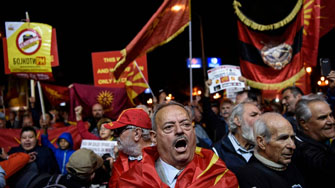
Macedonia's referendum: What's in a name?
The Republic of Macedonia held a non-binding referendum on September 30 to decide whether to change the name of the constitutional state – which has been used since its independence in 1991 – to the "Republic of North Macedonia". Preliminary results released on October 1 showed that 90 percent of voters said "yes", but the turnout was below 50 percent and the referendum may be invalid.
2018-10-08 -
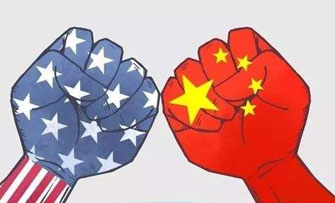
Trade war having negative impact on US economy as deficit widens
The widened US merchandise trade deficit in August shows that US President Donald Trump's trade war has had a negative impact on the country's economy, and more uncertainties loom for the US and world economies, Chinese analysts said on Friday.
2018-09-29 -
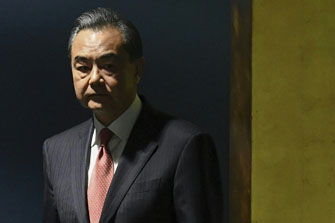
Zhao Minghao: Damage from Trump's trade unilateralism goes beyond China, US
Chinese State Councilor and Foreign Minister Wang Yi called on Friday for stronger actions to defend multilateralism in his speech at the General Debate of the unfolding United Nations General Assembly (UNGA).
2018-09-29 -

Liu Zhiqin: US accusations about technology transfer ring false
Amid all the unfair tariffs and false accusations made by the US to attack China, one claim has been particularly irritating: Western countries have continually accused China of requiring transfer of technology in return for access to its market. The US government has repeated this lie many times to make it sound like the truth. However, it is the Western countries that invented the idea of using technology to gain access to other markets.
2018-09-28 -
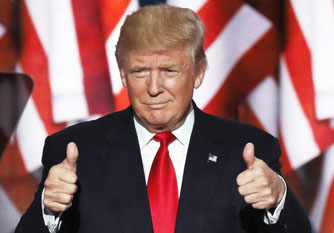
Zhao Minghao: How Trumpism will damage global order
US President Donald Trump's address at the 73rd UN General Assembly (UNGA) has shocked the world again. Trump put it bluntly, "We reject the ideology of globalism and we embrace the doctrine of patriotism." But UN Secretary General Antonio Guterres once said that multilateralism was more vital than ever to tackling dramatic global challenges. French President Emmanuel Macron also addressed the assembly and warned without multilateralism global wars would return.
2018-09-28 -
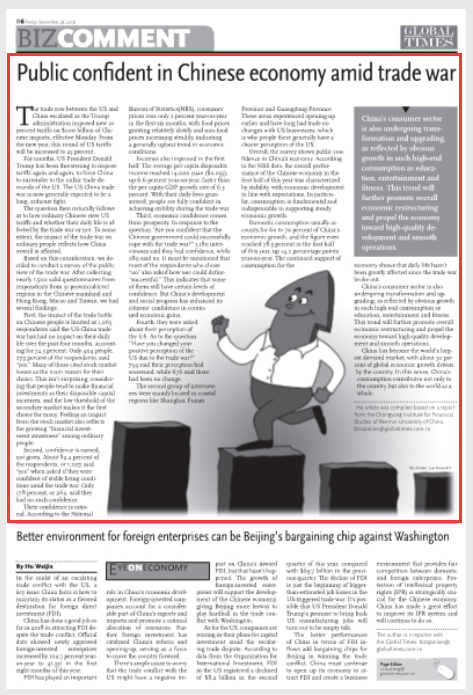
RDCY Report: Public confident in Chinese economy amid trade war
The trade row between the US and China escalated as the Trump administration imposed new 10 percent tariffs on $200 billion of Chinese imports, effective Monday. From the new year, this round of US tariffs will be increased to 25 percent.
2018-09-28 -

China's opening-up pledge leads to tariff cuts, offers foreign firms incentives
The State Council, China's cabinet, announced Wednesday that the government will further cut import tariffs effective November 1, a move that shows China's adherence to further opening-up, said experts.
2018-09-27 -
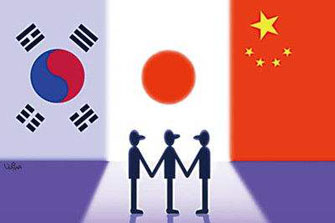
Ding Gang: China-Japan-SK FTA key to ‘Asia for Asians’
After the US began to replace the multilateral rules-based order with a bilateral one and launched one-on-one offensives against global trading partners, officials from China, Japan and South Korea vowed to speed up negotiations for a trilateral Free Trade Agreement (FTA) at a forum in Beijing last week.
2018-09-27 -
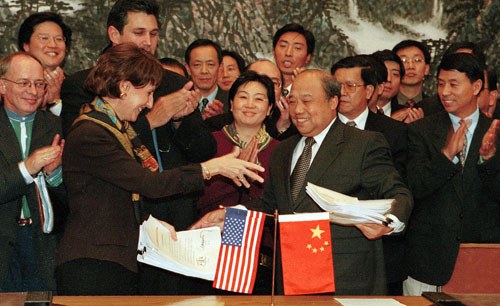
Trump's levies challenge global commerce regime
US President Donald Trump's latest move to impose tariffs on a further $200 billion of Chinese imports is seen by many as a major challenge to the rules-based global trade system.
2018-09-26 -
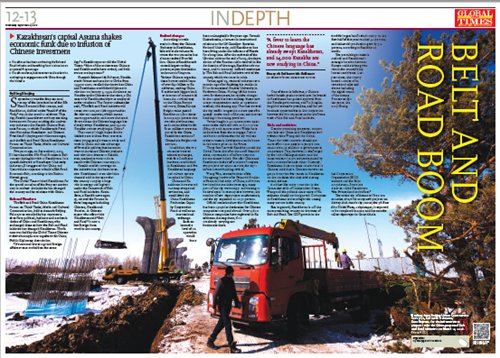
Kazakhstan’s capital Astana shakes economic funk due to infusion of Chinese investment
September 7 was the five-year anniversary of the introduction of the Silk Road Economic Belt concept, and Kazakhstan, dubbed as the "buckle" of the "belt," was in the mood to celebrate. That day, Kazakh journalists were busy traveling between two forums marking the anniversary in Astana: the Kazakh-Chinese Business Forum, to which Kazakhstan's President Nursultan Nazarbayev and Chinese President Xi Jinping sent video messages, and the Belt and Road China-Kazakhstan Forum on Think Tanks, Media an
2018-09-26 -
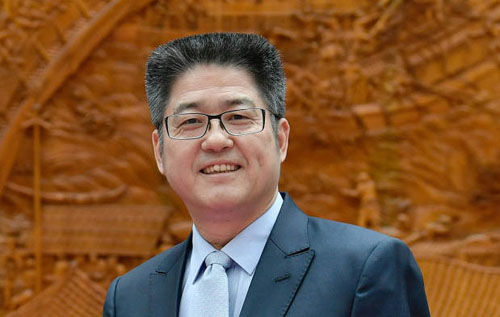
FT interview with Chinese vice-minister for foreign affairs on China’s vision for BRI
In a rare high-level interview on the topic, Le Yucheng, Chinese vice-minister for foreign affairs, has spoken at length to the Financial Times about China’s vision for the BRI.
2018-09-26 -
China, Russia Capable of Outlasting US’ Economic Attacks
The US continues to sanction other countries’ economies, a senior Chinese university scholar told Sputnik Friday, because its own economic growth has stalled. But countries like Russia and China, which know struggle and hardship, can easily outlast the Trump administration, he said.
2018-09-25 -
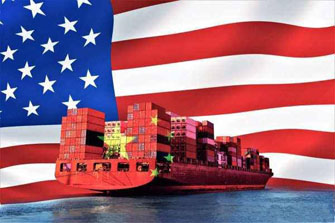
China offers trade friction solutions
China published a white paper on Monday - the same day that US tariffs on $200 billion worth of Chinese goods took effect - to clarify the facts about China-US economic and trade relations and clearly state its stance on trade friction with the US.
2018-09-25 -
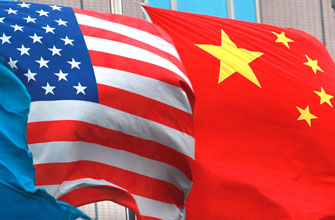
Full Text: The Facts and China's Position on China-US Trade Friction
China published a white paper on Monday to clarify the facts about China-U.S. economic and trade relations, demonstrate its stance on trade friction with the United States, and pursue reasonable solutions.
2018-09-25



























































 京公网安备 11010802037854号


