LATEST INSIGHTS
Your Present Location: LATEST INSIGHTS-

Wang Yiwei: Debt trap label hides anxieties of developed nations
The "debt trap" allegation against China was raised again recently. When delivering a speech at the APEC Economic Leaders' Meeting in Port Moresby, Papua New Guinea, US Vice President Mike Pence claimed that China's assistance to Pacific Island countries has caused debt burdens for the recipients.
2018-11-28 -

Guan Zhaoyu: What do achievements of Sino-Spanish trade ties mean?
This year marks the 45th anniversary of the establishment of diplomatic relations between China and Spain.
In the past 45 years, the two countries have worked together to promote practical cooperation in politics, economy, culture and people-to-people exchanges.2018-11-28 -
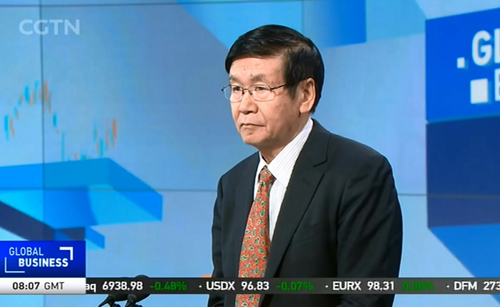
What can be expected from President Xi’s diplomatic tour?
Chinese leader's state visits to Spain, Argentina, Panama and Portugal and attendance to the G20 summit will play a significant role in the international community.
2018-11-27 -
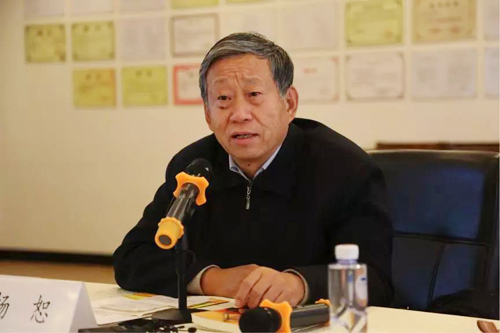
Yang Shu: Why five years is only a start for BRI
"I will not have a lengthy report on what we have achieved as I believe you have heard enough. Instead, I would like to bring to light some of the problems we are currently facing" - Yang Shu, director of the Institute for Central Asian Studies at China's Lanzhou University, started his public lecture on China's Belt and Road Initiative (BRI) in a surprisingly candid way at the Chongyang Financial Institute, Renmin University in Beijing on November 20.
2018-11-27 -

Forum focuses on stronger Sino-EU push for multilateralism
China and the European Union should work more closely to champion peaceful development and multilateralism and combat protectionist pressures amid global geopolitical uncertainties, top opinion leaders said at a forum in Madrid, Spain, on Thursday.2018-11-26 -

Liu Zongyi: Maldives has to walk China-India tightrope
Ibrahim Mohamed Solih was sworn in president of the Maldives on November 17 with Indian Prime Minister Narendra Modi being the highest-ranking foreign leader present. For India, Solih's win is a good opportunity to revive damaged relations with the Maldives. But some Indian media outlets were upbeat that Modi's attendance signaled India had regained influence over the archipelago nation.
2018-11-26 -
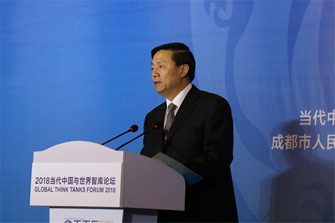
John Ross addresses Global Think Tanks Forum 2018 in Chengdu
The Global Think Tanks Forum 2018 lifted its curtain on Nov. 22 in Chengdu, the capital of China's southwestern province of Sichuan. The forum drew 120 attendees including think tank executives, leading experts, scholars and media representatives from 18 countries and regions to discuss future development of think tanks and their contribution to global governance.
2018-11-23 -

Ding Gang: China focuses on the end, West on means
The New York Times recently published a series of articles on the rise of China starting with "The Land That Failed to Fail." The idea behind these pieces is not complicated. They seek to convey that China's development is beyond the expectations of the West, but it does not believe the development model will last. Therefore, they have taken a wait-and-watch attitude, and are sure to see China reverse course after reaching a certain point. According to their political logic, this day will undoub
2018-11-23 -

Wang Peng: Unilateralism and Protectionism are wearing-and-tearing the APEC platform
It is a pity that the Asia-Pacific Economic Cooperation (APEC) 2018 in Papua New Guinea (PNG) ended without a formal joint statement for the first time since its birth in 1989 and the “Leaders’ Meeting” upgraded in 1993.
2018-11-23 -

Wang Yiwei: China-EU cooperation can safeguard WTO rules
The China-US relationship has drawn increasing attention from the international community. Some observers claim that amid what looks like a prolonged trade war, China and the US will compete to rally support.
2018-11-21 -
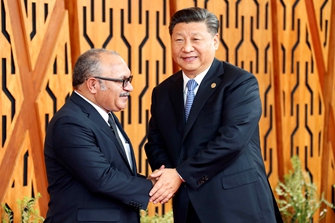
Wang Peng: Creating an Asia-Pacific community of shared future benefits all participants
Chinese President Xi Jinping emphasized the importance of cooperation and openness at the 2018 Asia-Pacific Economic Cooperation (APEC) CEO Summit in Port Moresby, Papua New Guinea on Saturday.
2018-11-20 -
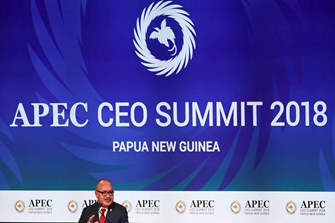
Guan Zhaoyu: Build an open Asia-Pacific through APEC and BRI
The 2018 Asia-Pacific Economic Cooperation (APEC) Leaders' Week is underway in Papua New Guinea from November 12 to 18, while Chinese President Xi Jinping will attend the APEC leaders' meeting from 17-18.
2018-11-20 -

Liu Ying: Amity, not rivalry, good for Sino-US ties
China and the United States are partners, not rivals, in trade, and the Sino-US relationship is one of the most important bilateral relationships in the world. Cooperation between China and the US since the establishment of Sino-US diplomatic relations almost four decades ago has benefited the peoples of both countries, as well as the people in the rest of the world.
2018-11-19 -
Promoting inclusive growth
CGTN was joined in studio by Mr. Liu Zhiqin, senior fellow at the Chongyang Institute for Financial Studies at the Renmin University of China. He said Pence is setting a fire while China is extinguishing the fire.
2018-11-19 -

Scholar praises China’s economic take-off during 40 years of reform and opening-up
China's record in poverty reduction since reform and opening-up is without parallel in human history, a UK expert has said in an interview with Xinhua News Agency.Since China started the reform and opening-up drive nearly four decades ago, over 700 million Chinese have shaken off poverty, accounting for over 70 percent of the global poverty reduction during the period.
2018-11-19 -
Wang Peng: Australia expresses concern about China's involvement
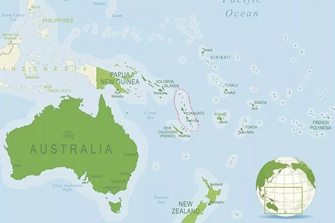
As China steps up its cooperation with the Pacific region, Australia is expressing concerns. Wang Peng, an associate researcher at Renmin University of China, explains why accusations that Beijing is trying to turn the region into a diplomatic battlefield are groundless.
2018-11-16 -

Tailored support can boost private economy
President Xi Jinping's recent speech on the private economy has boosted confidence in the private sector as well as China's economy. But what difficulties nonpublic enterprises face and how can they be resolved? Four experts share their views on the issue.
2018-11-16 -
Chen Dingding: For China, how much will the outcome of the US mid-term elections matter?
The highly anticipated U.S. midterm elections are finally through. Although some votes are still being counted or recounted, the main result seems to be clear: the opposition Democratic Party has regained the control of the House while the Republican Party retains its majority in the Senate.
2018-11-16 -

Wang Peng: Pacific islands value China cooperation, see no threat
The 2018 Asia-Pacific Economic Cooperation (APEC) Economic Leaders' Week is taking place from November 12-18 in Port Moresby, Papua New Guinea.
2018-11-16 -
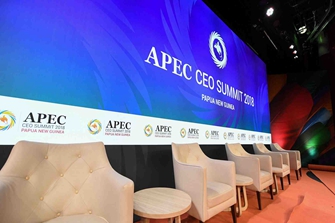
Chen Chenchen: Inclusive growth a lightning rod against Asia-Pacific uncertainties
The leaders, ministers, and officials of the APEC member economies are gathering in Port Moresby, capital of Papua New Guinea this week, aiming to provide policy stimulus for Asia-Pacific trade and development.
2018-11-15



































































 京公网安备 11010802037854号


