LATEST INSIGHTS
Your Present Location: LATEST INSIGHTS-

Liu Zongyi: On key Tibet anniversary, India needs to see reason on Dalai question
This year marks the 60th anniversary of democratic reforms in Southwest China's Tibet Autonomous Region. It is also the 60th anniversary of the 14th Dalai Lama fleeing from China into India. As an old issue between Beijing and New Delhi, the dispute over the 14th Dalai Lama has lasted for six decades. It was caused by a series of mistakes made by Indian politicians and strategists, including first prime minister Jawaharlal Nehru, in cultural, political, historical and defense contexts.
2019-03-28 -
Ding Gang: How will Brexit reshape China-EU relations?
Two major happenings have been reverberating in European media. First, the UK is in deep trouble over Brexit, which has caused political instability in the country. Second, this week's visit of Chinese President Xi Jinping to Italy and France has drawn headlines.
2019-03-28 -
More countries will participate in BRI
More countries will join the China-proposed Belt and Road Initiative (BRI), a senior Italian official told the Global Times on Wednesday, following Chinese media reports that two more G7 countries prepared to join.
2019-03-28 -
China, EU move to further improve relations
Chinese President Xi Jinping is scheduled to meet with the leaders of France, Germany and the EU during his visit to France, and experts said on Monday that if core members of the EU want to strengthen their unity, they need to be pragmatic and independent on policymaking, rather than submit to pressure from foreign forces and be more defensive toward China.
2019-03-28 -
Germany willing to actively participate in the 2nd BRI forum
Chinese President Xi Jinping held "unprecedented" talks on building new global governance with French President Emmanuel Macron, German Chancellor Angela Merkel and EU Commission President Jean-Claude Juncker on Tuesday in Paris.
2019-03-27 -
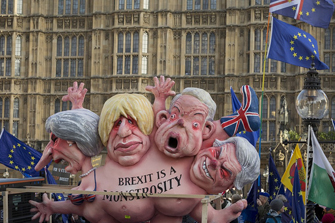
Wang Peng: What leads to Brexit's chaos?
The Brexit process is seen as a total "mess" in many people's words. Some have blamed Theresa May and her poor negotiating strategy for the current impasse in Brexit, and some blame the EU. What has caused this Brexit chaos?
2019-03-27 -
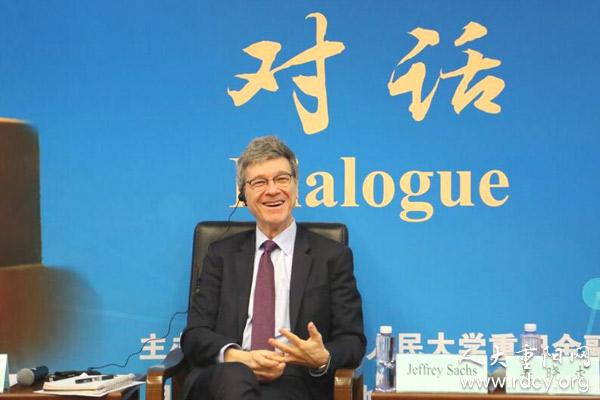
China should lead with sustainable development
Sustainable development means the idea of economic development that is socially equitable and environmentally sustainable. It is the idea of combining three objectives: economic growth, social justice and environmental sustainability.
2019-03-27 -
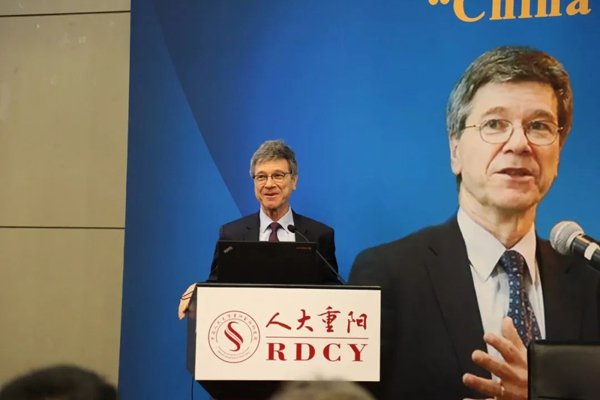
Is Thucydides wrong when it comes to China and U.S.?
Over the course of history, 12 out of 16 cases where rising powers confronted established powers ended up in war, from the Peloponnesian War to the most recent World War II. The world has remained peaceful for seven decades under a post-war international order, up until very recently, when the United States perceived the "threat" of a China that is rising meteorically.
2019-03-26 -
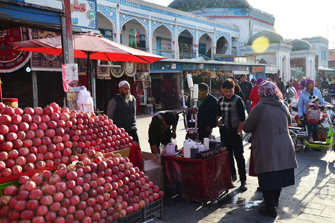
Liu Yushu: Fight against extremism in Xinjiang includes improving lives of residents
Some Western media outlets have been notoriously spreading rumors about Xinjiang Uyghur Autonomous Region for a long time. On March 18, China's State Council Information Office published a white paper titled "The Fight against Terrorism and Extremism and Human Rights Protection in Xinjiang," which shows how the country has tried to prevent separatist activities in Xinjiang.
2019-03-26 -

Long Xingchun: The US only hurts itself by pointing fingers at China-proposed BRI
The United Nations Security Council extended the mandate assistance mission in Afghanistan on March 15. Unlike before, it only gave a six-month extension rather than one year. The reason for the shorter extension is that the US opposed China's attempt to write the Belt and Road Initiative (BRI) into the resolution. Wu Haitao, China's Deputy Permanent Representative to the UN, described the smear by the US regarding the BRI as "contrary to the facts and fraught with prejudice."
2019-03-26 -

Li Wei: Closer Vietnam relations will eliminate uncertainties
Last year was marred by a series of economic shocks. In 2018, the World Trade Organization faced an unprecedented crisis, and the global trade order suffered clashes because of a tariff war launched by the US.
2019-03-26 -
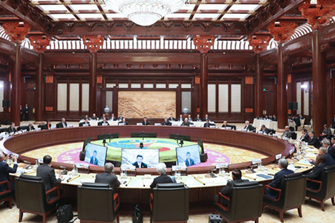
Wang Peng: China's BRI not a 'debt trap' but a shared 'economic pie'
The Belt and Road Initiative (BRI) has become the world's largest platform for international cooperation and one of the most well received programs promoting global public good since it was proposed in 2013. As many as 123 countries and 29 international organizations have signed BRI cooperation agreements with China, showing their support and confidence in the program.
2019-03-25 -
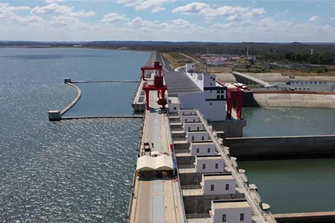
Yang Fanxin: Global BRI cooperation signals the next stage of China's opening up
As part of China's opening up drive in the new era, the Belt and Road Initiative (BRI) has aroused interest around the world and won widespread international participation as a result of its inclusive, win-win nature.
2019-03-25 -
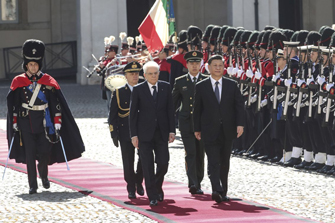
Jean-Guy Carrier: China-Italy agreement opens new path for Europe
The visit by President Xi Jinping to Italy, Monaco and France will be a turning point in relations between China and the European Union (EU) because it will highlight a different approach to financing Belt and Road Initiative (BRI) more in line with EU rules and expectations.
2019-03-25 -
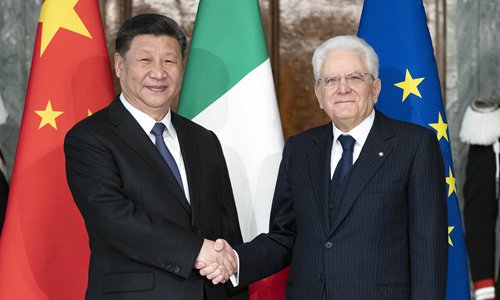
Italy’s support on BRI could be a good example for EU to follow
China and Italy are scheduled to sign a memorandum of understanding (MOU) on the Belt and Road Initiative (BRI) on Saturday during Chinese President Xi Jinping's visit to the country, which experts believe will have a positive demonstration effect on other European countries.
2019-03-25 -
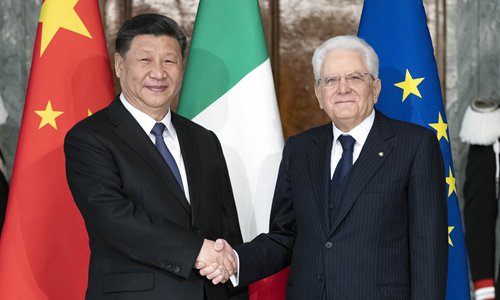
Italy’s support on BRI could be a good example for EU to follow
China and Italy are scheduled to sign a memorandum of understanding (MOU) on the Belt and Road Initiative (BRI) on Saturday during Chinese President Xi Jinping's visit to the country, which experts believe will have a positive demonstration effect on other European countries.
2019-03-25 -
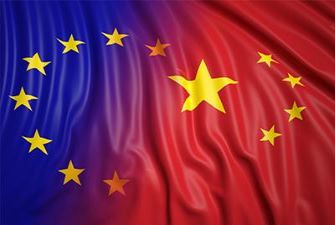
Cooperation or competition – a look at the future of China-EU ties
On Monday, Chinese Foreign Minister Wang Yi attended the ninth China-European Union High-Level Strategic Dialogue. The foreign minister later said that there will be more cooperation, stability, and connectivity in the world as China strengthens its ties with the European Union.
2019-03-22 -

Boeing crisis will not be a barrier in Sino-U.S. deal
The eighth round of Sino-U.S. high-level trade consultation talk is expected to be held in Beijing on March 28-29. A U.S. delegation led by U.S. Trade Representative Robert Lighthizer will fly to China to further discuss trade issues with the Chinese side. Chinese Vice Premier Liu He has been invited to the U.S. for the ninth round of talks in early April, said Chinese Ministry of Commerce spokesperson Gao Feng on Thursday.
2019-03-22 -
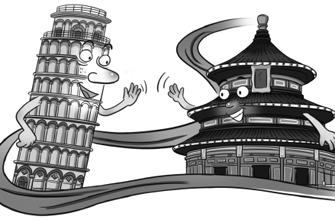
BRI a new source of growth for EU
President Xi Jinping is paying a visit to Italy, Monaco and France from March 21 to 26. During his visit to Italy, Beijing and Rome are likely to sign a memorandum of cooperation under the Belt and Road Initiative despite the efforts of the United States to prevent Italy from joining the BRI. What has prompted Italy to join the initiative? And will other major European countries follow Italy's example to join the initiative? Five experts share their views on the issue with China Daily's Liu Jianna.
2019-03-22 -
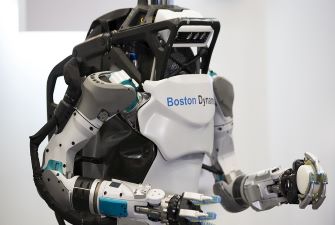
From AlphaGo to Atlas: The warning signs
Last year, MIT's Cheetah 3 robot attracted widespread concern around the world. MIT's Cheetah 3 robot can now leap and gallop across rough terrain, climb a staircase littered with debris, and quickly recover its balance when suddenly yanked or shoved, all while essentially blind.
2019-03-22








































































 京公网安备 11010802037854号


