LATEST INSIGHTS
Your Present Location: LATEST INSIGHTS-
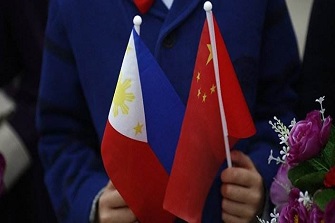
Beijing and Manila can be closer friends
Philippine President Rodrigo Duterte begins his five-day visit to China on Wednesday, the fifth since he took office in June 2016. During his visit, the two sides are also expected to discuss many issues. Two experts, Song Wei and Wang Yiwei, share their views on Duterte's visit and Sino-Philippine ties.
2019-08-28 -
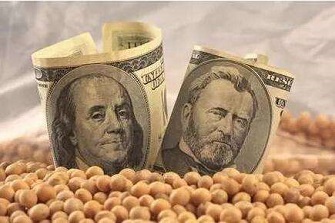
Zhao Minghao: Trump administration's 'ostrich mentality' towards the trade war
the White House's chaotic decision-making process is out in the open. The U.S., China and the entire world economy have to pay a huge price for it. The Trump administration needs to own its mistakes and return to the negotiation table with sincerity as soon as possible. This is the only right path to go down.
2019-08-28 -
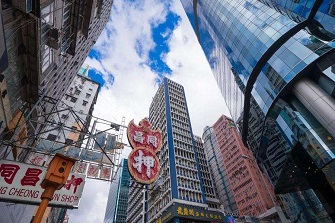
HK turmoil stirring recession fears
Experts say restoring order key to halting economic damage and global spillover. Leading financial agencies, economists worldwide and Hong Kong officials have issued fresh warnings on the city's potential for recession and the spillover effects on the global economy, as the monthslong turmoil in the key trade hub continues to dampen market confidence and disrupt business operations.
2019-08-28 -
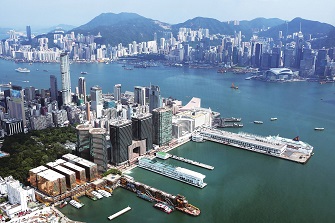
Zhang Jingwei: 'Color revolution' stands no chance of success in HK
In the past two months or so, Hong Kong has witnessed intensifying violence on its busy streets by mindless rioters. Their illegal acts have seriously affected people's daily lives with traffic jams and a paralyzed Hong Kong International Airport. They have also grossly violated the basic human rights of other people while damaging Hong Kong's image in addition to trampling on freedom of the press. These illegal acts indicate that not only has the anti-legislation campaign against the extradition-law amendments gotten out of control, but also has shown signs of terrorism and even a "color revolution".
2019-08-27 -
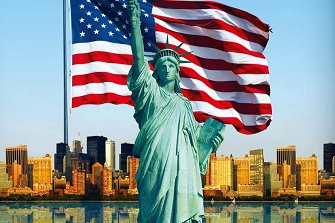
Wang Wen: Clout eroded as US shirks intl duties
A few months ago, I attended a thematic seminar in Europe on global governance. The organizers invited representatives from think tanks of more than 10 countries. At the end of the discussion, a few delegates realized there were no US scholars present. Last year, at a seminar in Istanbul, when it came to discussing the next steps in the Middle East and the role of the US, one scholar told the US delegates that the best way for the Middle East to grow is for the US to exit the region. Both experiences inspired me to ask, is the US still playing an important role on the world stage?
2019-08-27 -
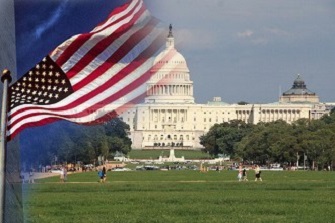
Liu Zhiqin: The US needs to redefine its role in the world
What will the world be like without the US? So far no think tank has touched this topic and no one has been seriously considering it. However, it is a question which calls for attention and in-depth study. It will be a big challenge, but one that is unavoidable.In fact, what the world needs is a new US - a country without prejudice and ruthlessness, a country that consistently acts on its word, and a country that respects others. The world will be fortunate if the US can become this country.
2019-08-27 -
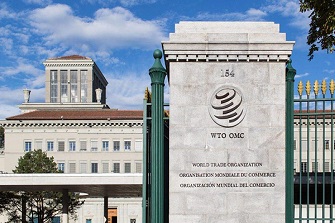
He Weiwen: US threat to WTO won't get it anywhere
The US leader signed a memorandum on July 26, directing the Office of the United States Trade Representative to stop treating "advanced economies" such as China as developing countries according to the World Trade Organization's rules, and urging the WTO to change its definition for developing country within 90 days. But since major reforms to the WTO require consensus (in effect unanimity) among all members, the world trade body cannot change the definition, even if it wants to.
2019-08-26 -
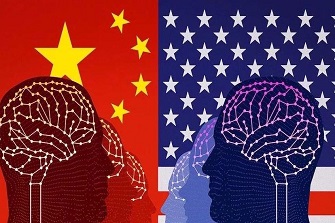
Zhao Minghao: US approach to Hong Kong problem puts trade negotiations in trouble
Recently, US officials, including President Donald Trump, Vice President Mike Pence and Secretary of State Mike Pompeo have commented on the Hong Kong situation on different occasions. Trump warned China on August 18 that violent crackdown on the protests in Hong Kong would harm trade talks with the US. Expected to be held in September, the 13th round of China-US trade talks is still subject to uncertainty. If the US continues to step up its interference in the Hong Kong affairs, it would become more difficult to reach an agreement between the two countries to end the trade war.
2019-08-26 -
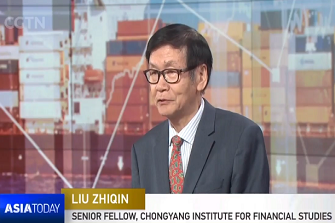
Trump jacks up tariffs on Chinese imports in latest tit-for-tat move
China imposes new tariffs on $75 billion in U.S. imports, which is considered a retaliatory countermeasure from Beijing. This is following U.S. President Donald Trump's announcement of a 10-percent tariff on 300 billion dollars' worth of Chinese goods. Liu Zhiqin, a senior fellow at Chongyang Institute for Financial Studies, said the tariff war will not make America richer and America has to realize how it is hurting the world economy.
2019-08-26 -
U.S. may not be the beneficiary of its own tariff hikes
The U.S.' latest move of levying another 10 percent tariff on Chinese goods has triggered a quick response from China. Leading Chinese scholars on Friday gathered at a panel discussion in Beijing to discuss the impact of the U.S. tariffs. Some experts argued the U.S. may not be the beneficiary of its own tariff hikes as it claims.
2019-08-23 -
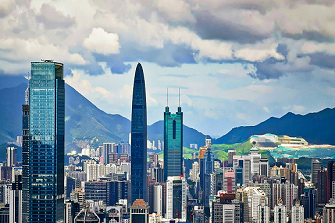
Shenzhen: Reform pioneer takes on new mission
Being the birthplace of China's reform and opening-up policy and a breeding ground for innovation in the past four decades, Shenzhen is taking yet another step forward. The southern Chinese city will transform into a competitive, innovative and influential global powerhouse by the mid-century, demonstrating socialism with Chinese characteristics, according to new guidelines released by the Chinese government last Sunday.
2019-08-23 -
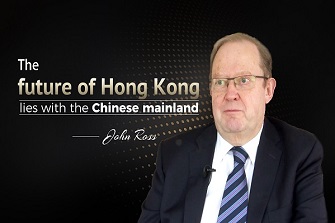
John Ross: The future of Hong Kong lies with the Chinese mainland
Hong Kong is now in its eleventh consecutive week of mass protests. The violent clashes between police and protesters have grabbed global attention. John Ross shares his views on the issue on CGTN.
2019-08-22 -
Big Four accounting firms assailed on HK stance
People who claim to be employees of the Big Four accounting firms - KPMG, Ernst & Young (EY), Deloitte and PricewaterhouseCoopers (PwC) - in Hong Kong have crowd-funded an advertisement in the city's Apple Daily to denounce statements made by senior executives of their firms and whitewash arrested rioters as "righteous guys" as increasingly violent protests bring huge damage to the city.
2019-08-22 -
John Ross: The future of Hong Kong lies with the Chinese mainland
Hong Kong is now in its eleventh consecutive week of mass protests. The violent clashes between police and protesters have grabbed global attention. John Ross shares his views on the issue on CGTN.
2019-08-22 -
Ding Gang: Can religious identity bring unity to India?
The Indian government has abolished the special status for India-controlled Kashmir and decided to split the region into two union territories to be directly ruled by the central government. Indian Prime Minister Narendra Modi had vowed to do so during his campaign for the 2014 election. During the general election 2019, Modi's Bharatiya Janata Party (BJP) again promised to revoke Kashmir's special status. Such moves have intensified tensions in the region.
2019-08-22 -
Zhang Jingwei: Sino-US relations enter ‘new normal’ stage
As the Group of Twenty summit in Osaka concluded, US President Trump agreed to allow American companies to sell their products to Chinese tech giant Huawei Technologies. The results of the meetings between Chinese President Xi Jinping and Trump ended up being rather gratifying. Trade conflicts between China and the United States have been going on for more than a year, with the conflicts extending to the fields of science and technology, and with the US landing big hits by imposing tariffs on goods worth at least US$250 billion.
2019-08-21 -
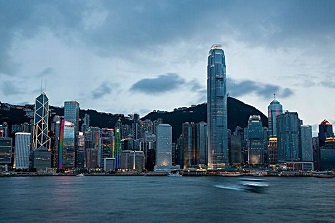
Politicians told HK not a chip for bargaining
Chinese officials and experts have urged politicians in the United States to stop using the situation in Hong Kong as a bargaining chip for negotiations or as leverage for fueling competition with Beijing. Senior politicians such as US Vice-President Mike Pence and House Speaker Nancy Pelosi have spoken out on or pushed legislation concerning the recent violent protests in the city. Pence angered China on Monday by telling the Detroit Economic Club that "for the United States to make a deal with China", Beijing needs to "respect the integrity of Hong Kong's laws".
2019-08-21 -
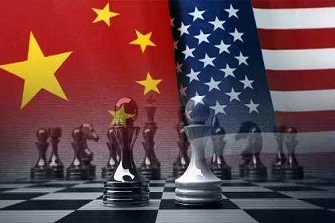
Zhang Jingwei: Equal dialogue key in Sino-US trade talks
The leaders of China’s and the United States’ economic and trade consultation teams spoke over the phone on the evening of July 9 on the implementation of the consensual exchanges agreed by the two nations at the recent G20 summit. The Americans appear to be showing goodwill for the upcoming round of talks. The US Department of Commerce has announced that it will partially lift the Huawei ban by removing restrictions on exports to the firm and eliminating tariffs on 110 Chinese products that were previously hit with a 25% levy.
2019-08-21 -
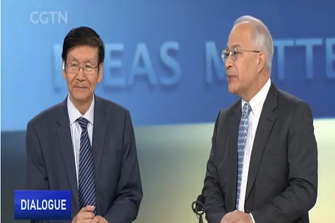
Are China-U.S. trade talks back on track after Trump's suspension of some tariffs?
The United States announced on Tuesday that it will suspend certain tariffs on a range of Chinese imports until mid-December for "health, safety and national security" factors, while saying that the 10-percent tariff on other items will go into effect as planned on September 1. As the next round of trade talks is scheduled to take place in September, does the announcement by the Office of the United States Trade Representative (USTR) raise hopes for further progress?
2019-08-20 -
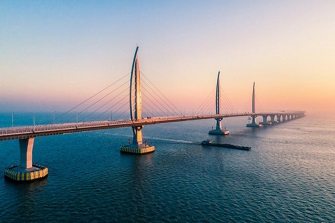
Wang Wen: China and world can learn from each other
From this week, Wang Wen, Executive Dean of RDCY, opened the new column “Wang Wen on Changing World” in Global Times (English edition). The first artical "China and world can learn from each other" was published on August 20, 2019.
2019-08-20



































 京公网安备 11010802037854号


