LATEST INSIGHTS
Your Present Location: LATEST INSIGHTS-

Ding Gang: Buddha’s birthplace hints at Asian century
All planes flying from Kathmandu to Lumbini in southwestern Nepal are air minibuses. Shortly after the aircrafts take off, what heaves in sight is usually undulating mountains on the edge of the mighty Himalayas. Only half an hour later, passengers could see an immense plain. It is a gateway to the core of Indian civilization. Google Maps shows the driving distance from Lumbini to New Delhi is about 800 kilometers.
2019-11-28 -

William Jones: Will Democrats' rush to impeach secure Trump's re-election?
The United States was subjected to a week of hearings in the House of Representatives by the House Intelligence Committee attempting to make the point that President Donald Trump was unfit for office and should be impeached. The issue was an alleged attempt by the president to use promised military aid as a "wedge" to get the newly elected Ukrainian president, Volodymyr Zelensky, to investigate the role of Hunter Biden, the son of one of his Democratic challengers in the 2020 election, in alleged payoffs from the Ukrainian firm Burisma.
2019-11-28 -
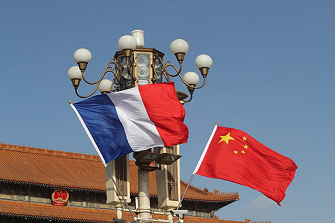
Sino-French cooperation advances with tangible results across many dimensions
Located in downtown Shanghai, Yuyuan Garden, which was built during the Ming Dynasty (1368-1644), is a classical Chinese garden with an exquisite design. On the evening of November 5, Chinese President Xi Jinping and his wife Peng Liyuan invited visiting French President Emmanuel Macron and his wife Brigitte Macron to tour the garden and have dinner at one of its pavilions. Macron began his second state visit to China in Shanghai on November 4. During his three-day trip, he attended the Second China International Import Expo (CIIE) in Shanghai and held talks with Xi in Beijing.
2019-11-27 -
Wang Wen: China not in a position to lead the world
Global governance has reached its most complex period in history. Against this backdrop, new ideas have emerged in the world - some people hope that China can replace the US to become the new global leader. However, I often tell some of my foreign friends not to expect too much from China. China has not yet walked out of the middle-income trap. China does not have that strength and foundation. China has not yet acquired the experience and ability for a global leader. China has neither the will nor the strategy to become a new global leader.
2019-11-26 -
Trade dispute hurting global economy
There are increasing fears that the trade dispute between the United States and China could further destabilize the global economy. The 19-month-long standoff is already hitting US consumers and the country's agricultural sector in particular, as well as affecting business confidence in China.
2019-11-22 -
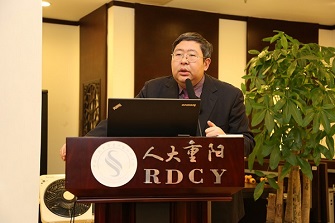
Jia JInjing: The development of productive forces in 70 years
On October 31st, the eighth lecture of "The 70th Anniversary of the Founding of The PRC" series which hosted by Chongyang Institute for Financial Studies of Renmin University of China (RDCY) and Huanqiu Web, was held at RDCY. Jia JInjing, assistant to the Dean of RDCY and director of the Marco Research Department, delivered a keynote speech on "The development of productive forces in 70 years". The lecture was hosted by He Si, the director of the Office of RDCY. More than 100 guests attended the lecture.
2019-11-22 -
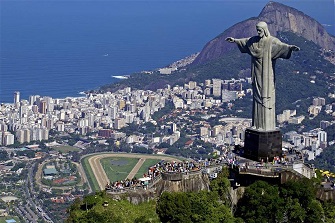
Ding Gang: Latin American woes stem from globalization
Contrary to popular belief, it is not doctrines that are dominating Latin American politics, but globalization. If we still use neoliberalism or any other concept invented by Western scholars to explain what Latin America is passing through, our understanding of the continent may not be right. We can only understand the problems of Latin American countries by observing them in an already globalized world, especially comparing them with Asian countries.
2019-11-21 -
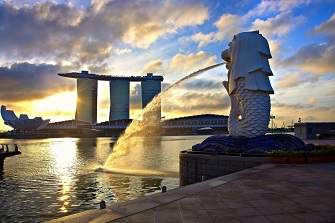
China will enhance cooperation with Singapore, eyes further financial openness
China will support Singapore to become one of the international financial centers for offshore yuan trading, said an official from China's central bank on Monday, according to media reports.Analysts say the move symbolizes further internationalization of the yuan and shows that China is more open to foreign capital.
2019-11-20 -
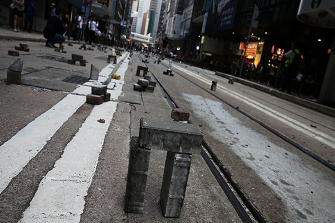
William Jones: The source of Hong Kong's problems lies in Washington
While President Trump maintains a guarded silence on the violence in Hong Kong, and is getting hit by much of the conservative press for his not speaking out "in support of" the bomb-throwers on Hong Kong streets, many of his underlings are playing these provocations to the hilt, just stopping short of breaking with the President's hope that this all will end peacefully.
2019-11-20 -

Wang Wen: Witnessing progress through wheels of time
Nevertheless, from these trips I have recognized that history is unpredictable. The transformation from glory to decay, and from unity to division is always hard to notice. The political unrest in Chile and the Hong Kong Special Administrative Region of China in 2019 has further proven this. Under such metamorphosis, China's rise has reached a moment that is the nearest to the country's great rejuvenation. The Chinese need to observe the world more carefully, remain humble and take lessons from those once powerful major countries and emerging economies.
2019-11-19 -

State media warns of blockchain speculation
Several listed companies have been suspected of speculating on blockchain technology, the Xinhua News Agency reported on Monday. Over 500 of China's 3,000-strong listed firms said they are legitimately connected to blockchain technology, but only 40 can substantiate their claims with full disclosure and concrete business, Xinhua reported. Warning of rising pressure on the behalf of regulators, the report comes at a time when listed firms have claimed they use blockchain technology for their business.
2019-11-19 -
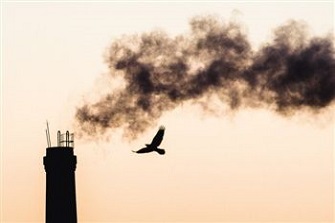
US begins Paris climate accord exit
The United States started the process of pulling out from the Paris Agreement on Monday, the first formal step in what will take a year to exit the global pact to fight climate change. Its actions will undermine the international solidarity in coping with the threat from global warming, analysts said. US Secretary of State Mike Pompeo said on Monday that he had filed a formal notice to the United Nations, starting the process.
2019-11-19 -

How the BRI could help Pacific island countries combat climate change
With snow white sandy beaches and startlingly blue water teeming with coral and fish, Pacific island countries are often considered to be paradise on earth. But with climate change and the related rise in sea levels looming, the existence of many such islands are under threat.
2019-11-18 -
HK govt promises justice after rioters attack elderly man
Wang Yiwei was interviewed on China Plus Vedio.
2019-11-15 -
Ding Gang: Chinese-foreign co-production documentary on 70th PRC founding anniversary makes global debut
The biggest birthday party the world has ever seen is being held this year as nearly 1.4 billion people across China are marking the 70th anniversary of the founding of the People's Republic of China with a year-long celebration.
2019-11-15 -
Dong Shaopeng: US pension fund backs A-share investment
A US federal retirement fund has decided to stick to its original plan of investing in the Chinese mainland's A-share markets despite fierce opposition from some US senators amid the two countries' prolonged trade row.
2019-11-15 -
Ding Gang: Many questions for India after temple verdict
The Indian Supreme Court's decision on Saturday made history by clearing the decks for the construction of a Hindu temple by giving the ownership of a disputed plot of land at Ayodhya in the northern state of Uttar Pradesh to Hindus.
2019-11-14 -
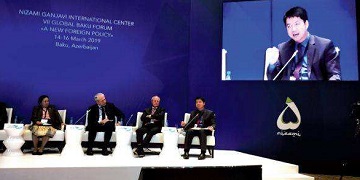
Wang Wen: ‘Gn’ shows how power structures shape new intl governance mechanism
It is hard to imagine that Azerbaijan, a country that ranks above 90 in terms of area and population, has such a global appeal, if you haven't taken part in Global Baku Forum. I almost thought President Ilham Aliyev was the leader of a superpower, when he stood in the center of more than 40 former presidents and prime ministers from more than 30 countries and posed with them for pictures at the opening ceremony.
2019-11-12 -
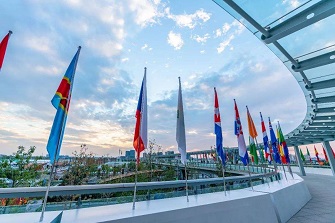
William Jones: Media and think tanks join hands to combat 'fake news' about China
Around 270 representatives of think tanks and media organizations from 99 countries gathered in Shanghai on November 6 and 7 for the second Hongqiao International Economic Forum on China's 70-year Development and the Building of a Community with a Shared Future for Mankind, to discuss the significance for the world of China's road to prosperity over the last 70 years and celebrate the success of the Belt and Road Initiative (BRI).
2019-11-11 -
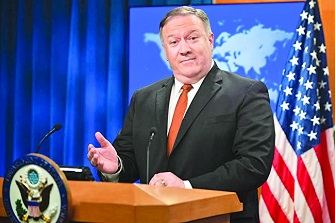
Pompeo slammed for slandering CPC
On the day celebrating the 30th anniversary of the fall of the Berlin Wall, US Secretary of State Mike Pompeo viciously attacked China in his speech in Berlin, trying to build a new Cold War wall, which observers find ironical. Experts slammed him for neglecting his duty as the US' chief diplomat, saying he doesn't deserve his status. Pompeo said in his speech in Berlin on Friday that China's tactics would be "horrifyingly familiar" to the former East Germans, claiming "free nations" are in a "competition of values" with "less free nations."
2019-11-11







































 京公网安备 11010802037854号


