LATEST INSIGHTS
Your Present Location: LATEST INSIGHTS-
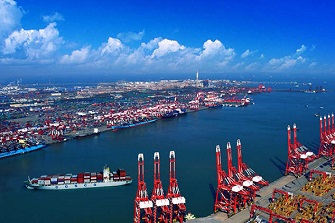
Progress on the Belt and Road Initiative: a four-year evaluation
Progress on the Belt and Road Initiative: a four-year evaluation is included in Regional Connection Under the Belt and Road Initiative: The Prospects For Economic and Financial Cooperation edited by Fanny M. Cheung and Ying-yi Hong which was publish by Routledge in New York in 2019. The author is Wang Wen, the executive dean of RDCY, Jia Jinjing, the director of the Marco Research Department of RDCY, Xiang Junyong, the research fellow of RDCY and Liu Ying, the research fellow of RDCY.
2019-12-10 -
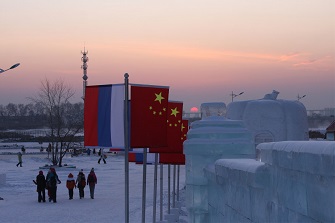
Wang Wen: Russia, China need strategic reassurance
Over the past three years, I have worked with Glazyev to promote seven rounds of China-Russia economic think tank dialogue. He led delegations of Russian elites to Chinese cities and has been striving to make Russia look east. Glazyev believes China's experiences - that the country doesn't follow Western-style democracy but pays more attention to the modernization of national governance; that it has optimized allocation of resources and established the world's most complete industrial chain through formulating five-year plans; that it has set up a diverse financial system under the regulation of the central bank - are of immense value to Russia.
2019-12-10 -
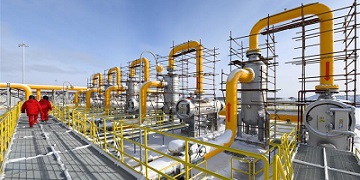
China, Russia inaugurate east natural gas pipeline
Chinese President Xi Jinping and his Russian counterpart Vladimir Putin inaugurated the China-Russia east route natural gas pipeline by video link-up on Monday sending a signal that energy and cooperation in other sectors between the two countries are becoming the key to boosting multilateralism. Entering service the same day, the pipeline will help Russia export up to 38 billion cubic meters of natural gas per year to China, according to an article posted on the China National Petroleum Corp (CNPC) website on Monday.
2019-12-09 -
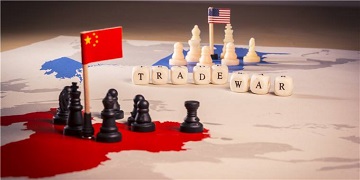
China-US trade down 11.1% from Jan-Nov, still ‘positive’ in general
China's trade with the US plunged 11.1 percent to 3.4 trillion yuan ($483 billion) in the first 11 months of the year as the long-running bilateral trade war continued to batter both sides, according to customs data released on Sunday. The 11-month decline widened from a 10.6 percent contraction in the first 10 months. However, China managed to make up for its worsening trade with the US by beefing up trade with other markets, and it achieved what experts described as generally positive trade volume this year.
2019-12-09 -

Liu Yushu: Digitalizing the Silk Road
The Pakistan-East Africa submarine fiber optic cable connects Pakistan with Kenya via Djibouti and it will also connect Europe via a terrestrial cable system, building a new digital economic highway for Africa, Europe and Central Asia. This is just one example of a wide range of cooperation taking place among countries participating in the Belt and Road Initiative, which has laid a solid foundation for the development of an open, inclusive and transparent global digital economy in the future and attracted worldwide attention.
2019-12-09 -

William Jones: With Xinjiang Bill, U.S. Congress drops the ball in war on terror
The U.S. Congress is really going overboard these days in its China-bashing fervor. With the obsession on foreign policy issues these days, with Russia, China and Ukraine seemingly topping their agenda, they seem to have little time for the issues of importance to the American people. While congressmen's posturing about alleged Chinese technology theft or Russian interference in U.S. elections will win them kudos from the foreign policy "wonks" in the Washington think-tanks, they will not gain much traction among their constituents, waiting eagerly for an infrastructure bill, a jobs bill, or medical insurance reform.
2019-12-09 -
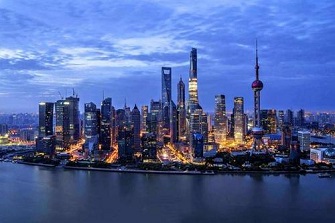
Global Order Under Profound Changes
Ambassador He Yafei is a prolific former Chinese diplomat who has witnessed and participated in many key global events. China-US Focus editor-at-large James Chau sat down with Ambassador He for an interview on a wide-range of issues, including a global order under stress, the growing US-China rivalry, and how China manages to achieve growth while working to address social challenges.
2019-12-06 -
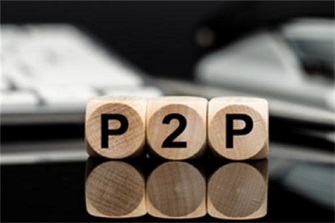
Finance reform reins in risks
Regulators recently held talks with the last surviving P2P lending platforms in Beijing, according to a report by the financial news site caijing.com.cn on Tuesday, citing sources close to the matter. In a bid to manage escalating financial risks, China has implemented measures to reign in risky business transactions and illegal speculations.Though Beijing has not announced it will close all P2P platforms, it is encouraging these platforms to implement reforms.
2019-12-06 -
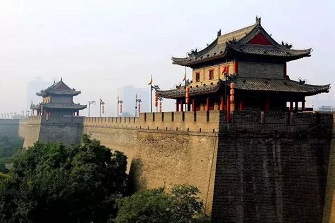
Ding Gang: China’s political system predates the West’s
An apparent problem is that plenty of Western scholars still judge China's political system by Western standards. They rank political systems in accordance with Western theories, and believe China's centralized setup lags their democratic system and must evolve into democratic one. With the expansion of Western civilization in the past five centuries, such an understanding is considered reasonable. But actually, China's system existed long before the West formed its own, and has developed in China's own way.
2019-12-05 -
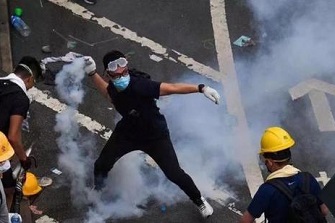
China sanctions US over HK
The Chinese Foreign Ministry announced the first wave of countermeasures against the US on Monday since the US passed and signed the so-called Hong Kong Human Rights and Democracy Act and continued its interference in China's domestic affairs in the city. The move includes suspending visits of US warships and aircraft to the city and sanctioning multiple US-headquartered non-governmental organizations, including the National Endowment for Democracy (NED) and Human Rights Watch.
2019-12-05 -

China urged to take 'stronger countermeasures' against US' Xinjiang bill
China will take strong countermeasures against the US, including releasing an "unreliable entity list" that includes relevant US entities, and imposing sanctions on relevant US officials, experts said, after the US House passed an act filled with groundless accusations against China's Xinjiang Tuesday night, local time. The Uyghur Human Rights Policy Act smeared China's counter-terrorism efforts in Xinjiang Uyghur Autonomous Region and used fabricated information to slander the vocational education and training centers and religious freedom in the region.
2019-12-05 -
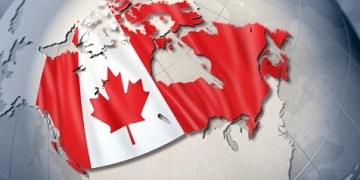
Chinese market too important for Canadian businesses to ignore
Canada Goose, Hatley, Factors Group - what do those names have in common? They are all Canadian companies that increased investment in China recently. Those companies' moves show a warming-up trend in bilateral economic relations between China and Canada, as Canadian enterprises value business opportunities in the Chinese market and won't stop their investment plans because of external pressure, experts said.
2019-12-04 -
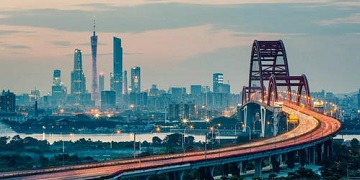
Liu Zhiqin: Opening-up policies need firm application
In order to promote quality economic growth, the Chinese central government has rolled out a series of policies including the Foreign Investment Law which will come into effect on January 1, 2020, 11 measures on financial reform and measures to promote the development of pilot free trade zones (FTZs). These policies have been well received by markets, will significantly improve the domestic business climate and will boost investor confidence.
2019-12-04 -
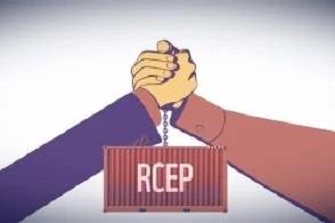
Japan unlikely to abandon RCEP
Japan has too much to gain and will not abandon the Regional Comprehensive Economic Partnership (RCEP) easily, even without the presence of India, despite recent comments by a Japanese official on a possible withdrawal, experts said on Sunday. Japan's State Minister for Economy, Trade and Industry Hideki Makihara was reported by Bloomberg as saying that Japan is not likely to sign the RCEP if India doesn't join. India announced that it was withdrawing from the RCEP in November, saying that it would hurt its vulnerable citizens.
2019-12-03 -
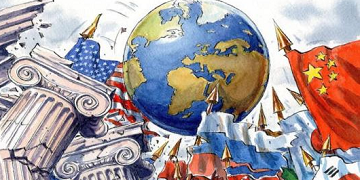
Wang Wen: What’s behind the fear to criticize the US?
"Why does no one dare to criticize the US, which is the main country engaging in unilateralism? Why is the international community at its wits' end after the US has pulled itself out of various treaties and organizations? Why doesn't the international community jointly rein in the US international power?" My three questions surprised many of those present and added a tinge of excitement to the tedious breakout session. Then, I continued, "The 2030 agenda that sets out to achieve the 17 goals including 'no poverty' and 'zero hunger' needs clear and feasible mechanism rather than just empty talk."
2019-12-03 -
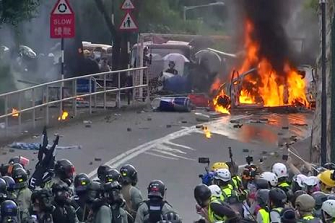
DC Comics poster hints at support for HK riots, triggering strong backlash
DC Comics' official Instagram account released a cover of Dark Knight Returns: The Golden Child which many netizens found offensive, as it likely shows its support for Hong Kong's rioters, sparking a strong backlash on social media. In the cover, a character dressed as Batman, one of DC's most iconic characters, holds a flaming Molotov cocktail and tries to throw it. "The future is young. Dark Knight Returns: The Golden Child out 12/11," the DC Comics Instagram account said in the post on Wednesday, though the post was later deleted.
2019-12-03 -
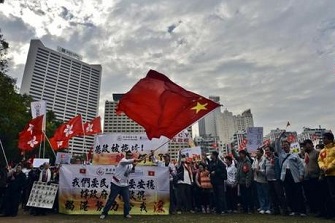
Wang Yiwei: US incites violence by passing HK laws
The US has targeted Hong Kong not only because of ideology and alleged violation of human rights and democracy in the SAR, but also, and more importantly, because it wants to slow China’s rise by curbing the global financial hub’s role as “bridge” in the Guangdong-Hong Kong-Macao Greater Bay Area, the Belt and Road Initiative and the internationalization of the renminbi. It wants to make Hong Kong a piece on its chessboard to keep China in check and serve the vested interests of the US and the West.
2019-12-02 -
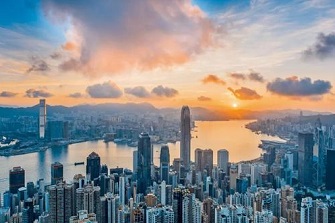
William Jones: As Hong Kong remains calm, many questions still remain
The U.S. Congress has determined to "stay involved" in Hong Kong affairs through the Hong Kong Democracy and Human Rights Act, which was signed into law by Trump on Wednesday. This requires an ever-watchful eye on possible machinations by the U.S. or the British in fomenting problems for China in Hong Kong. While the British Empire disappeared, British imperial thinking has not. And unfortunately, too many of their "American cousins" have also adopted that characteristic British swagger, which has always accompanied the British overlord.
2019-11-29 -
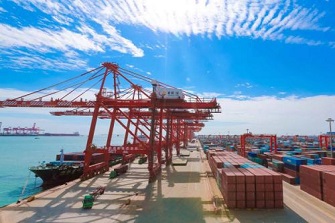
Trilateral trade deal moves closer
China, Japan and South Korea are ready to lower trade barriers for each other, such as cutting tariffs, as they move to hold a fresh round of talks on forging a free trade deal, experts predicted. By such cooperation, the three Asian neighbors aim to hold together and withstand the chill of US-initiated protectionism, they added. China will reportedly hold a new round of trilateral free trade agreement (FTA) talks with South Korea and Japan on forging a free trade deal, according to the Yonhap News Agency.
2019-11-29 -
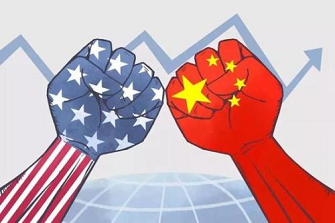
He Weiwen: China-U.S. Decoupling Is Just a Daydream
The New Economy Forum in Beijing sent a meaningful signal recently: It’s not only academic leaders but members of the public in China and the United States who are worried about the possible decoupling of the world’s two largest economies. Decoupling, in the words of Henry Paulson, former U.S. treasury secretary, would mean the rise of an “Economic Iron Curtain.” Decoupling has been advocated repeatedly by White House hawks as a way of curbing China-U.S. relations in economy, trade, investment, technology and people-to-people exchanges. Their purpose is to check China’s rise as a strategic rival.
2019-11-29







































































 京公网安备 11010802037854号


