LATEST INSIGHTS
Your Present Location: LATEST INSIGHTS-

William Jones: Taking a broader look at the debate on 'human rights' in Xinjiang
The concept of human rights has a great variety of connotations about what it actually means in practice. The notion is generally accepted by all nations. But in different societies, with different forms of government and social interaction, human rights may take different forms, often as a result of cultural, social or political differences.The United States has often attempted to present itself as the "arbiter" of human rights.
2020-01-15 -
Wang Wen: China and its Long March: End in Sight? Not Yet
China has entered a new era of development. China now has an impact on the world that is ever more comprehensive, profound, and long-lasting, and the world is paying ever greater attention to China. What path did China take? Where is China going? What are China’s goals in shaping the world? How will China interact with the rest of the world? You can find the answer in the book “The Long March of Becoming a Powerful Country”.
2020-01-15 -
Wang Wen: Eastern mind-set foretells global future
The theme of this years' Raisina Dialogue is quite postmodern - "21@20: Navigating the Alpha Century." What does it mean? There is no explanation in the agenda. But according to the theme of each panel discussion, I assume the organizers of the forum might think the year 2020 is the starting point of the 21st century and marks the end of the 20th century, and what's coming next will be like the first letter of the Greek alphabet - Alpha - which signals a new era.It is a theme designed with oriental imagination. It wisely responds to the global logic that has been misled by Western mind-set for 30 years.
2020-01-14 -

Liu Zongyi: Egalitarian security architecture can help stabilize South Asia
In 2019, there were major changes in the traditional and non-traditional security situation of South Asia. Tensions between India and Pakistan over Kashmir continued and the possibility of an armed clash remained quite high. The geostrategic confrontations in South Asia and the Indian Ocean region are intensifying.The situation in Afghanistan is deteriorating.Overall, the security situation in South Asia is getting worse, which does not bode well for the region's economic development. But there are mainly three possible solutions to improve the situation.
2020-01-13 -
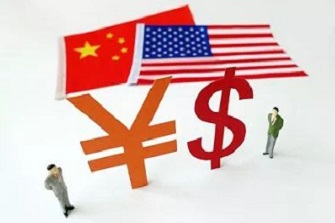
Levy reductions viewed as positive for Chinese, US stocks
China's plan to lower or eliminate import tariffs on a wide range of items, mostly consumer goods, will be a boon to both the Chinese and US stock markets, analysts said on Monday. The move, which comes as China and the US are on track to sign a phase one deal limiting their trade friction, is positive for listed companies in sectors that stand to benefit from the move - and to companies in general.China on Monday announced that duty rates on more than 850 consumer items, from frozen pork and avocados to orange juice and high-technology products, will be reduced or eliminated.
2020-01-13 -
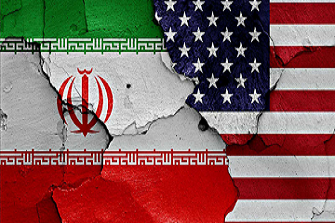
Trump's address shows US, Iran both calm
US President Donald Trump said at a press conference in Washington, DC, Wednesday that "No Americans were harmed" in the missile attacks by Iran. He didn't say the US will launch military retaliation, only that it will impose "additional punishing economic sanctions" on Iran.Trump's address showed that the US has already got what it wants, such as the death of a major hostile figure in the region, and no military retaliation being announced has also pacified Americans who are worried about a war.
2020-01-10 -
Upcoming trade deal marks milestone in trade talks
Chinese Vice Premier Liu He will lead a delegation to Washington next week to sign the phase one trade agreement with the US, China's Ministry of Commerce (MOFCOM) said Thursday. The signing will bring an end to weeks of work on the deal and mark a milestone in negotiations to resolve the long-running trade war.While the interim agreement delivers some relief to the world economy amid rising trade and geopolitical uncertainties, it only represents a new beginning for Beijing and Washington in addressing their profound differences on a wide range of issues, and tensions between the two biggest economies will likely persist, Chinese analysts said.
2020-01-10 -
HK's future as bridge between mainland, West will get stronger
The Hong Kong Special Administrative Region's (HKSAR) future role as an international financial hub is still promising, thanks to the central government's internationalization efforts and the city's important position as a bridge between China and the West, industry analysts said on Tuesday.Their comments came after Executive Director of the Stock Exchange of Hong Kong (HKEX) Li Xiaojia issued his report for Hong Kong's development in 2020 on Monday, in which he said that the world needs more and better connections and Hong Kong's role as the connector between East and West will only become more vital.
2020-01-09 -
2020: A year of milestone significance for China
On New Year's Eve, Chinese President Xi Jinping delivered his annual speech, reviewing the country's accomplishments in 2019 and sending his wishes for 2020.President Xi called 2020 as "a year of milestone significance," as China is set to eliminate poverty, finish building a moderately prosperous society in all respects and realize its first centenary goal. China will remain open to the outside world and continue to join hands with countries across the globe to promote the construction of a community with a shared future for mankind.
2020-01-09 -
Ding Gang: Old mind-set distorts West’s view of BRI
A typical Western view of the countries engaging in the BRI is that these states are attracted to China's money. What matters is not whether the BRI is part of China's strategy, but that it can stimulate and promote the development of countries along the route. Development is the first priority. In the current globalization process, development requires cooperation as well as infrastructure construction.Why are countries along the BRI willing to approach China? This is the crux of the matter.
2020-01-09 -
Zhao Minghao: Toward Philosophical Coexistence
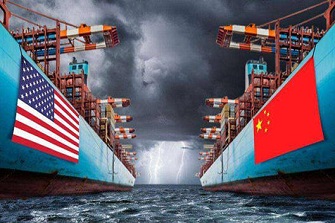
China and the United States will sign a phase one trade deal this month, an important step forward in their attempts to ease tensions. Their trade negotiation teams have made great efforts to this end. Needless to say, responses to the agreement have been mixed, and there are some criticisms both in the United States and China. However, this only shows that the final agreement has a certain balance, and it definitely cannot satisfy everyone. The two sides have achieved a necessary compromise.
2020-01-08 -
Europeans grow wary of their old partner
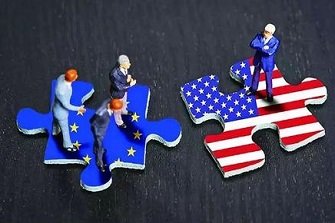
The European Union and the United States, which have long championed shared goals, have increasingly been drifting apart as evidenced by disputes over issues ranging from security to trade in recent years.Entering the new year, the tensions between the two powers are likely to continue, although their overlapping interests are seen as preventing any rapid decline in their relations.
2020-01-08 -
Uncertainty remains over date for signing phase one deal
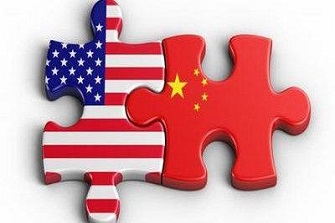
There is still uncertainty regarding when China and the US will sign the phase one trade agreement as final details remain to be worked out and other complicating factors have arisen, such as the escalating conflict between the US and Iran, Chinese analysts said on Monday.Unilateral announcements from US officials and media speculation about the date and other details about the signing ceremony should not be taken as final until they are confirmed by Chinese officials, the analysts noted.
2020-01-08 -
Huang Renwei: Where Are China-Russia Relations Heading?
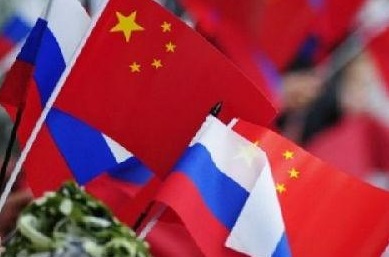
China officially refers to its relationship with Russia as a comprehensive strategic partnership of coordination. The two countries do not simply pursue military or security cooperation but work for comprehensive cooperation, especially in economics. There are two main trends in the future development of China-Russia relations. One is that economic cooperation is becoming deeper and more comprehensive; the other is that the two countries will work to keep the international order stable in opposition to unilateralism.
2020-01-08 -
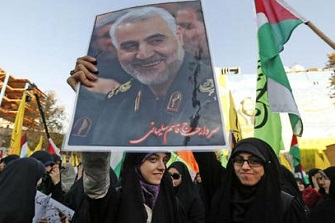
Wang Wen: Global efforts needed to restrict US adventurism
An Iranian friend of mine asked me what I thought about the killing of Qasem Soleimani, commander of Iran's elite army Islamic Revolutionary Guard Corps by a US drone strike in Iraq the day after Soleimani's death. I answered without hesitation - this is an act of state terrorism. There was no trial, no Congress authorization, no public debate, and the US simply killed a senior official of a sovereign country by arbitrary use of force and accusations from its hegemonic discourse power.
2020-01-07 -
Xi makes nation's voice heard around the world
President's overseas visits bolster diplomatic efforts. Over the past year, President Xi Jinping traveled to 12 countries in Asia, Europe and South America during seven overseas trips.Under the leadership of President Xi Jinping, China remained committed to multilateralism and championed justice worldwide this year, as it strived to push forward major-country diplomacy with Chinese characteristics, according to officials and analysts.
2020-01-07 -
Xi makes nation's voice heard around the world
President's overseas visits bolster diplomatic efforts. Over the past year, President Xi Jinping traveled to 12 countries in Asia, Europe and South America during seven overseas trips.Under the leadership of President Xi Jinping, China remained committed to multilateralism and championed justice worldwide this year, as it strived to push forward major-country diplomacy with Chinese characteristics, according to officials and analysts.
2020-01-07 -
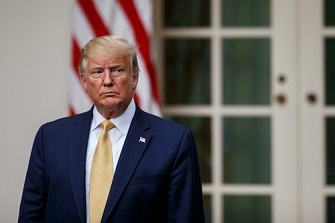
William Jones: Trump begins a slippery slope with assassination of Soleimani
U.S. President Trump's unfortunate decision to follow the advice of his neoconservative advisers to assassinate Qasem Soleimani has placed the world on the slippery slope towards war and chaos – and not only in the Middle East. While Soleimani was reviled in the West for his role in terrorism, he was highly revered by the Iranian people as a fighter for Iran going all the way back to his service in the Iran-Iraq War. Those demonstrations some weeks ago protesting the economic conditions in Iran, which Secretary of State Pompeo and others were lauding as the beginning of a more pro-Western opinion, have now been replaced by millions out in the street mourning their fallen leader.
2020-01-07 -

China-ASEAN trade to burgeon further in 2020
Trade between China and Southeast Asian countries will continue to boom at a faster speed in 2020, thanks to Beijing's push to increase trade volume with those states under the shadow of the China-US trade war and the two regions' high complementarities in trade structures, experts said on Sunday. China and members of the Association of Southeast Asian Nations (ASEAN) will also see closer trade ties under a broader policy push, such as signing of a massive regional trade deal - the Regional Comprehensive Economic Partnership (RCEP) - the experts noted.
2020-01-06 -

He Weiwen : 4 years of Yangtze River Economic Zone: A development demonstration
January 5, 2020, marks the fourth anniversary of Chinese President Xi Jinping's historic speech launching the Yangtze River Economic Zone strategy. It is a significant strategy ensuring the high-quality growth of the whole country and has a vital stake in realizing the two centennial goals and the rejuvenation of the Chinese nation.Green, high quality and harmonious development are core experiences of the Yangtze River Economic Zone over the past four years, following the correct pathway charted by President Xi Jinping. It will undoubtedly continue to make a significant contribution to the whole country towards the great rejuvenation of the Chinese nation.
2020-01-06




















































 京公网安备 11010802037854号


