LATEST INSIGHTS
Your Present Location: LATEST INSIGHTS-

He Weiwen: Flu outbreak reveals US’ true colors
While people in China and around the world are actively cooperating to combat the novel coronavirus pneumonia (COVID-19) outbreak, some US politicians and media are making accusations against China, questioning the effectiveness of its response to the epidemic. However, the US sees frequent outbursts of influenza, and its government not only reacts with extremely low efficiency but also remains silent. The contrast has revealed a US double standard.
2020-02-20 -
He Weiwen: Virus Economics: Cautious Confidence
The sudden outbreak of the novel coronavirus, COVID-19, caught China totally unprepared just before the Chinese Lunar New Year holiday. China's economy suffered a lot in the epidemi. Interruptions in Chinese supply chains is spreading to other countries, which will influence the global economy. If China has the right policies and pathways, and if it works successfully with the international community, there is a high chance that its economic growth will stay within its trend line over the medium term.
2020-02-20 -

Jean-Guy Carrier: Love and amity the most effective vaccine
The Chinese people see China's entry into the WTO is proof that their country was stepping out into the world, and that the world was turning increasingly toward China. But events took a surprising turn when the SARS epidemic broke out in China in November 2002. By early 2003, the SARS virus had spread to 17 countries. The outcome of the coronavirus outbreak is likely to be the same as that of the SARS epidemic. However, The difference is not with the coronavirus so much as it is with the reality of China's return to the global stage and its influence as an engine of the global economy.
2020-02-19 -
Sergey Glaziev: 'Russia supports' China's fight against outbreak of coronavirus
Measures taken by Chinese government to fight the coronavirus epidemic are impressive. The whole world is delighted with the speed and scale of the measures taken to prevent the spread of infection, as well as the cohesion and discipline of the Chinese people facing a new health threat.For us (Russia), China is a strategic partner with a long friendship and cooperation. The two heads of state have repeatedly talked about mutual friendship, cooperation and support, highlighting the importance of joint opposition to external threats by using such Chinese expression as "back to back" and Russian expression as "shoulder to shoulder".
2020-02-19 -
Liu Ying: Epidemic will have limited impact on trade
The novel coronavirus outbreak will impact China's trade in the first quarter of this year. In the short run, the epidemic's impact on China's exports will be larger than that on imports. To cope with the adverse impact of the epidemic on China's economy, the country has launched macroeconomic and fiscal measures to support China's imports and exports. And the global supply chain will rapidly recover in the second quarter as the epidemic is effectively brought under control.
2020-02-19 -

The urgency to understand China's Xinjiang narrative
The issue of Xinjiang has repeatedly been brought up in Western criticism for China. It almost comes as a "handy weapon" for some politicians when they find it necessary to play down China.However, to judge the issue from a "right or wrong" point of view is to fail to grapple the complexity behind the debate. Controversies around Xinjiang are a mirror that reflects some deep differences in terms of how the West and China see issues like human rights, freedom, governance and development.
2020-02-18 -

Ong Tee keat: The Unorthodox Lunar New Year
The Year of Rodent in 2020 will leave an indelible mark in my memory as we usher in the Lunar New Year against the gloomy backdrop of the onslaught of Coronavirus. Throughout the history of mankind, virus knows no race or nation state. It could cause an outbreak anywhere. It is the collective responsibility of international community to fight the deadly pandemic concertedly in the interest of human survival.
2020-02-18 -
William Jones: Nobody likes a bully
U.S. Secretary of State Mike Pompeo and his sidekick and fellow West Pointer, Defense Secretary Mark Esper, descended on the Munich Security Conference (MSC), like Batman and Robin into Gotham City, to "save" the people from the "evils" lurking around them, in this case China and Russia. "The West is Winning" Pompeo trumpeted triumphantly to what must have been a surprised audience, gathered to discuss how the Cold War was over and that new forms of collaboration between nations had to be established.
2020-02-18 -
Wang Wen: Five battles that China must win in 2020
The 2020 Spring Festival might be the most difficult and unforgettable Chinese New Year since the launch of the reform and opening-up four decades ago. The whole country has spent this year's holiday as if it were wartime. Chinese decision-makers have used the word "war" to inspire people's morale and mobilize national resources, stressing the need to resolutely win the people's war against the novel coronavirus pneumonia (NCP).
2020-02-18 -
The New York Times and Chris Buckley misrepresent China’s efforts to defeat the coronavirus
While China is mobilizing all resources available in the battle against the novel coronavirus pneumonia (COVID-19), the New York Times has been busy hyping a public opinion storm by pulling rumors out of a hat in an attempt to defame China and spread overpowering fright over the epidemic. The New York Times has always been a base camp of liberalism in the US. It has shown its long-term prejudice against both people and countries with different values via reports based on its own ideology.
2020-02-17 -
He Weiwen: US’ WHO funding cut plan amid epidemic exposes lack of responsibility
Just as the world is combating the novel coronavirus pneumonia (COVID-19), Ebola and locust plague in Africa, the US government seeks to halve its funding for the World Health Organization (WHO). It's selfish and indifferent moves once again clearly exposes a severe lack of international responsibility. Instead of providing aid as it should have, the US again makes baseless fear-mongering actions and words, all of which have been quelled by China's open, transparent, responsible stance, and its positive cooperation with the WHO.
2020-02-17 -

William Jones: A much distress regenerates a nation, 中国,加油!
The outbreak of the coronavirus in China came as a great shock to the world. And the emergency measures taken by the Wuhan authorities and by the Central Government have been singularly important in attempting to limit the spread of the disease in China and the rest of the world. The courageous efforts of the Chinese medical personnel and the citizenry in dealing with an overwhelming event which tested the capacity of the extensive medical infrastructure in the city has represented a degree of heroism seen otherwise only in the case of war.
2020-02-17 -
Wang Wen: Too Early To Talk About China-U.S. P2 Trade Agreement
China and the US signed the phase one (P1) trade agreement on Jan. 15, 2020. Additionally, in a recent interview, US Vice President Mike Pence said that negotiations for the phase two (P2) trade agreement are already under way. But in my opinion, the top priority now for the two powers is deciding how to ensure the implementation of the phase one trade agreement.
2020-02-17 -
Wang Wen: China and its Long March: End in Sight? Not Yet
China has entered a new era of development. China now has an impact on the world that is ever more comprehensive, profound, and long-lasting, and the world is paying ever greater attention to China. What path did China take? Where is China going? What are China’s goals in shaping the world? How will China interact with the rest of the world? You can find the answer in the book “The Long March of Becoming a Powerful Country”.
2020-02-17 -
Ding Gang: Foreign perceptions won't influence China
What the outside world sees from the epidemic is not static but dynamic. The situation in China is undergoing rapid changes. It is these changes that will eventually break preconceived views and give the world a more comprehensive understanding of China. Today's China is still in its developing phase and one of the main challenges in the future will be how it tackles its domestic problems. China's development is not determined by how the outside world sees China, but how China remains firm on its chosen path. In this process, it is of vital importance that China's governance system should advance with the times and have a strong ability to self-correct.
2020-02-14 -
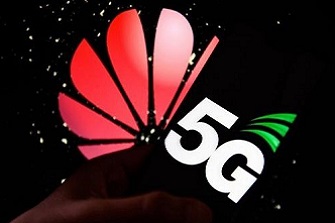
Zhang Jingwei: What is behind the UK’s decisive stance on Huawei?
US President Donald Trump was furious when his friend, British Prime minister Boris Johnson, decided to give Huawei a role in building the UK's 5G infrastructure. German Chancellor Angela Merkel seems to be going a similar direction in a position paper announced yesterday. Chinese academic Zhang Jingwei ponders the UK's move and thinks ahead to implications that it may have on the UK's wider relations with China and the US.
2020-02-14 -
Slawomir Majman: Have confidence in resilience of China's economy
The resilience of China's economy cannot be underestimated. We believe that in the medium and long term, China's economy will manifest a strong revival trend and with the support of the international community, the Chinese nation and their government will ultimately conquer the epidemic and China's economy will remain robust."No country is an lonely island . We have common duties and common destiny", President Xi has said. The epidemic is a great test of the Chinese authorities efficiency but equally a powerful and magnificent test of nations solidarity and cooperation.
2020-02-14 -
Willism Jones: There's no doubt China will bounce back from epidemic's impact
There has been a great outpouring of sympathy for China throughout the world in the wake of the sudden outbreak of the novel coronavirus pneumonia. But, at the same time, those forces in the West who have been adamantly opposed to the admission of China into the pantheon of world powers, have seen this catastrophe as an opportunity to throw new obstacles in the path of China's rise.
2020-02-13 -
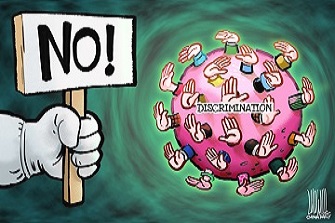
Yury Tavrovsky: 'Yellow peril' virus more contagious and condemnable
"The Chinese! The Chinese are coming!" Two men were running and shouting at the entrance of the Exhibition subway station in Moscow. I looked around and saw a group of Chinese tourists taking pictures of the elegant and gigantic Monument to the Explorers of Space.
2020-02-12 -
Zhao Minghao: Washington pressure tactics on Beijing are sure to boomerang
Chinese President Xi Jinping on Friday spoke on the phone with US President Donald Trump, sending the world a positive signal about the bilateral ties between China and the US. Trump expressed his confidence in China's economic growth, and said the US fully supports China's efforts to control the novel coronavirus pneumonia (NCP). The two leaders also reaffirmed their commitment to implementing the phase one trade deal reached between the two countries in January.
2020-02-12






















































 京公网安备 11010802037854号


