Focus
Your Present Location: HOME> Focus-

Cheng Cheng: West’s ODA leaves Africa weak, underdeveloped
ODA did not help with poverty reduction, economic and industrial growth. Quite the opposite: African countries have developed an institutional dependence on ODA, which limits local governance ability.
2018-04-12 -

Wang Yiwei: A true community of equality and prosperity
The changing pattern of global economic development has given rise to new proposals of international relations and cooperation. From Davos to Boao, a community with a shared future for humankind is China`s proposal as it develops into an influential global power amid historic changes. China`s proposal has the potential to promote global development in a more equitable and fair manner.
2018-04-12 -
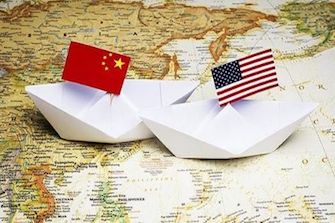
Chen Chenchen: US-China trade war a sign of Trump’s risky brinkmanship
A trade war does not make economic sense, and it does not help solve the structural problems that US economy truly has. A much more plausible way to understand Trump`s trade war mentality is to see it as a political gamble rather than an economic move.
2018-04-10 -

Belt and Road Initiative and Possible Impacts on the South China Sea Issue
Since China proposed the Belt and Road Initiative (BRI) in late 2013, the impacts of the 21st century Maritime Silk Road (MSR) construction on the South China Sea (SCS) issue become a focal point of both academic research and public concern.
2018-04-10 -
A common rise: future of Sino-Russian relations
The common rise of China and Russia is the rejuvenation of peace and cooperation. Reform is an important guarantor of peace and promoter of cooperation. Both countries are committed to promoting shared rejuvenation, a theme that accords with the national development priorities of many countries and coheres with their long-term interests. Yet one would be wrong to think of rejuvenation as a zero-sum game. Rather, it is a process of cooperation. Only joint reform can promote common rejuvenation.
2018-04-09 -
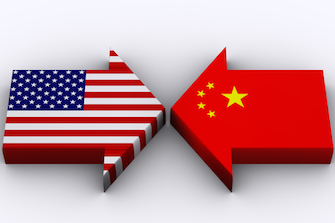
William Jones: Repairing the Frayed US-China Relationship
The draconian measures being proposed now by the Trump administration, if implemented, would be disastrous for the American, as well as the world economy. It would be useful to find those projects where the US and China can work together on the “frontiers of science”.
2018-04-09 -
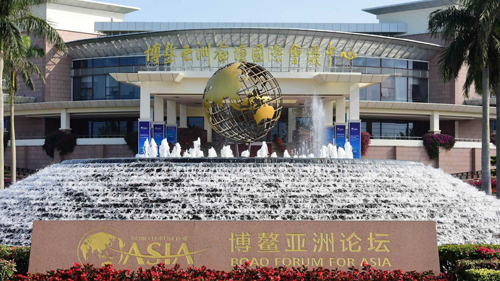
Wang Yiwei: How could Asia secure leadership in global growth?
On Sunday, the annual Boao Forum for Asia (BFA) with the theme "an open and innovative Asia for a world of greater prosperity" will open in south China`s Hainan Province. Over the past two decades, the changing themes of the forum have reflected Asia`s evolving role in the world economy from a marginalized community to a helping hand and now to a growth leader.
2018-04-08 -
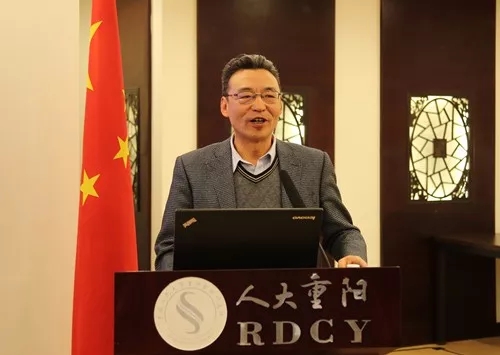
Guo Qingwang: China`s fiscal and taxation reform in new era
During China`s “two sessions” in 2018, Chongyang Institute for Financial Studies at Renmin University of China (RDCY) launches a series of seminars, inviting famous professors from Renmin University of China (RUC) to interpret hot topics. On the evening of March 21, the fifth lecture was given by Professor Guo Qingwang, former dean of School of Finance at RUC, interpreting the top priorities of the fiscal and taxation reform in the new era.
2018-04-08 -

"Community with shared future for mankind" most coherent analysis of global affairs
”President Xi Jinping’s concept of a `common future for humanity’ from its inception has been the most coherent analysis of global affairs,” said British expert John Ross in a recent interview with Xinhuanet.
2018-04-04 -
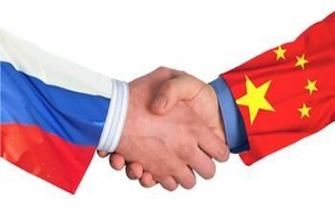
Guan Zhaoyu: Defense minister’s Russia tour forges ties
China and Russia have carried out security cooperation within the multilateral framework of the Shanghai Cooperation Organization and the Conference on Interaction and Confidence Building Measures in Asia.
2018-04-03 -
Liu Zhiqin: Chinese economic success and twists with US
During the past four decades, China has reshaped itself and become the second largest economy in the world, and many seek to explore the country’s codes of success.
2018-04-02 -
Liu Zhiqin: Sino-US trade war may be protracted battle of attrition
The story of the farmer and the viper is well-known. The freezing viper betrayed the kind farmer by biting him. Now the world is witnessing a modern version of this story.
2018-03-28 -
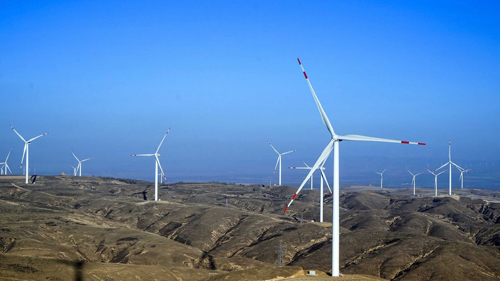
Wang Yiwei: Belt and Road Initiative promotes green development
China`s reform and opening up witnessed a "treatment after pollution" problem and learned its lesson from it. The country now vowed to not pursue economic growth at the expense of the environment - one lesson that China also wants to share with the countries joining in the Belt and Road Initiative (B&R).
2018-03-28 -
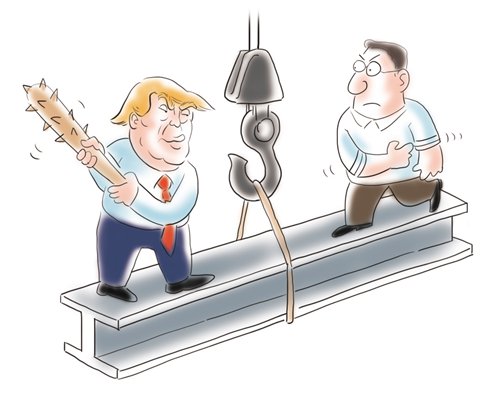
Zhao Minghao: US trade policy destabilizes global economy
Stocks fell sharply after the US President Donald Trump administration threatened to launch a trade war against China, showing how trade conflict hurts the world economy. The Organization for Economic Co-operation and Development, the West`s leading economic think tank, warned that a trade war prompted by US protectionism threatens to derail the ongoing global economic recovery, currently in its best position for seven years.
2018-03-28 -
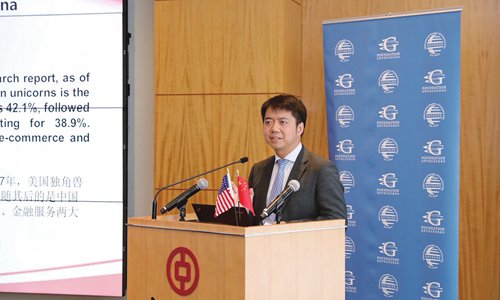
Co-evolution: Future of China-US cooperation
Editor`s Notes: On March 21, AmCham China hosted a forum on“US-China Relations Outlook Under Trump’s Administration”in New York. Zhang Qiyue, consul general of China in New York, Edward Cox, chairman of the New York Republican State Committee, and Wang Wen, executive dean of Chongyang Institute for Financial Studies, Renmin University of China, attended and spoke at the event.
2018-03-26 -
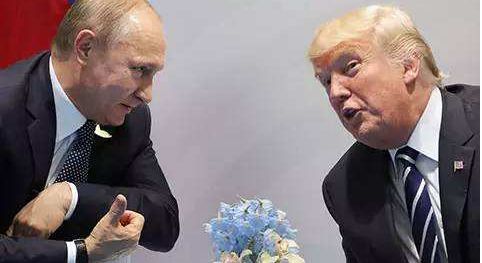
Guan Zhaoyu: Re-elected Putin will fight off US pressure
Vladimir Putin won a landslide re-election victory with 76.65 percent of the vote in Sunday`s election. His annual State of the Union address this year revealed that the Russian president will review domestic and foreign policies in his fourth term. US-Russia ties, an important link in Kremlin`s foreign affairs, will likely cause a domino effect and affect Russia`s relations with Washington`s allies. US-Russia slipped into a dark period with the Ukraine crisis and the alleged collusion between t
2018-03-23 -
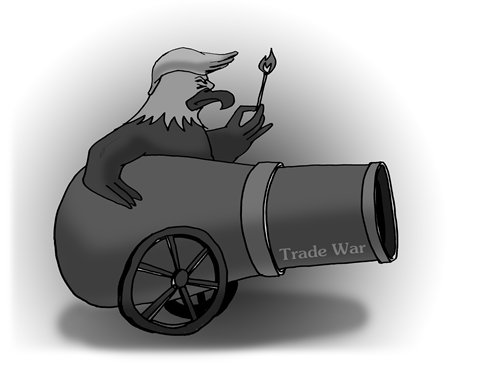
Liu Zhiqin: Solving trade disputes with US requires law, reasoning
Today`s world is funny: sometimes it`s ruled by law, but most of the time the world is not ruled by law. How can it be? Because in many cases we find things are too "strange" to understand in a normal way.
2018-03-23 -
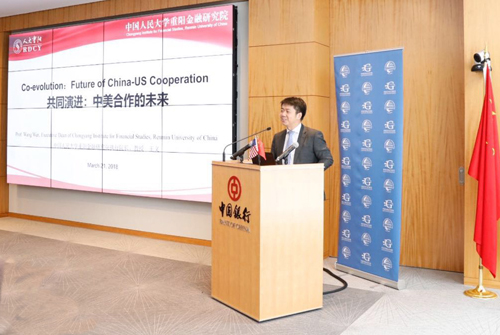
Wang Wen: China-US ties should evolve for win-win cooperation
The relationship between China and the United States should enter a new era of co-evolution for win-win outcomes, an academic said here Wednesday.
2018-03-23 -
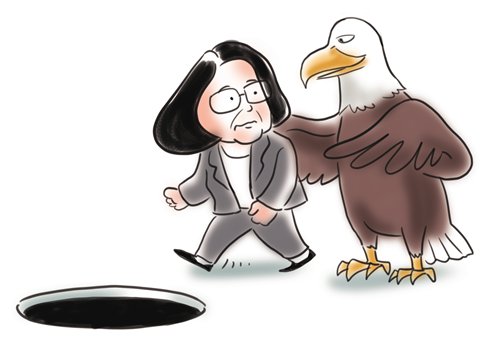
Zhao Minghao: US to use Taiwan Travel Act as bargaining chip
US President Donald Trump`s recent signing of the Taiwan Travel Act has roiled ties and brought a new challenge to Sino-US relations. With tensions escalating between Beijing and Washington in trade, the US move over Taiwan made the situation more complex.
2018-03-22 -
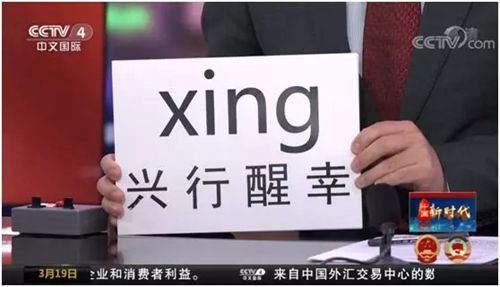
CCTV: 40 years of reform and opening up brings great changes to China and world
CCTV-4 "China News" program opens up a special report on "China`s New Era" . Wang Wen, executive dean of Chongyang Institute for Financial Studies at Renmin University of China, was invited to talk with the CCTV anchor Zhou Yingfeng on the hot topics regarding the achievements of the 40th anniversary of reform and opening up on March 19.
2018-03-21

































































 京公网安备 11010802037854号


