Focus
Your Present Location: HOME> Focus-
John Ross: What pushed Hong Kong to the brink?
Hong Kong is now in its tenth consecutive week of mass protests. The violent clashes between police and protesters have grabbed global attention.
2019-08-19 -
John Ross: What pushed Hong Kong to the brink?
Hong Kong is now in its tenth consecutive week of mass protests. The violent clashes between police and protesters have grabbed global attention.
2019-08-19 -

Long Xingchun: Pakistan unrelenting on Kashmir issue
Pakistan is prepared to "fight to the end" over the Kashmir issue if necessary, Prime Minister Imran Khan said on Wednesday during a speech from Pakistan-controlled Kashmir. "I don't want war but it's clear now that they [India] don't want to talk," Khan said. Pakistan's 73rd Independence Day was celebrated on Wednesday as "Kashmir Solidarity Day," so as to express support for the people of Kashmir.
2019-08-19 -
Zhao Minghao: Trump Pushes China-US Trade Negotiations Toward Long-term Impasse
By deciding to impose a 10-percent tariff on the last remaining freely traded $300 billion of Chinese exports to the US starting in September. US Department of the Treasury designated China as a “currency manipulator” a designation. China decided to suspend its purchase of US agriculture products. Though China and the US had agreed to start their 13th round of trade talks in Washington in September, we have reasons to worry these anticipated negotiations may not occur as scheduled as tensions escalate between the two countries.
2019-08-19 -
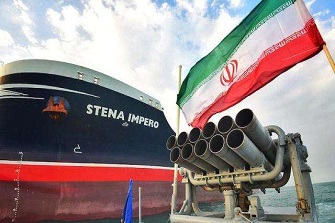
Hua Liming: Iran worried about effect of Brexit on nuclear deal
Will Johnson toe US President Donald Trump's line? If so, will Britain's withdrawal spell doom for the deal? Boris Johnson, who became the United Kingdom's newly elected prime minister on July 23, is a hard-line euroskeptic politician. While Europe is keenly following how Britain's Cabinet would proceed with Brexit under Johnson's leadership, in the Persian Gulf, Iranians are concerned about the fate of the Iran nuclear deal, or the Joint Comprehensive Plan of Action, in the post-Brexit era.
2019-08-16 -
He Yafei: Present-day World Needs to Uphold and Rebuild Multilateralism
During a recent personal discussion about multilateralism and in response to witnessing the ongoing chaos worldwide, former Slovenian President Danilo Türk stated to me that the world today is going “from hopeful to possible success.” From our conversation, we both came to the conclusion that although multilateralism is under attack and the global governance regime is porous, international collaboration can still be reborn and can ultimately succeed with support from such emerging countries as China and others.
2019-08-16 -
Zhao Xijun: China’s financial opening-up has righteous motives despite Western skepticism, distortion
Recently, China announced a slew of measures to further open its financial market. The 11 new measures encourage overseas financial institutions to participate in the establishment of, and invest in, asset management subsidiaries of commercial banks. They also allow them to set up and invest in pension management companies. Investment restrictions of overseas personal insurance companies will be completely scrapped in 2020. Those measures serve as a milestone, marking a new stage of China's financial opening-up.
2019-08-16 -

Wang Peng: Trade conflict will prompt China to develop a more independent monetary system
The China-US trade war began over a year ago, the US' economic bullying has since spread to the financial and currency sectors as the US has designated China as a currency manipulator.This is not the first time the US has waged a trade war, and China is not its first victim. Looking through history, the US has always gained upper hand and left its opponents with a "lost decade" or decades. In this history, there are lessons to be learned.
2019-08-15 -
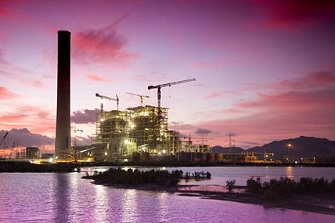
Ding Gang: China powers the Indonesian dream
Seated opposite us in a conference room, Tulus Martini, a young Indonesian mother, was answering our questions in fluent Chinese. A blue sign was hanging on the wall. It read "Jawa 7 Coal-Fired Power Plant. "In 2017, China Energy Engineering Group Zhejiang Thermal Power Construction Co Ltd started building this power plant in Kota Serang in the northwest region of Java, Indonesia. The plant is a key project of Indonesia's medium-term plan to add 35 million kilowatts of generation capacity, as well as China's first overseas mega-kilowatt class thermal power project.
2019-08-15 -
Bian Yongzu: Driven by market demand
Use of the renminbi is an increasingly common choice of countries participating in the Belt and Road Initiative. Some Western scholars misunderstand the China-proposed Belt and Road Initiative believing it is a means to promote the internationalization of the renminbi. In fact, although there is a certain relationship between the initiative and yuan's internationalization, they are two different issues.
2019-08-15 -
Bian Yongzu: The Shorter the List, the Greater the Opportunity
Three administrative documents released by the Chinese government, Special Administrative Measures on Access to Foreign Investment (2019 edition), Free Trade Zone Special Administrative Measures on Access to Foreign Investment (2019 edition) and Catalogue of Industries for Guiding Foreign Investment , came into effect on July 30, 2019. The latest revision includes new opening-up measures in services, manufacturing, mining and agriculture, allowing full foreign ownership in more sectors, with no additional limits added. Three changes highlight the new negative list.
2019-08-14 -

Liu Zongyi: Kashmir issue proves India unqualified for UN Security Council seat
Through a presidential order, the Indian government on August 5 scrapped Article 370 of Indian Constitution, which granted special status to the India-controlled Kashmir. The move means the region, an internationally recognized disputed territory between India and Pakistan, was forcibly transformed into alleged Indian territory by New Delhi. This is unacceptable to Pakistan and has triggered a serious confrontation between the two countries.
2019-08-13 -
Zhao Minghao:Washington is choking off U.S.-China economic and trade negotiations
On August 9, the International Monetary Fund (IMF) released a report saying that the renminbi (RMB) is not being significantly undervalued or overvalued, and a more flexible exchange rate will provide greater room to solve China's domestic problems. This statement is bound to disappoint the Trump administration. The U.S. Treasury Department, which labeled China as a "currency manipulator," had originally hoped to seek backing from the IMF.
2019-08-13 -
William Jones: Who's 'mucking about' in Hong Kong, and why?
The world has been taken by surprise by the violence and the duration of the ongoing turbulence in Hong Kong. While demonstrations in Hong Kong do occur on occasions, the violent eruptions coming out of this demonstration was unexpected. However, it is probably not "spontaneous."
2019-08-13 -

John Ross: Why the rise of China is a long march
For numerous reasons the book is essential reading for anyone studying China's rise. But its importance lies above all in its "Chinese characteristics" - in showing how the framework of thought created by China's age of struggle and rising era is the most accurate guide to current international events. It outlines the basis on which the success of the Chongyang Institute was created. In addition to its importance for China itself if Western leaders read it they will make far fewer mistakes in understanding China.
2019-08-12 -
He Weiwen: Why the U.S.’s 90 day ultimatum to the WTO will get it nowhere
U.S. President Donald Trump issued a White House Memorandum (hereafter referred as the Memo) on July 26, on reforming the WTO’s developing economy status. The Memo set a 90-day ultimatum to the WTO to change the developing economy status of several WTO members, including China. If the WTO fails to meet the deadline, the U.S. says it will act unilaterally. The Memo, harsh in wording, was in fact neglected in the WTO and refuted immediately by China.
2019-08-09 -
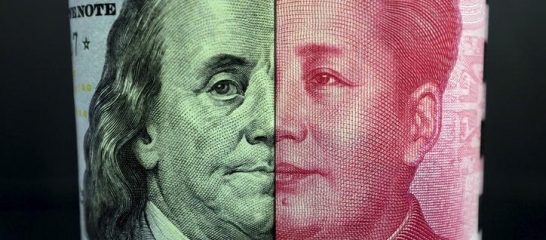
John Ross: China tests its nuclear financial weapon – US markets understood, has Trump?
On Monday 5 August China tested an economic nuclear weapon – it allowed the RMB’s exchange rate to fall. In addition to the drop itself it took it below the psychologically important 7.0 level. Financial markets understood immediately the impact of this drop in the RMB’s exchange rate – the US S&P500 share index fell by 3% in a single day, the worst daily decline of 2019. This sharp fall on US share markets repeated the experience following the RMB’s devaluation in 2015.
2019-08-09 -
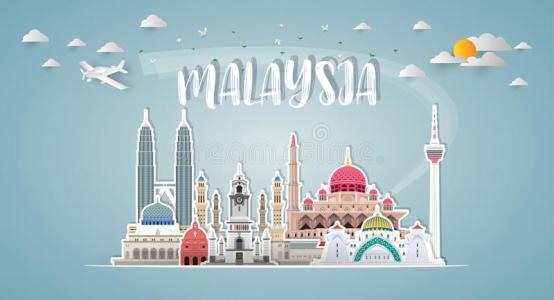
Ding Gang: More than durian to China-Malaysia relations
My recent visit to Malaysia came eight years after my first trip to the country. As the car approached the Petronas Twin Towers, the landmark of Kuala Lumpur, I saw a billboard of China Construction Bank (CCB). On the second day, as I was wandering in the city, I noticed a signpost next to the office building of the operation department of CCB. It showed that the British Malaysian Chamber of Commerce is housed in the same building.
2019-08-08 -
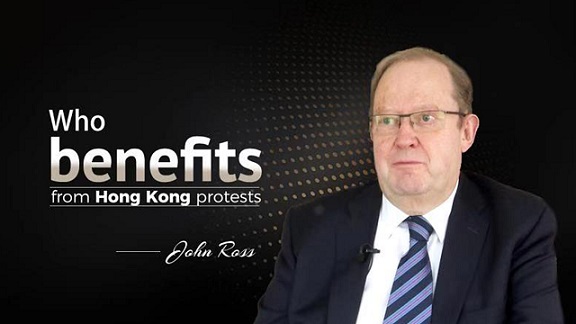
John Ross: Who benefits from Hong Kong protests?
Hong Kong is now in its ninth consecutive week of mass protests. The violent clashes between police and protesters have grabbed global attention.
2019-08-08 -
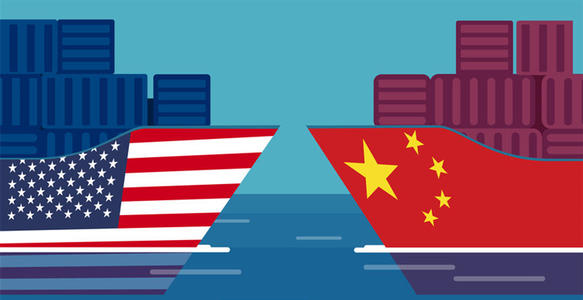
William Jones: New US tariffs cannot Trump China
US President Donald Trump's rash measure of imposing a new 10 percent tariff on Chinese goods on top of the 25 percent already levied threatens to hurt the US economy. It may also create a major blowout in international financial markets. In addition, this attempt to play hardball with the Chinese side in these all too important discussions could totally poison the atmosphere for amicable talks with China on any issue in the future.
2019-08-07















































 京公网安备 11010802037854号


