Focus
Your Present Location: HOME> Focus-
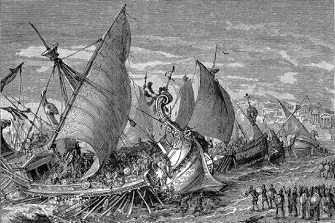
He Yafei: Great-Power Awareness of Crisis and Tragic Sensibility
American scholars have recently trumpeted a geopolitical “tragic sensibility.” They believe that the United States has been reluctant to squarely face the challenges posed by China and Russia – a result of the loss of its tragic sensibility and awareness of crisis needed to create a collective sense of responsibility and take decisive action.The so-called tragic sensibility originates from the obsession and reflection of tragedies in ancient Greece.
2019-10-11 -
The Confucius Institute in the eyes of a President
Recent news about the proposed closure of a number of Confucius Institutes in the U.S. and Australia carries an unpleasant scent of a negative political attitude towards China. This change of attitude deserves attention and concern. For years now the Confucius institutes have played a very useful role of providing opportunities for learning Chinese, for cultural exchanges and general communication with China, much needed in our time.
2019-10-11 -

John Ross: US economy slowing but not in danger of recession
Will the US enter a recession in 2020, a US presidential election year, or will its economy only slow further without entering actual recession? That is the discussion among the overwhelming majority of US economists. To illustrate this, Bloomberg asked on October 5, "Is the US Headed for a Recession?" Its analysis began, "Through all the noise around US data this week, a clear signal is emerging: The world's biggest economy is slowing down. The question now is, how badly?"
2019-10-10 -

Ding Gang: K-pop strikes the right chord in East Asia
Korean pop (K-pop), which found birth in South Korean culture, represents a symphony of various styles and genres of music. Observing how K-pop developed and thrived can help us reassess cooperation in East Asia. As we learn to perceive young people - understand what they want, what makes them sad and happy, and how they see each other - we will definitely find ways to increase trust. Cultural phenomena like K-pop are resonating among the young in East Asia and finding favor during cultural interaction.
2019-10-10 -
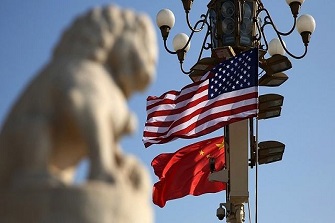
Zhao Minghao: Diplomatic Dance Step May Help Ease China-US Tension
The vice ministerial-level trade talks between China and the United States have concluded in Washington, making necessary preparations for the high-level talks to be held in the coming weeks. A statement by the Office of the U.S. Trade Representative described the talks as “productive,” but concerns are growing about the prospects of the larger trade negotiations. Before the start of the talks, U.S. officials were said to have discussed the possibility of reaching an interim trade deal with China.
2019-10-10 -
Srikanth Kondapalli: 70 years of the PRC – Directions, achievements and prospects
To mark the PRC's 70th founding anniversary, CGTN has introduced a special series "70 Years through Foreigners' Eyes." In the fifth episode, Srikanth Kondapalli, Chairman of Centre for East Asian Studies of School of International Studies at Jawaharlal Nehru University at New Delhi, and Non-Resident Senior Fellow at Chongyang Institute for Financial Studies, Renmin University of China, shared his views on how China has been struggling ahead to make the country prosperous.
2019-10-09 -
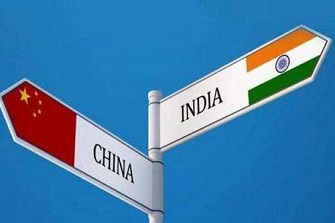
Liu Zongyi: China-India bid can forge united Asia
Chinese President Xi Jinping and Indian Prime Minister Narendra Modi are slated to hold the second informal meeting in the South Indian coastal town of Mamallapuram in Tamil Nadu later this week after the two leaders held an informal summit in Wuhan in April 2018, according to Indian media reports. Mamallapuram is a UNESCO world heritage site recognized for being the home to exquisite Hindu statues and stone-carved temples belonging to the Pallava Dynasty.
2019-10-09 -
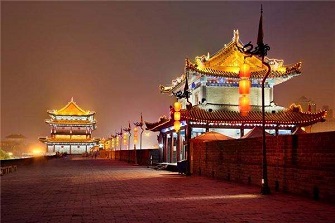
William Jones: The BRI promotes the dialogue of cultures
Much has been written recently in the Western media about China's Belt and Road Initiative (BRI). Numerous Western think-tanks have devoted units of their establishments to study the BRI. And even many of those individuals and institutions that have taken a positive view of the project (and many have not), there is still an undertone of suspicion that somehow, for all the good it has achieved, it is still motivated primarily by Chinese political interests and should, therefore, be approached cautiously.
2019-10-08 -

Wang Wen: Africa has a lot that China can learn from
I often write on the flight. This habit makes me more productive, but it carries huge risks. For example, it is easy to forget the laptop on the cabin seat. Two weeks ago, when I was transferring flights in the Ethiopian capital Addis Ababa, the risks finally boiled over. It happened on my way back to Beijing from a visit to Zimbabwe. When a friend who works for a Chinese company in Harare heard that I was on the same plane as his parents, he asked me to help the aging couple to find their way around the Addis Ababa airport for a transfer to Shanghai.
2019-10-08 -

William Jones: Beware of the doomsday prophets
As little Greta Thunberg was making her prime-time appearance at the UN Climate Summit, in an almost hysterical state, railing against world leaders who were talking about "fairy tales of eternal economic growth" while the world was facing "mass extinction" because CO2 levels have not been brought down to "net zero," I could not but feel a little sorry for this poor child from Sweden. But psychologically, she is undoubtedly in a very fragile state. I don't know who put her there, but it is well-nigh criminal that they have done so. Even more criminal is the attempt to put her on a world tour to spread her irrational fears of "mass extinction."
2019-10-08 -

Zhao Minghao: No need to overreact as Quad ups gear
The Quadrilateral Security Dialogue - known as Quad - between the US, Japan, India and Australia was held Thursday on the sidelines of the UN General Assembly at the foreign minister's level. Since its revival in November 2017, the Quad had met only at the joint-secretary level. This first foreign-minister-level meeting may suggest that the framework is upgrading. Speculation is swirling on whether it would move toward a NATO-like group in Asia.
2019-09-30 -
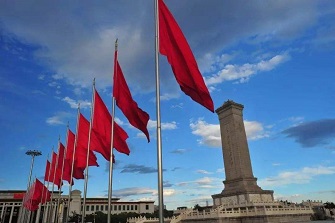
William Jones: “Right to Develop”—Center of Human Rights
The release of China’s White Paper on Human Rights comes at an important time when the world has been witnessing to the recent violence in Hong Kong, where many of the activists are claiming that their lawful rights were being endangered by a proposed draft law for extraditing criminals. In the course of this turmoil, time and again the claims were made that China was a “human rights violator” and this by the very people who were shutting down the Hong Kong economy and making it impossible for many Hong Kongers to even learn their livelihood.
2019-09-29 -

William Jones: Don’t Draw the Wrong Conclusions from “American Factory”
The recently released documentary film “American Factory” by Julia Reichert and Steven Bognar is another one in the genre of films that are aimed at depicting the life and the trials of the American working class and the travails of modern capitalism. Reichert has done a number of these films, but “American Factory” has gained a greater amount of notoriety because it depicts a Fuyao auto-glass factory in Ohio which was set up by a Chinese entrepreneur, Cao Dewang, on a site of a closed General Motors assembly plant, hiring many of the American workers who had been laid off from their GM jobs after the 2008 financial crisis.
2019-09-27 -
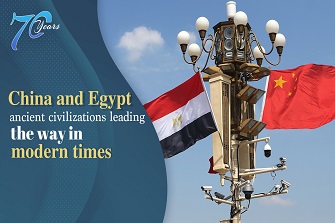
Hisham El-Zimaity: China and Egypt – ancient civilizations leading the way in modern times
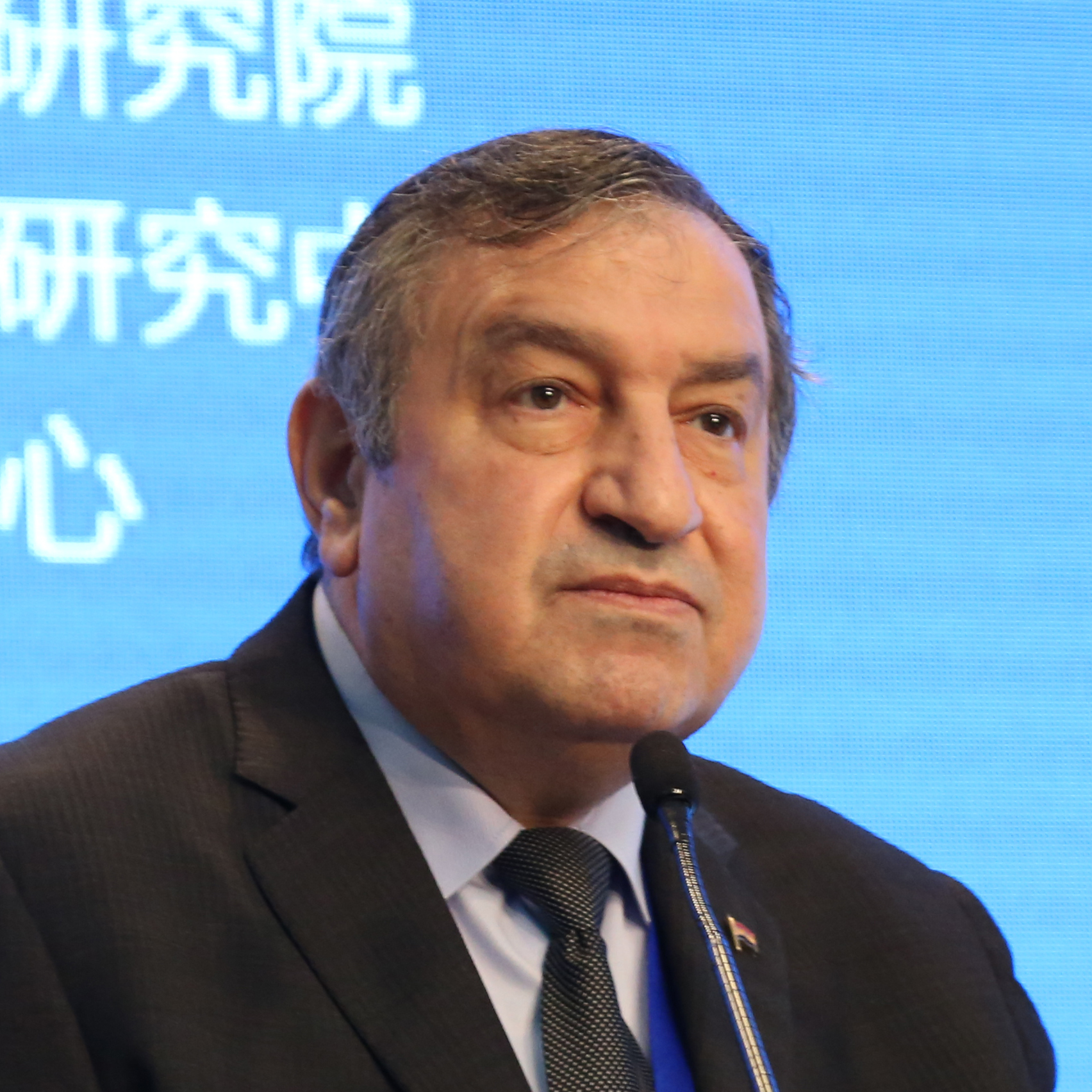
To mark the PRC's 70th founding anniversary, CGTN has introduced a special series "70 Years through Foreigners' Eyes." In the fourth episode, Hisham El-Zimaity, former Assistant Foreign Minister of Egypt and Non-Resident Senior Fellow at Chongyang Institute for Financial Studies, Renmin University of China, shared his views on lessons from China's rapid development and Egypt's relationship with China.
2019-09-27 -
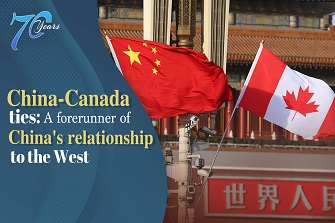
Jean-Guy Carrier: China-Canada ties, A forerunner of China's relationship to the West
To mark the PRC's 70th founding anniversary, CGTN has introduced a special series "70 Years through Foreigners' Eyes." In the third episode, Jean-Guy Carrier, non-resident senior fellow of Chongyang Institute for Financial Studies, Renmin University of China (RDCY); executive chairman, Silk Road Chamber of International Commerce (SRCIC) , shares his views on Canada's historic relations with China.
2019-09-27 -
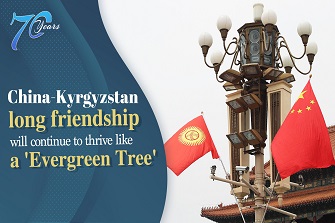
Djoomart Otorbaev: China-Kyrgyzstan long friendship will continue to thrive like an 'Evergreen Tree'
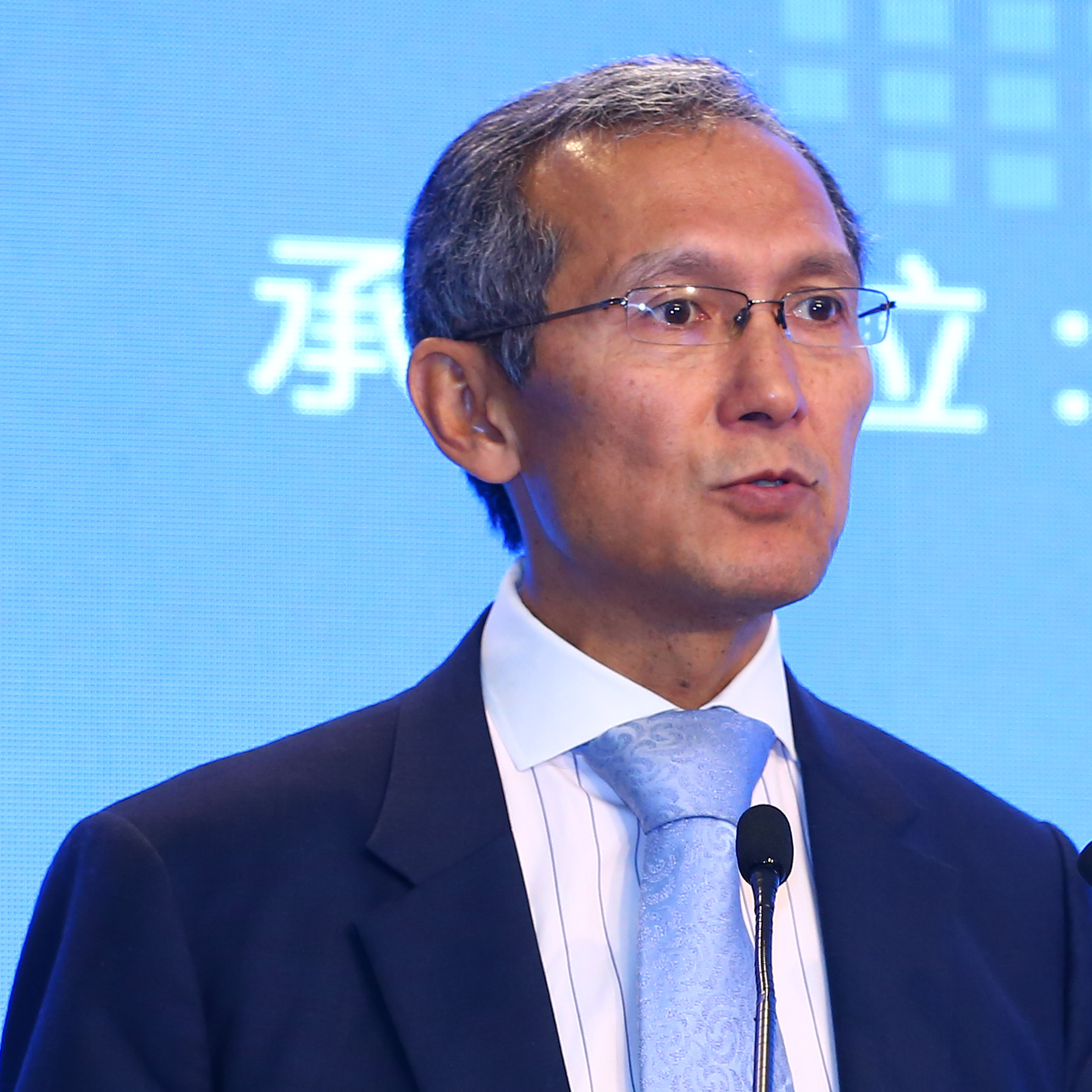
To mark the PRC's 70th founding anniversary, CGTN has introduced a special series "70 Years through Foreigners' Eyes." In the second episode, Djoomart Otorbaev, former Prime Minister of the Kyrgyz Republic and non-resident senior fellow at the Chongyang Institute for Financial Studies, Renmin University of China, shared his views on China's achievement in the past seven decades and Kyrgyzstan’s future relationship with China.
2019-09-26 -
Ding Gang: How to grow in China, Tech it from Huawei
I visited the headquarters of Chinese tech titan Huawei in Shenzhen, South China's Guangdong Province, Tuesday afternoon with journalists from the US and Germany. During the four hours of interview, the words of former 3Com Corporation CEO Bruce Claflin kept coming to my mind that it would also be an amazing story if Huawei founder Ren Zhengfei's success took place in the US. The Chinese tech giant's story began in Shenzhen in the context of the resurgent Asian nation's reform and opening-up. A company like Huawei could only emerge in a market economy which offered favorable conditions.
2019-09-26 -
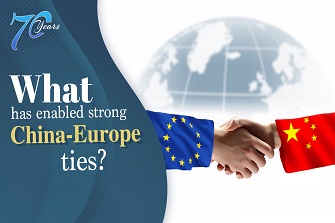
Antonio Villafranca: What has enabled strong China-Europe ties?
China's skyrocketing economy is the result of policies embraced by its leaders and of the strong will of its people. However, these alone would not be enough to enable China's economic miracle. China's success is also made possible by the country integrating itself into the international economy, the system inaugurated by western countries after the Second World War and out of which China emerged as a flourishing major world power.
2019-09-25 -
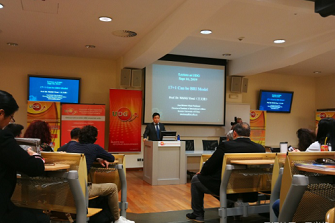
Wang Yiwei: Why West has begun to learn from China
"Seek knowledge even if you have to go as far as China" is a popular adage in the Muslim world. It has its origin in the hadith - traditions related to Prophet Muhammad, the founder of Islam. Now the West has begun to take the same road. Why should the West seek knowledge from China? The answer lies in the clear comparison between the two: The West is in relative decline compared to its previous glory, while China enjoys stability and development. With comprehensive reforms, China has proposed the Belt and Road Initiative (BRI) and the concept of community of shared future for mankind.
2019-09-25 -
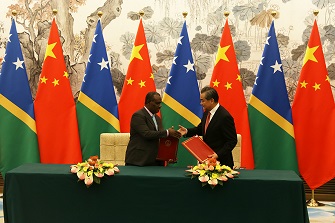
Zhao Minghao: Pacific island countries caught in America's China policy
Two island countries in the Pacific-the Solomon Islands and Kiribati- recently severed diplomatic ties with Taiwan. Such moves have been opposed by the U.S. and it even sent a navy ship to sail through the Taiwan Strait to advocate for "free navigation". But Washington's interference on the sovereign states' decisions makes no sense. Manasseh Sogavare, the Prime Minister of the Solomon Islands, said that the U.S. threatened to cut aid if the Solomon Islands decided to cut ties with Taiwan.
2019-09-24



















































 京公网安备 11010802037854号


