Commentaries
Your Present Location: Teacher_Home> Wang Wen> CommentariesHow Trump 2.0 accelerated China's push for tech and trade resilience
How Trump 2.0 accelerated China's push for tech and trade resilience
As intense US-China competition becomes the new normal, pressure has strengthened China's capacity to adapt rather than deter it from its long-term ambitions
Source: SMCP
Update: Jan 22 2026
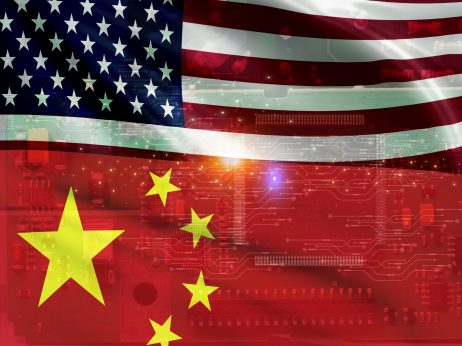
After a year of Trump 2.0, China has much to be thankful for. This is not an endorsement of US hegemony but an expression of confidence in China’s increased resilience – and an acknowledgement of the US policies that pushed China there.
The Chinese government’s stance towards Trump 2.0 remains the same: to adhere to its own principles, respond rationally and look to turn any crisis into an opportunity.
For a start, Trump 2.0’s tariff war on China has backfired. All it did was force China to diversify. Last year, trade with Belt and Road Initiative partner countries grew by 6.3 per cent to reach 23.6 trillion yuan (US$3.39 trillion), accounting for 51.9 per cent of China’s total foreign trade value. Trade with the European Union also grew by 6 per cent to 5.93 trillion yuan to account for 13 per cent.
In contrast, trade with the United States fell by 18 per cent to 4.01 trillion yuan and only accounted for 8.8 per cent. In particular, trade with the Association of Southeast Asian Nations (Asean) grew by 8 per cent, with Latin America by 6.5 per cent and with Africa by 18.4 per cent.
By October, China had upgraded its free trade agreement with Asean. In November, Chinese companies secured a record US$83.5 billion in import deals at the China International Import Expo (CIIE) in Shanghai. In December, the Hainan free trade port came into operation.
China can thank Trump 2.0 for putting the resilience of Chinese companies to the test, forcing them to go global and diversify under the catalyst of trade pressure.
Secondly, China remains undefeated by Trump 2.0’s tech war, which targeted the core of China’s industrial chain with chip export controls, an expanded entity list and other technological restrictions.
In semiconductors, China’s production of 28-nanometre chips is stable and improving, and locally produced electronic design automation (EDA) tools – used in chipmaking – are estimated to have supplied as much as a quarter of the domestic market last year. In a growing range of fields from electric vehicles to artificial intelligence, quantum computing and biomedicine, Chinese technologies are leading.
China can thank Trump 2.0 for forcing it to become more technologically self-reliant. But the leap could not have happened without national policy and the building of a technological foundation over the past decade. In the end, the US tech blockade spurred breakthroughs such as Huawei’s Ascend chips and champions such as Yangtze Memory Technologies Co (YMTC), China’s top flash memory maker.
Thirdly, Trump 2.0’s designs on Venezuela and Greenland, and threats on Iran, have taken the hegemonic logic of “America first” to the extreme. This is in contrast to China’s four global initiatives – for development, security, civilisation and governance – and its concept of a community with a shared future.
Thanks to the hegemonic arrogance of the US, more countries are seeking a different way and endorsement of China’s initiatives is growing. This is reflected in increasing interest in China’s Belt and Road Initiative, which saw its highest engagement last year in terms of the value of construction contracts and investments.
Trump 2.0’s protectionism and internal divisions contrast with China’s advantages in governance and opening up. Last year, America saw partisan disputes worsen, social divisions intensify and governance efficiency drop. China, however, continued its “high-level opening up”, welcoming 17 per cent more foreign-invested companies in the first 11 months of last year. Grass-roots governance continues to modernise, with community “grid” workers – who manage residential areas – reporting a conflict resolution rate of over 98 per cent in some areas last year.
But while China counts its blessings, this does not mean ignoring its many challenges.
The short-term economic impact of Trump 2.0 cannot be underestimated. Tariff barriers have hit profits for some exporters and supply chain adjustments have raised costs. A declining share of the US market has led to job pressures in some of China’s export-oriented coastal cities. The risk of global inflation and financial market fluctuations are increasing the difficulty of China’s macroeconomic regulation and control.
Also, Trump 2.0’s tech blockade poses long-term challenges. There still remains a gap between the US and China in areas such as high-end chips, core industrial software and precision instruments. Significant investment and sustained effort are needed in Chinese technology. Restrictions on the flow of high-end Chinese talent to the US for further study and tech cooperation hinder the openness of the innovation ecosystem.
The escalation in geopolitical risks also has an impact. Trump 2.0’s “Donroe” Doctrine poses a direct threat to China’s interests in Latin America, even as China’s overseas interests in general are braced for regional conflicts.
While China has a lot to be thankful for – its growth under pressure is an affirmation of national resilience and potential – the current situation of suppression and international tensions is not tenable. China wants to see healthy relations with the US, but this requires equality and mutual respect. Neither American hegemony nor all-out aggression is acceptable.
The intense US-China competition is becoming the new normal. China will continue to advance its national rejuvenation through the Chinese path to modernisation, maintain strategic composure in a complex environment, look to turn crises into opportunities, build a new development paradigm and promote reforms in the global governance system. China will proceed at its own pace; it will not be led astray by Trump 2.0.
Key Words: Trump 2.0, Trade resilience, US-China












































































 京公网安备 11010802037854号


