Commentaries
Your Present Location: Teacher_Home> Wang Wen> CommentariesThe US Cannot Push China out of Latin America
The US Cannot Push China out of Latin America
China’s role in Latin America is built on trade flows, long-term investment, financial links, and large-scale infrastructure projects that benefit both sides.
Source: The Diplomat
Update: Jan 17th 2026
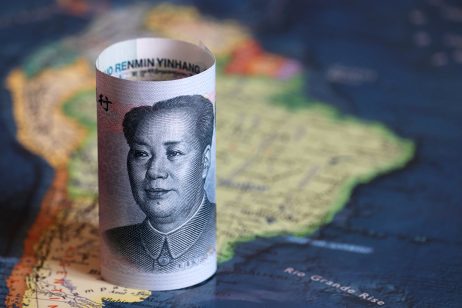
Following his surprise military intervention in Venezuela, in which U.S. forces struck targets and captured President Nicolas Maduro, U.S. President Trump has repeatedly stated the United States intends to push Chinese interests out of Latin America.
This approach has included a revival of Monroe Doctrine-style thinking that underestimates both the scale of China’s economic footprint in the region and the degree to which that presence has become embedded in local economies.
The scale of China’s investment and the depth of its cooperation in Latin America go far beyond Trump’s imagination. China’s role in Latin America is no longer marginal or experimental. It is built on trade flows, long-term investment, financial links and large-scale infrastructure projects that support China’s global supply chains and resource security while also tying regional growth to Chinese demand.
2024 saw China’s bilateral trade with Latin America surpass $500 billion for the first time, roughly 35 times the level in 2001. Trade for 2025 expected to exceed that mark again, highlighting the increasing depth of China’s economic engagement in the region.
While that figure remains well below the approximately $1.2 trillion in U.S.-Latin America trade, that comparison is somewhat misleading. About two-thirds of U.S.-Latin America trade consists of commerce with Mexico alone. If we only consider South America, China’s importance already surpasses that of the United States.
In South America China has already overtaken the United States as the primary economic partner in key countries including Chile, Peru, and Uruguay. Brazil sends about 28 percent of its exports to China, compared with roughly 13 percent to the United States. By sourcing roughly 65 percent of its soybeans from the region, China turned Trump’s agricultural leverage strategy into a public fiasco.
Investment patterns show a similar shift. China’s accumulated investment stock in Latin America, estimated at about $650 billion, is closing the gap with the U.S. total of roughly $1 trillion. Chinese investment is concentrated in energy, mining, infrastructure and renewable energy, sectors that shape long-term development rather than short-term consumption. Chinese firms have signed more than $300 billion in construction contracts across the region, far exceeding U.S. levels.
Efforts by Washington to block Chinese investment would face resistance not only from Beijing but also from Latin American governments and communities that depend on those projects for jobs, tax revenue and infrastructure upgrades.
The United States has long been accustomed to treating Latin America as its geopolitical backyard, deploying random trade rules to integrate Mexico and Central America into its sphere of influence.
But in South America China’s economic presence now rivals or surpasses that of the U.S. in commodities, infrastructure finance, and industrial inputs.
Latin America plays a critical role in China’s resource supply. In 2024 the region accounted for about 65 percent of China’s soybean imports, 40 percent of copper imports, and 30 percent of lithium imports.
At the same time China exports machinery, vehicles, consumer appliances and telecommunications equipment to the region, reinforcing two-way dependence.
I have visited Brazil, Peru, Chile, Argentina, and Ecuador multiple times. In those visits I have seen firsthand how Chinese investment is generally welcomed and that access to the Chinese market is viewed locally as an important economic opportunity.
Perhaps more concrete examples illustrate how deeply this relationship runs: About 90 percent of Chile’s cherry exports go to China. Peru’s Chinese-financed Chancay port, completed in 2024, reduced shipping times to Asia by about 12 days and generated more than $200 million in additional tax revenue in its first year, according to Peruvian officials. Chinese-built hydropower plants, hospitals, and schools are operating across several countries delivering tangible benefits to communities.
If access to the Chinese market were suddenly restricted, the consequences would be significant for export-dependent sectors. Those Chilean fruit farmers, for example, could face bankruptcy, while local economies would experience sharp declines in foreign exchange earnings, with broader social and economic implications.
The U.S. market cannot replace China’s, and most Latin American countries will instinctively resist attempts by Washington to control their economic choices.
It is my personal experience that most Latin American countries are tired of U.S. hegemony and pursue a more diverse diplomacy. After the release of China’s 2025 Policy Paper on Latin America and the Caribbean, 12 countries expressed interest in deepening cooperation, reflecting a shared rejection of today’s “Donroe Doctrine”-style policies.
China’s approach differs from historical models of extraction or coercion and stands in contrast to the strategic intentions of both the 19th-century Monroe Doctrine and the 21st-century “Trump Corollary.” China’s influence in Latin America does not rely on military bases or political strings but is largely market-driven, focused on stable resource supply, investment returns, and reliable trade routes.
The ingrained habit of U.S. realpolitik thinking simply fails to grasp the forces behind the surge in China-Latin America cooperation over the past 20 years. Through a model of “win-win cooperation,” Beijing seeks to secure its interests and ensure stability through reliable resource supply, guaranteed investment returns, and unobstructed strategic channels. There’s no need for political strings or hegemonic coercion. The notion that bilateral trade between two sovereign countries could be halted by a Trump tweet, administrative order, or declaration of a “Donroe Doctrine” is buffoonishly simplistic.
Trump can apply political pressure, of course. He can support pro-U.S. regimes in some Latin American countries, use rule-based mechanisms for economic coercion, spread misinformation through narratives like the debt trap fallacy, and restructure supply chains through nearshoring or tariffs.
But if the U.S. attempts to marginalize Chinese interests through a gradual, salami-slicing approach, China is likely to respond with a composite strategy of defensive counterattack and strategic escalation. This includes economic integration, financial empowerment, rule restructuring, diplomatic coordination, and risk management, designed both to protect existing investments and expand new areas of cooperation, solidifying the China-Latin America community of shared economic interests.
China’s toolbox includes capabilities that Trump did not anticipate. Put simply, the U.S. did not win the first trade war against China in 2018 and is even less likely to win the second now. The current tariff truce underscores the limits of American trade leverage. In Latin America, attempts to challenge China’s influence are likely to expose the gap between U.S. rhetoric and its actual capacity.
A more pragmatic approach for Washington would be cooperation with China in Latin America ‒ joint investment and commercial engagement with regional countries ‒ rather than exclusion.
U.S. and Chinese interests do not have to be zero-sum in Latin America. Both parties could thrive through engagement, not confrontation. But the Donroe Doctrine treats cooperation as a threat and still thinks a tweet can reshape trade.
Key Words: China, U.S., Latin America




















































































 京公网安备 11010802037854号


