Commentaries
Your Present Location: Teacher_Home> Wang Wen> CommentariesSci-tech spending to rise 10% this year
Sci-tech spending to rise 10% this year
Source: China Daily
Update: Apr 7th, 2026, 9:09 AM
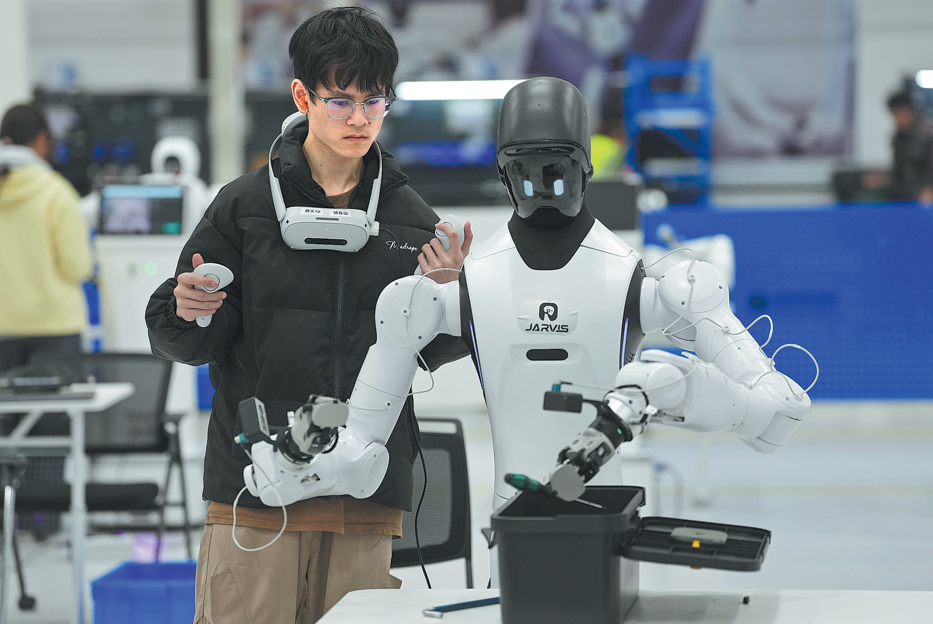
A technician checks a humanoid robot at a tech company in Ningbo, Zhejiang province. HUANG ZONGZHI/XINHUA
China plans to increase fiscal expenditure on science and technology by 10 percent this year to 426.42 billion yuan ($62 billion), the fastest growth among major spending categories, as part of a sustained push to achieve technological self-reliance.
The proposed spending significantly outpaces the average growth rate for central government expenditures, which is budgeted at 5.5 percent, according to the 2026 central budget released by the Ministry of Finance in March.
In 2008, science and technology related spending stood at about 107.7 billion yuan, accounting for 8 percent of central expenditures. It surpassed 200 billion yuan in 2012, topped 300 billion yuan in 2018, and is now expected to surpass 400 billion yuan this year, representing about 9.4 percent of central spending.
The spending priorities align with the Government Work Report, which identified accelerating high-level technological self-reliance as one of the key tasks this year. The report called for "strengthening original innovation, tackling core technologies, increasing investment in basic research and providing long-term stable support".
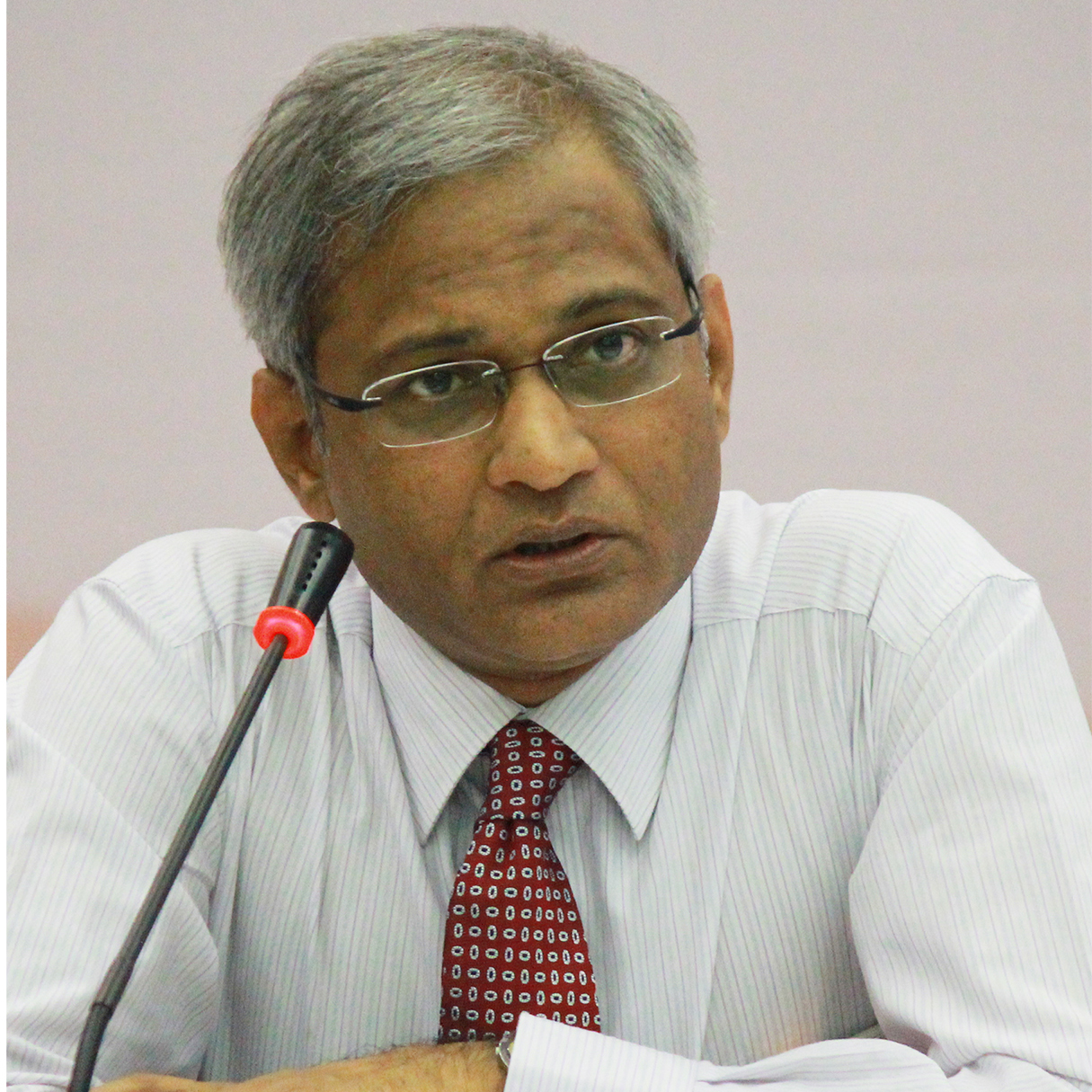
The substantial increase in science and technology spending comes amid intensifying global competition, particularly in high-tech sectors, said Wang Wen, dean of Renmin University of China's Chongyang Institute for Financial Studies.
China has broken into the global top 10 of innovation rankings for the first time, according to the Global Innovation Index 2025 released by the World Intellectual Property Organization in September.
"There is now a palpable sentiment that China could become a true leader in technological fields, a shift from five years ago when the focus was primarily on catching up with the front-runners," Wang said. "This requires sustained, long-term investment."
To this end, the emphasis on basic research is particularly significant. According to the budget, funding for basic research is set at about 116.9 billion yuan, up 16.3 percent from the previous year, while funding for applied research is projected at about 156.9 billion yuan, down 13.3 percent.
"Key core technologies cannot be bought, begged or borrowed — they have to be achieved through our own efforts," said Pan Jiaofeng, president of the Institutes of Science and Development at the Chinese Academy of Sciences.
"Take integrated circuits and foundational software, for example. These are technologies that leading countries have cultivated over decades, and our push in these fields is relatively recent," Pan said. "The question is how we can traverse in a relatively short time a path that took others decades to complete. We are now at the stage of having to crack the hard nuts."
Pan also stressed that it's imperative to maintain focus and investment over the long term, even when progress is incremental and results are not immediately visible.
The government's commitment to innovation extends beyond direct science spending. The 2026 central budget allocates 200 billion yuan in ultra-long special treasury bonds to support equipment upgrades across industries.
Additionally, 250 billion yuan in ultra-long special treasury bonds is designated for consumer goods trade-in programs, which will help create market demand for innovative products.
A growing number of multinational corporations are establishing innovation centers in China, drawn by the country's rapidly maturing research environment, deep talent pool, and unique ecosystem that combines market scale with technological dynamism.
"We look at China not just as a market; we see China as a production base and, in particular, a base for innovation," said Rogier Janssens, president of Merck China. "We need Chinese talent to drive innovation, enhance supply chain efficiency, optimize production systems and find market opportunities."
Key Words: Tech, rise 10%, China









































































 京公网安备 11010802037854号


