Commentaries
Your Present Location: Teacher_Home> Wang Wen> CommentariesBeijing sees Starmer visit as chance to widen crack in western unity
Beijing sees Starmer visit as chance to widen crack in western unity
The PM is hoping for trade deals to improve the economy but booming China has little need of British goods and has other ideas in mind
Source: The Times
Update: Jan 28th 2026

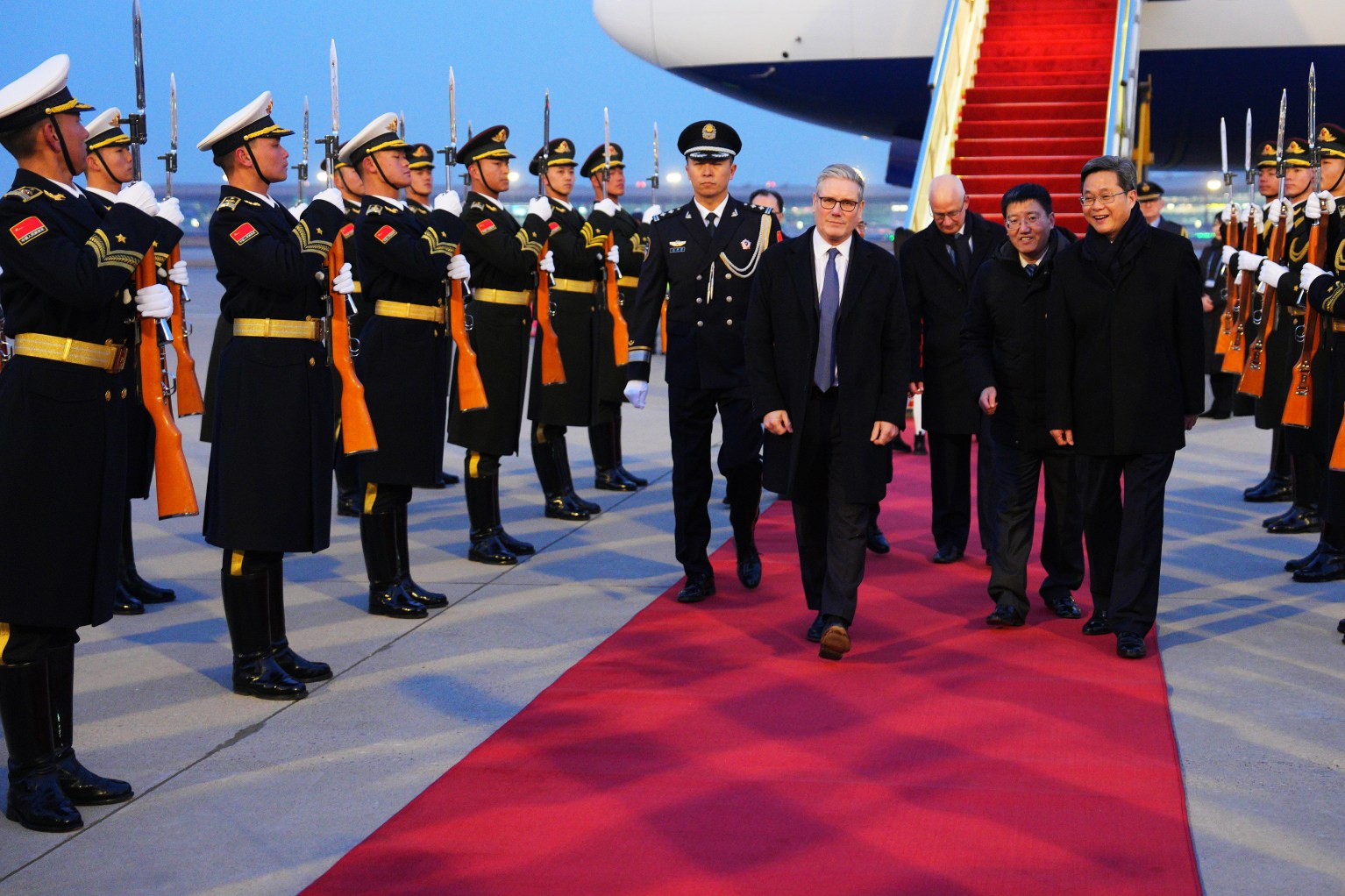
The UK is not and never will be China’s favourite country, thanks to the defeats inflicted on it by British forces in the age of empire. But diplomatic niceties still matter and Sir Keir Starmer’s visit — the first visit by a British prime minister since 2018 — is regarded in Beijing as a win and was heralded with an honour guard when he stepped off his plane.
China does not like the criticism over problems such as human rights and spying that it has faced from UK politicians in recent years. Britain may no longer be a great power but it still has a voice, not least as a fellow permanent member of the UN security council.
Perhaps optimistically, Beijing now believes those voices will be quieter.
• Starmer vows no more ‘ice age’ with China
But what makes Starmer’s visit even more important to China is its timing, though that is accidental. No one could have predicted, when the visit was first mooted two years ago, that it would take place in the wake of a decision by President Trump to offend all America’s closest allies at once.
Beijing sees a chance to make strategic inroads, or at least sow confusion in the western world, which had until recently been united in trying to “contain China”.
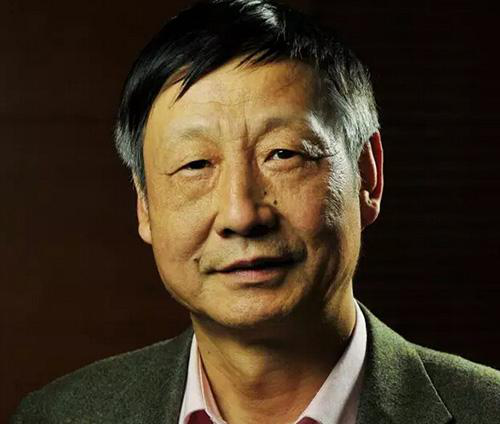
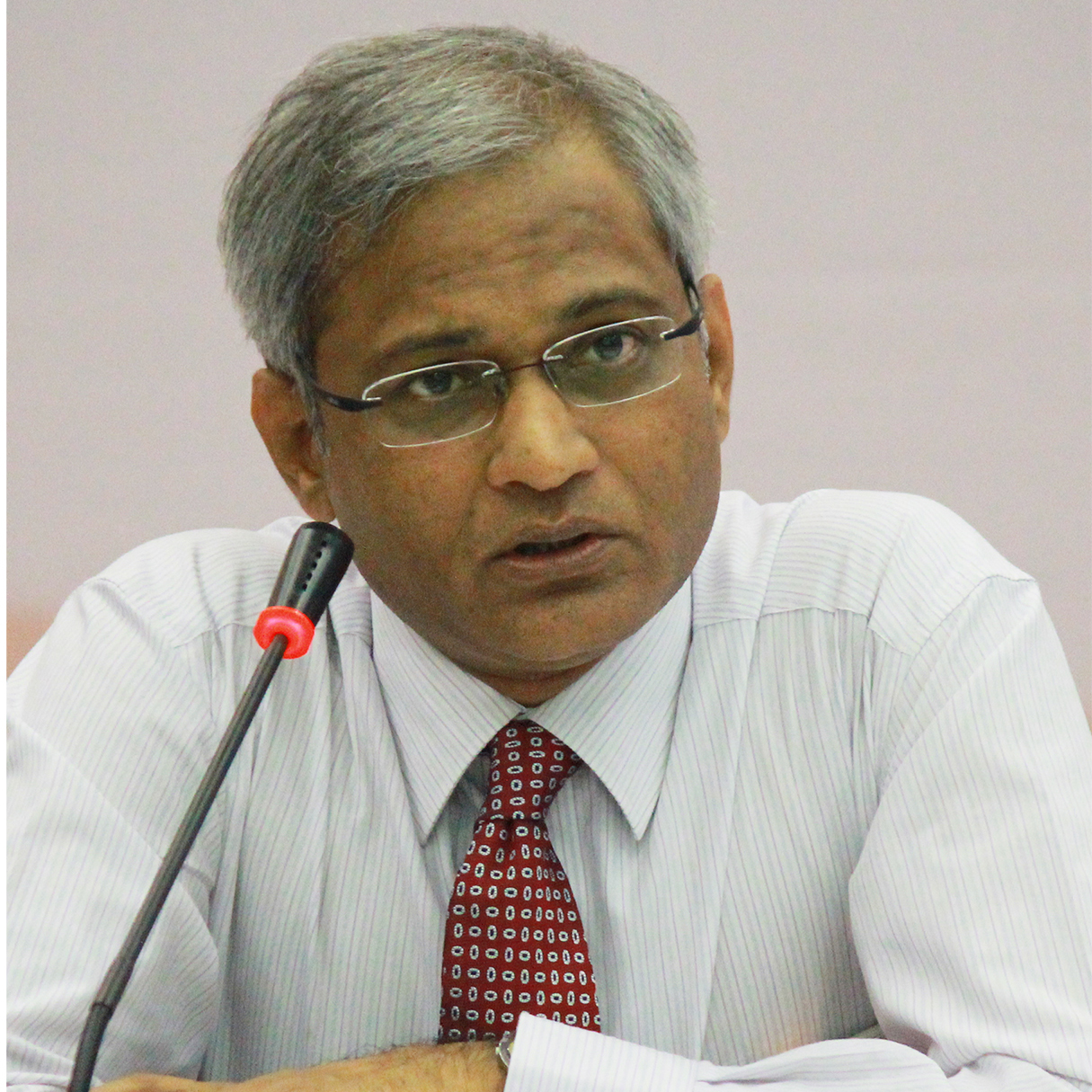
“Starmer’s visit to China and his statement that ‘there is no need to choose sides between China and the US’ signify a crack or even failure in the western collective strategy of blockading and containing China,” said Wang Wen, the government-linked head of a research unit at People’s University in Beijing. “It also proclaims, in a pragmatic manner, the end of the narrative of the western containment strategy against China.”
That may yet prove to be a Chinese hope rather than reality. Two weeks ago Mark Carney, the Canadian prime minister, drew a furious response from Trump by calling China a more reliable partner than America. But Starmer shows no sign that he wants to weaken the transatlantic relationship in the same way.
• Realpolitik rules but Britain makes it too easy for China
Still, China is eager to make capital out of the undoubted rifts in both political and popular attitudes to America caused by Trump’s recent comments about Greenland, Nato and the military record of US allies in Afghanistan.
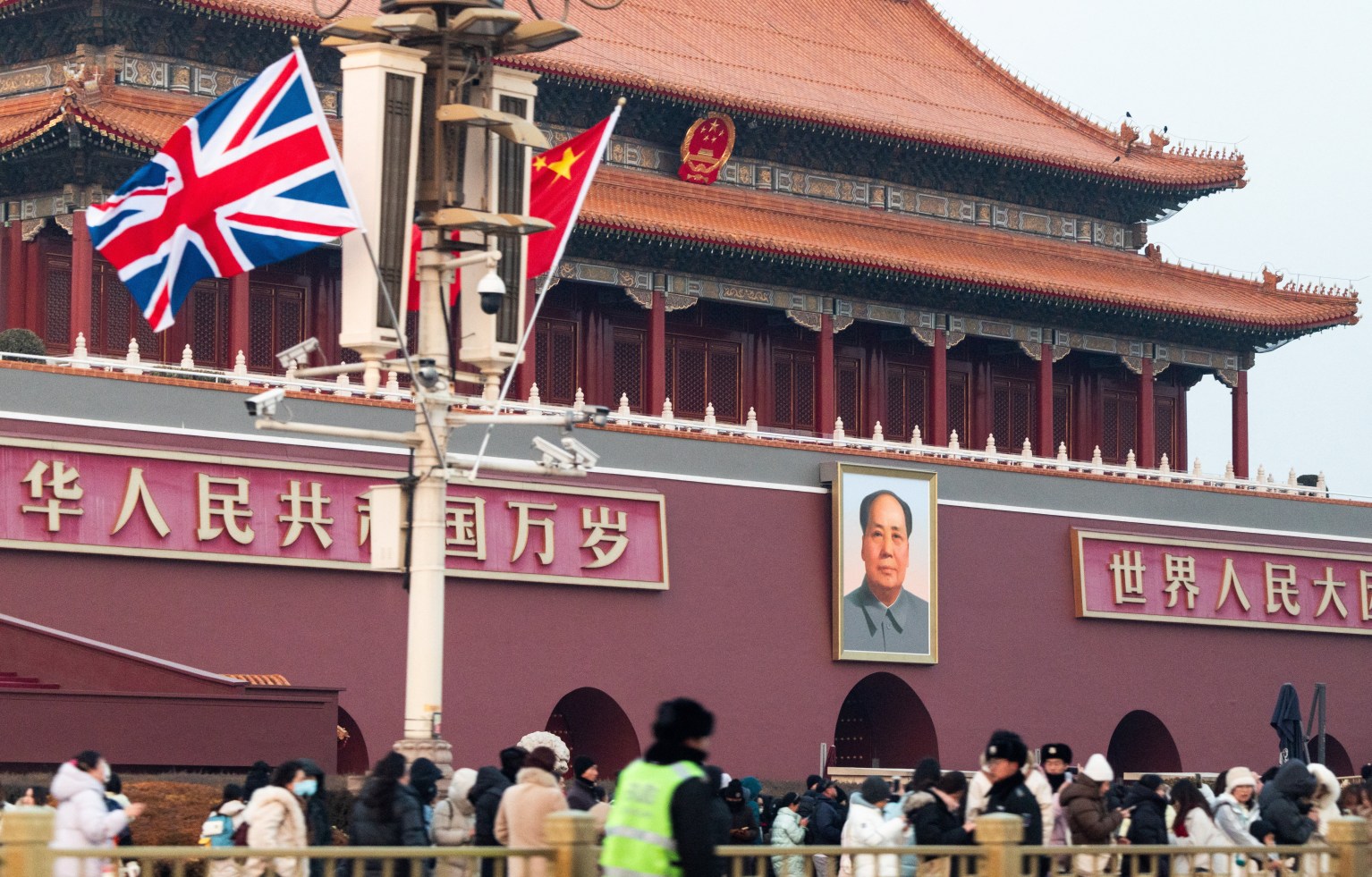
The question is what can China give Starmer as a reward for his visit, other than fine words and the obligatory tour of the Forbidden City?
Britain’s mantra is that it wants to “co-operate, compete and challenge” when it comes to China. Beijing is all for co-operation but, as with any country, that depends on its own interests. It is unlikely to offer concessions on human rights or put pressure on Moscow to stop the war in Ukraine.
As for competition or challenge, it does not feel a huge amount of either from Britain at the moment, as China’s tech industries, global diplomatic outreach and military strength power ahead.
• Cost of keeping China happy over embassy won’t buy much in return
Starmer’s most obvious desire is for a boost to trade, and in particular anything that will add a few notches to British GDP. He is being accompanied by 50 business chiefs, in a return to the sort of entourage that George Osborne, the Tory former chancellor, would bring when he was heralding the “golden era” of UK-China relations.
That is not foolish in principle — personal and political relationships are important when it comes to China. If Britain is not politically in favour, companies won’t be open to deals either.
In practice, though, UK-China trade is lopsided to China’s advantage. This is unlikely to change unless Britain really does decide to turn against Chinese windmills, electric vehicles and other tech products on security grounds. Starmer’s visit suggests that is not the case.
British exports to China, less than a third of its imports, have hardly changed in the past decade — no matter whether relations were officially in a “golden era” or an “ice age”.
The once longed-for bonanza for the City of London in terms of opening up China’s financial services market has never materialised, though there are some odd, marginal quirks, such as UK holdings of Chinese gold reserves, which show up in some trade figures despite never moving from the Bank of England’s vaults.
In terms of actual, hard goods, China (including Hong Kong) has spent more than £20 billion on “buying British” in each of the last seven years — up a bit, 6.4 per cent, in 2024-5, but down a bit, 1.2 per cent, the year before — according to the China-Britain Business Council. By contrast, Britain spent more than £60 billion on imported Chinese goods.
Left to themselves, those imports may not grow much more. Britain’s style leaders are proud that its fashion — Burberry is very popular — design and architecture appeal to the Chinese elite. But in terms of hard cash, the big earners are education, power equipment, cars and pharmaceuticals — and in each of these sectors, China is moving quickly up the value chain and determined to import less, not more.
In his current five-year plan, still the most important indicator of policy, President Xi set out clearly how he wants China to become more and more self-reliant, rather than indulge in further globalisation of its supply chains, and its companies are already on their way.
• Xi quashes rumours of party rift with bold demand for growth
Britain has two big pharmaceutical companies operating in China — GSK and AstraZeneca. But China is investing hugely in its own pharmaceutical industry, including in the use of artificial intelligence to design new drugs.
Elsewhere, the trend is also against the integration of China into global trade, the biggest economic trend of the past three decades. A survey this month by the European Chamber of Commerce in Shanghai found that 70 per cent of firms were investigating ways of separating their China supply chains from those in the rest of the world.
Britain has always hoped that its commitment to free trade will be rewarded. Rather than putting tariffs on Chinese electric vehicles, for example, as the US and EU are doing, it is trying to encourage Chinese companies to invest and build cars in Britain.
Whether the effect of any of the trade deals that are announced this week will show up in time to rescue the British economy remains open to question.
“It would be pretentious and naive to think that trade or City of London commercial deals are anything more than marginal to the UK economy,” said George Magnus, an economist and an associate at Oxford University’s China Centre. “And we’d also need to look at what the Chinese are getting in return because leverage and dependency matter — a lot.”
Key Words: Starmer, Visit, China








































































 京公网安备 11010802037854号


