Commentaries
Your Present Location: Teacher_Home> Wang Wen> Commentarieshas the case for PRC capital opening changed?
has the case for PRC capital opening changed?
Source: Substack-China Policy leads
Update: May 20th, 2026
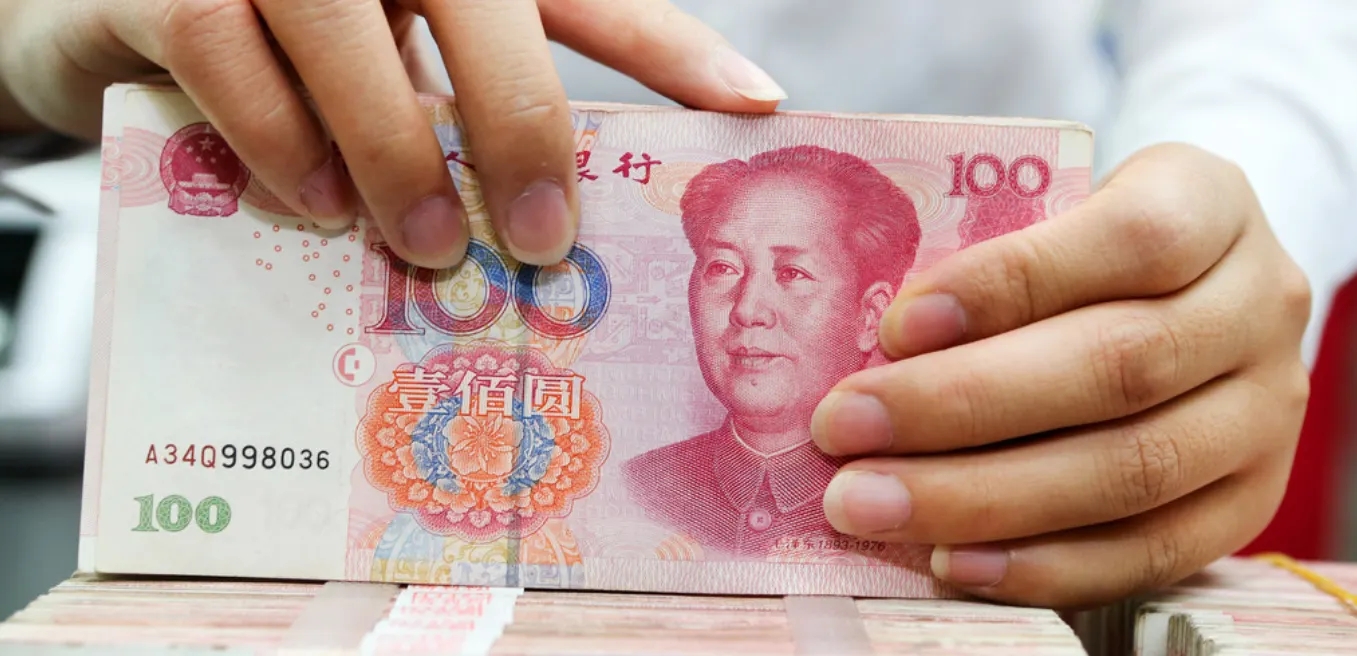
Beijing welcomes PRC firms expanding abroad and moving capital with them. Household savings shifting into foreign assets is another matter.
The difference between capital ‘flow’ and ‘flight’ is the whole argument. That distinction, drawn by Liu Xiaochun 刘晓春 Shanghai Financial Institute, is the operating principle behind the 15th 5-year plan’s push to ‘promote opening the capital account’ and ‘step up RMB internationalisation’.
The capital account remains tightly managed; openness sits at 16 percent of the OECD average, but the signals point one way.
Full liberalisation is not envisaged. The plan signals ‘limited globalisation’ of international finance: selective opening, monitored at every stage, with ‘firewalls’ installed along the way. The aim, as Xia Bin 夏斌 China Chief Economist Forum chair frames it, is not to give up control, but to ward off shocks, sustain growth and cut reliance on the US dollar. Exchange-rate flexibility and macroprudential oversight are meant to rise with each step outward.
the case for resilience
US sanctions on Russia sharpened Beijing’s drive for a more resilient financial regime. Threatened curbs on PRC currency and cross-border payments added pressure. Spurring RMB internationalisation, or at least initiating ‘regionalisation’, helps mitigate dollar-denominated shocks. It gradually builds PRC sway over global production in ways that recall, in Xia Bin’s analogy, US financial expansion after World War II.
RMB internationalisation and capital account opening are linked in both directions.
The two must move in tandem says SAFE (State Administration of Foreign Exchange) head Zhu Hexin 朱鹤新. Without further capital account opening, RMB internationalisation will stall ,Zhang Liqing 张礼卿 Central University of Finance and Economics warns.
The 15th 5-year plan sets out a prospective shift from a channels-and-quota approach, QFII (Qualified Foreign Institutional Investor) and QDII (Qualified Domestic Institutional Investor), to an upgraded negative-list model with activity-based oversight, laying groundwork for freer convertibility over time, says Wang Wen 王文 Renmin University Chongyang Finance Research Institute.
Concerns over large-scale outflows have receded among PRC economists. A weaker US dollar, less reliance on dollar debt, a firmer domestic market and overseas investors’ underweight position in PRC assets all reduce the risk, argues Miao Yanliang 缪延亮 China International Capital Corporation. The large PRC M2 stock, adds Li Xunlei 李迅雷 Zhongtai Securities, reflects the current exchange-rate set-up, whereby the central bank is obliged to expand the money supply as it buys foreign currency; greater opening would trim that figure, as some residents shift into FX and foreign inflows widen offshore RMB use.
following the money out
Outbound investment by PRC firms in non-financial sectors rose 36 percent 2019–25, as production and supply chains moved abroad, building out capital projects in tech and infrastructure. Firms doing so need capital account policy to keep up. PRC firms need greater flexibility to allocate funds globally, argues Zhou Chengjun 周诚君 PBoC Finance Research Institute, in line with their liquidity needs and risk appetite; Li Xunlei adds that a more open RMB capital account would support firms’ overseas mergers and acquisitions.
By end-2024, RMB outward loans had risen 14 and inter-firm cross-border RMB payments by nine percent, as firms tapped steadier domestic financing and better rates at home to fund expansion abroad. Beijing has raised the ceiling on how much PRC firms can lend overseas, giving them more room to manage cross-border capital allocation. Sheng Songcheng 盛松成 China Europe International Business School describes the move as a shift towards a more market-driven approach that puts RMB international financing to work in the real economy.
how it works in practice
On the inward side, market access thresholds for foreign investment in select sectors have been reduced, and more flexible currency-fund pools and cross-border fund policies piloted in (free trade zones) are being rolled out nationwide. The ‘more compliant, more convenient’ links regulatory treatment to firm behaviour, allowing trusted firms faster, simpler processing of trade settlement and cross-border financing.
New debt channels and higher funding caps, including free trade bonds and green foreign bonds, are intended to bring more foreign capital onshore gradually. Beijing has also widened outbound-side cross-border finance channels in February 2026, including RMB cross-border interbank financing and a higher macroprudential coefficient for firms’ overseas lending.
Oversight is seeing a parallel shift. New rules on funds linked to overseas listings fold activities, from IPO registration to buybacks and delisting, into a single framework, transferring many routine approvals from SAFE to banks. Banks now handle compliance checks and client service on the front line, while oversight shifts focus to ‘unified rules’, ‘account controls’ and ex-post data tracking. Control is not loosened so much as recast: flexibility is available, but only with clear, traceable fund flows.
controlled by design
The ‘impossible trinity’, a principle of international political economy traced to the 1930s, holds that monetary policy autonomy, exchange rate stability and full capital mobility cannot coexist, argues Ding Zhijie 丁志杰 PBoC Finance Research Institute director. Further capital account opening, even incremental and controlled, forces a choice between exchange rate control and independent monetary policy. Beijing cannot keep all three.
Whether as obstacles to RMB internationalisation or preconditions for managing it safely, capital controls are contested among PRC economists. Peng Wensheng 彭文生 China International Capital Co. argues that as global financial rules are tightening in ways that recall the Bretton Woods era, such controls may do less to impede RMB internationalisation than commonly assumed.
Closing the capital account does not guarantee insulation from shocks, argues Miao Yanliang: financial stress spreads even without direct links, as in 1998 when Russia’s default hit Brazil despite scant bilateral ties. The safer bet, on this reading, is a system built to absorb and manage shocks rather than to wall them out.
The practical upshot is a division cleanly captured by Lian Ping 连平 Guangkai Industry Research Institute: ease corporate outflows where appropriate; keep household outflows tight. Opening the capital account for Beijing means channelling the flows it wants while holding the line on those it does not.
For Beijing, opening without liberalising is not a contradiction. It is the policy.
Key Words: PRC, Capital, Opening






















































































 京公网安备 11010802037854号


