Commentaries
Your Present Location: Teacher_Home> Liu Ying> CommentariesChina Critical for U.S. Businesses, Survey Finds
China Critical for U.S. Businesses, Survey Finds
Source: Los Angeles Times
Update: Jun 26th, 2026 4:11 PM
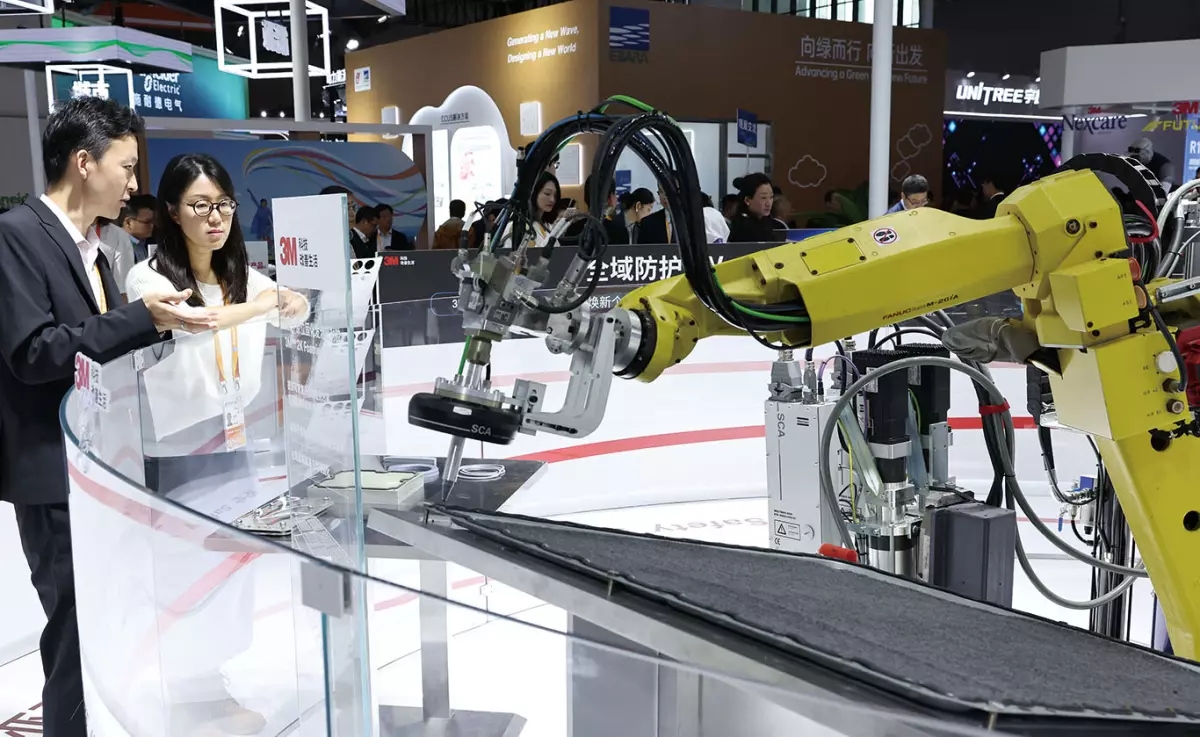
Amid signs of positive developments in bilateral economic ties, experts said that if China and the U.S. manage their differences and find more common ground, it would serve the interests of business in both countries.
Their comments came after an annual member survey conducted by the U.S.-China Business Council found that 95% of respondents consider China “somewhat to very important” for staying globally competitive.
“For U.S. companies, China is not optional,” the council said, summarizing the survey report issued on June 10.
Sean Stein, president of the U.S.-China Business Council, said the results are clear. “Despite the challenges, competing in China is a prerequisite for many American companies to compete globally.”
The survey report emphasized that U.S. businesses are “not leaving China” because the Chinese market remains important “not only for scale but also for being a multifaceted source of global competitiveness”.
The survey found that almost half of U.S. companies apply the experience they gain through their China operations to other markets.
Liu Ying, a researcher at the Chongyang Institute for Financial Studies at Renmin University of China in Beijing, said China and the U.S. are now competing in many high-value industries.
“That does not mean cooperation is impossible, but it requires a much more sophisticated approach than the simple complementary model of the past,” Liu said.
In May the two countries agreed to establish trade and investment councils — intergovernmental cooperation platforms that will provide ground for resolving disputes before they escalate, and help foster a more stable and predictable environment for businesses in both markets.
The Chinese Ministry of Commerce said that through the trade council the two countries would discuss issues such as reducing tariffs on specific products, and that they have agreed in principle to reduce tariffs on products of an equivalent scale worth $30 billion or more on each side.
Zhu Min, former deputy managing director of the International Monetary Fund, said that differences between China and the U.S. are inevitable, but so is collaboration.
“Through a constructive approach, one that uses expanding cooperation to manage differences, both nations and their peoples stand to benefit; and so does the world. We need to keep lengthening the list of cooperation items while shortening the list of differences.”
Henry Ding, president of 3M China, said China is the largest overseas market for the U.S. industrial conglomerate, and the company remains confident in the broad opportunities created by China’s high-quality development.
In recent years 3M has accelerated the localization of its full value chain in China, spanning research and development, testing and manufacturing.
“Today more than 50% of the products 3M sells in China are manufactured locally,” Ding said.
“This year 3M China will continue to increase its local R&D investment and plans to achieve more than 30% growth in new product launches compared with 2025, significantly outpacing other global markets.”
The business council said: “U.S.-China relations remain companies’ greatest challenge in the China market, and despite the truce, both governments continue to release new economic security policies.”
As the two countries set the agendas for the trade and investment councils, Stein said, the results of this year’s survey should serve as a wake-up call for policymakers in both countries.
“We have a real opportunity to make progress on more than just tariff reductions.”
Key Words: China, Business, Survey






















































































 京公网安备 11010802037854号


