Commentaries
Your Present Location: Teacher_Home> Ding Gang> CommentariesChina challenges Western ‘tribute system’ theory in push to control its narrative power
China challenges Western ‘tribute system’ theory in push to control its narrative power
Article by US billionaire investor Ray Dalio puts spotlight back on English term used to describe Chinese diplomatic and economic posture
Source: SCMP
Update: Aug 10th, 2026 8:30 PM
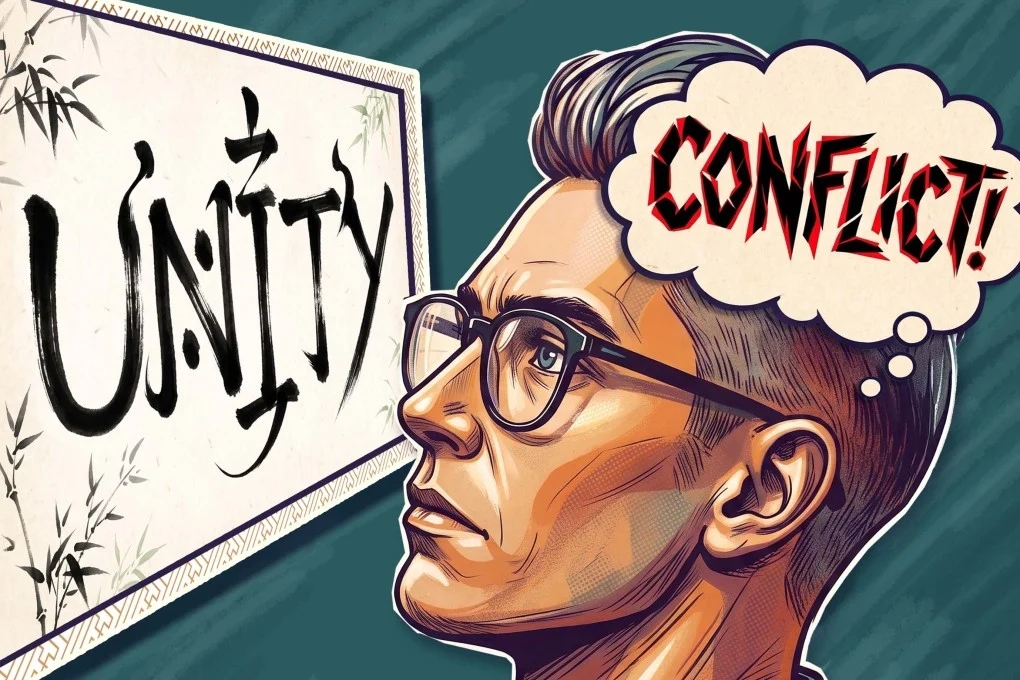
Illustration: Mario Rivera
Beijing is stepping up efforts to challenge the Western concept of the “tribute system”, arguing that foreign frameworks distort ancient Chinese diplomacy and misrepresent the country’s contemporary global rise.
China is redoubling efforts to define its own practices, experiences and ideas through original, home-grown social science language rather than through what it says are Western conceptual lenses.
The theory was forged and made popular in the US decades ago as a means to interpret both ancient and contemporary Chinese diplomacy. China’s push for narrative power to win over a broader overseas audience continues to be tested, including among foreign perceptions of Chinese history and practices.
In a recent example, American billionaire investor Ray Dalio wrote in an article published on his Substack on June 19 that “we are in the very early stage of a shift to a tribute system-type order in the Asia region and even beyond”.
He argued in the article “The Tribute System: The New World Order” that while China’s economic and financial powers were growing rapidly, the US handling of Iran’s seizure of the Strait of Hormuz had convinced others that Washington “doesn’t have what it takes to fight to maintain its empire”, prompting a change in thinking by global leaders.
The founder of Bridgewater Associates, one of the world’s biggest hedge funds, said the dynamic was reflected in the many visits by foreign heads of state and their delegations to Beijing since late last year, which Dalio characterised as efforts “to build tribute-type relationships” with Chinese President Xi Jinping.
The “tribute system” is a term coined in the 1940s by John King Fairbank, a Harvard historian credited with founding the academic field of modern Chinese studies in the US, and his collaborator Ssu-yu Teng, for a Sinocentric, hierarchical model of international relations that prevailed before unravelling in the second half of the 19th century.
As China’s global standing has risen, analysts and policymakers in many countries have repeatedly revisited the more than 80-year-old term to assess Beijing’s foreign policy and potential strategic calculations, despite broad objection to the concept within academia.
Even Fairbank had reservations about its use, writing that “tribute” was a “very rough and often misleading” translation borrowed from European vocabulary.
Its use led to views that China could be leveraging its Belt and Road Initiative to build a so-called new tribute system centred around it to extend increasing influence and power across the neighbourhood and beyond, prompting rebuttals from Chinese scholars.
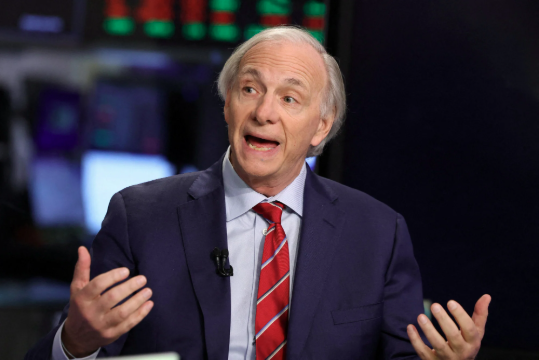
Ray Dalio, founder of Bridgewater Associates, is pictured in April. Photo: Reuters
Mention of the notion by Dalio – who has long been seen as a bridge between China and the United States and a frequent visitor to senior Chinese officials – did not appear to strike a chord with officials in Beijing.
“The so-called tribute system is a false image projected by the Western hegemonic logic onto Chinese diplomacy,” Chinese foreign ministry spokesman Lin Jian said on July 16, responding to a question apparently about Dalio’s argument, even though he was not identified by name.
That was two days after a social media channel named Chaoyang Shaoxia – which is widely believed to be affiliated with the ministry – published a long critique of the concept.
“Using the negatively loaded English word ‘tribute’ to describe the ancient Chinese concept of chao gong is highly misleading to international audiences unfamiliar with Chinese culture,” it said.
According to the tribute system theory, which is called “the Chinese world order”, China’s historical dynasties were considered the centre of civilisation, culturally and morally superior to outsiders, who would naturally come bringing “tributes” – usually produce from their native lands – to pay homage.
In return, Chinese emperors would reward them with fine objects, formally invest their rulers as native kings or chieftains, and grant them access to trade with the Middle Kingdom.
According to Dalio’s post, relations in the tribute system were not between equals but between superiors and subordinates who should treat each other well to preserve harmony.
If an inferior power treated a stronger one inappropriately, the latter would typically punish it through pressure and deception, although also occasionally by violence, he added.
But Chaoyang Shaoxia noted that the term tribute was “born with the attributes of coercion, violent plunder and one-way exploitation”, as it was derived from a Latin word that originally referred to Roman imperial taxes on provincial populations, and later forced medieval payments from vassals to feudal lords in Europe.
It stated that the formulation did not correspond to chao gong, a term it said was intended to denote “voluntary” acts of reaching out to others based on appreciation and “spontaneous” behaviours of presenting gifts to express goodwill.
The channel said ancient China had followed the principle of hou wang bo lai, or giving generously and taking little. This meant it returned goods to so-called tributary states worth far more than what they had been offered, making the arrangement economically lucrative for them.
It also argued that while modern China had inherited the traditional philosophy of “valuing harmony above all”, it had “completely” abandoned the hierarchical world view of imperial times and firmly upheld that all countries, regardless of their size, wealth or strength, were equal.
The mismatch between “the tribute system” and China’s historical practice “effectively reflects a deeper question of who has the final say and who sets the definitions in the international public opinion sphere”, Chaoyang Shaoxia said.
“For years, China’s ideas and image have faced a problem of being shaped by others rather than by itself. The West has always projected its own historical experience onto China and measured China by its own value standards.
“For cultural concepts unique to China that lack direct English equivalents, or for existing Western translations that carry colonial, exoticising or prejudicial connotations, we can definitely forge a new path.”
The critique comes as Beijing steps up its push to build a “Chinese intellectual system in philosophy and social sciences”, reiterated by Xi in May in a directive urging the development of indigenous, independent theories and knowledge that can explain China’s practices to the outside world without being allegedly monopolised or distorted by Western concepts and narratives.
The effort has extended beyond contemporary Chinese politics, diplomacy and law, to scrutinising foreign origin theories about China’s history, as those interpretations are increasingly seen as relevant to the country’s current domestic governance and foreign policy.
For example, Chinese scholars and officials in recent years have taken aim at the “New Qing History” school of thought that emerged in the US, saying it misreads China’s past and inherently threatens the country’s national unity today by providing historical ammunition for separatism in border regions.
Zheng Yongnian, a Chinese political scientist, cautioned that historical experiences in China were often used as case studies for Western concepts and theories, which would not help the world understand the country accurately.
He said the term “tribute system” was the result of Fairbank imposing Western frameworks on China because he could not find an exact equivalent in the English lexicon.
Zheng said the way ancient Chinese states organised their external relations more closely resembled what would today be described as China’s policy of unilateral opening-up.
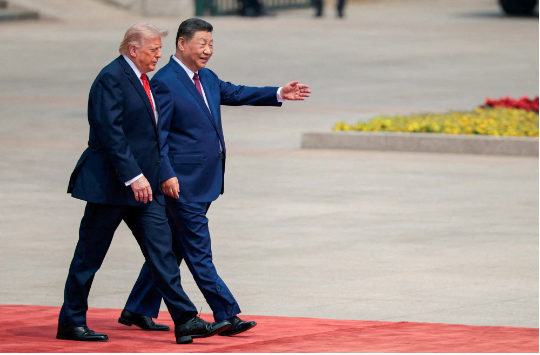
US President Donald Trump walks with Chinese President Xi Jinping at the Great Hall of the People in Beijing in May. Photo: Reuters
Liu Wenming, a history professor at Capital Normal University in Beijing, has also called for re-examining the tribute system as a “foreign concept” to help “eliminate misunderstandings of Chinese history … and to better appreciate the peaceful and friendly nature of the regional order in ancient East and Southeast Asia”.
“Until a more appropriate translation is found, transliteration remains a viable option, namely using chao gong in English,” he wrote in an article published in July last year in Historical Review, a bimonthly journal supervised by the state-run Chinese Academy of Social Sciences.
In its article on July 14, Chaoyang Shaoxia suggested that “the tribute system” could be replaced with “jade-silk covenant” or “treasure ship model”, referring to Ming dynasty admiral Zheng He’s seven voyages into the Indian Ocean in the 15th century. Beijing has long portrayed the historical episode as a symbol of China’s peaceful rise, win-win diplomacy and openness to the world.
However, those alternative translations could also run into headwinds from competing narratives abroad, with many foreign scholars noting that the Chinese mariner’s “treasure ships” were heavily armed. Some also cited records pointing to coercion and conflict when local rulers failed to pay due respect, with others framing Zheng’s expeditions as “power projection” or “proto-maritime colonialism”.
A similar challenge to external messaging has surfaced in discussions surrounding China’s Ethnic Unity and Progress Promotion Law, which took effect last month.
While Chinese officials may use the term “unity” to convey that the legislation emphasises interaction, exchange and blending among ethnic groups in China on an equal footing – premised on the coexistence of differences – overseas media use terms such as “integrate” or “assimilate”.
“On the surface, this appears to be a translation issue, but in essence it is a question of who has the power to define,” Ding Gang, a senior editor with the official People’s Daily, wrote in an article on social media on July 7.
“The public debate surrounding this law is ultimately not just about the legislation itself, but about who has the authority to interpret a particular development path,” added Ding, who is also a senior fellow with the Chongyang Institute for Financial Studies at Renmin University in Beijing.
He said that in the English-speaking world, the word “unity” had never been used to describe how different ethnic groups coexist amid their differences.
Because of differences in knowledge, foreign audiences would “naturally” substitute it with concepts more familiar to them and “automatically” link China’s ethnic policies to their historical memory of Western colonisers’ cultural and racial oppression of indigenous peoples, he argued.
Ding added that the association of “China’s ethnic policy” with “assimilation” had become a common sense-style default perception in Western coverage of China-related issues.
He called for greater attention to the “concepts” that could allow China’s “stories” to properly land with the foreign audience.
“Without conceptual intermediaries that can be recognised within the other side’s cognitive system while accurately corresponding to Chinese practice, even the most compelling stories will remain floating outside their framework of understanding, ultimately to be recompiled and redefined by their own concepts,” he said.
Key Words: China, Challenges, Narrative

































 京公网安备 11010802037854号


