Commentaries
Your Present Location: Teacher_Home> Daryl Guppy> CommentariesThe China-Davos challenge
The China-Davos challenge
Source: The Edge Singapore
Update: Jul 10th, 2026
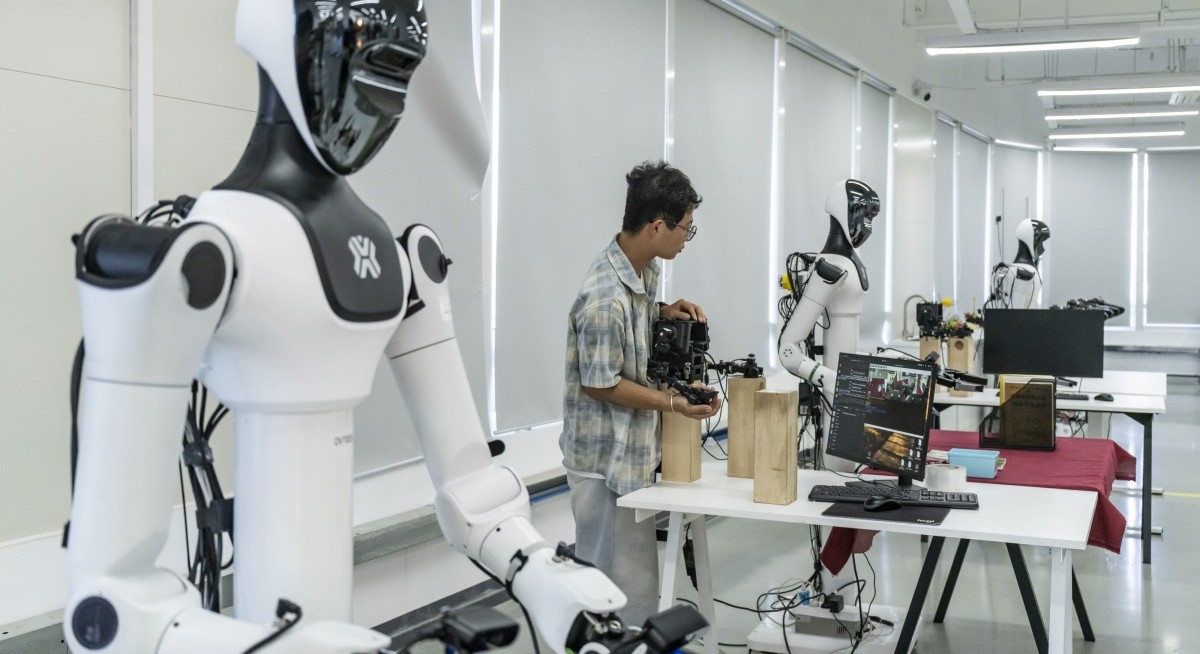
The Summer Davos, held in Dalian, passed almost without notice in much of the Western media. The meeting was significant for what it said about the development of the digital and technological economy in China.
The outline bones of these aspirations are found in the 15th FiveYear Plan but Premier Li Qiang put some flesh on the bones. He also demolished the idea that China’s competitiveness depended on subsidies. These changes are designed to harness what President Xi Jinping calls the “new quality productive forces”.
This is more than a fancy slogan. Five years ago, many observers dismissed the catchy slogan, “Designed in China”, which captured the aspirations of the 15th Five-Year Plan. That dismissal was a mistake.
Businesses need to ensure that they do not make the same mistake this time. These new productive forces are changing the economic and consumer landscape. Those that catch the emerging opportunities early can reap great benefits.
This growth does not rely on subsidies. It is driven by an innovation ecosystem that is every bit as competitive as that found in Silicon Valley.
China is no longer just a sales market. It is a place where products are tested faster, where clustered supply chains respond more rapidly, where founders move faster because the competition is more numerous and where entire industries evolve at breakneck speed.
America claims to move fast and break things. China aims to move fast and build things, and that’s a very different philosophical approach.
The focus on these policy initiatives goes beyond advanced industries like clean-energy manufacturing, semiconductors and biotechnology. An intelligent digital and technological society feeds into every level of economic activity, changing the nature of work in ways not yet fully understood. Exploring these experiences was the agenda of the Summer Davos.
China is becoming the “Smart Factory of the Future” with a full-scale industrial transformation. Fixed asset investment in manufacturing has a strong focus on digital transformation, AI integration and green technologies.
Under the Manufacturing Upgrade Plan 2026, over 70% of large manufacturers will operate smart, digitally networked factories.
China leads in the development of electric vehicles, high-speed rail, solar, 5G, quantum computing and automation. These unleash the application of new productive forces that change the economic and social landscape in the same way that the widespread application of electricity did in the late 19th century.
How China responds to these challenges will ripple well beyond its borders and shape supply chains, business strategy and cooperation between the world’s biggest economies. This shapes the way business will engage with China and the opportunities which will emerge in this new landscape. Existing business structures may disappear, just as candlestick-makers were extinguished by electric lighting.
Technical outlook for the Shanghai market
The Shanghai index retreated from the 4,100 resistance level. The sudden fall last week found support at the lower edge of the trading band near 4,025. This week, the index has dropped below the 4,025 support level.
The market is defined by a broad trading band shown as resistance at line C and support at line B. The index has previously moved below line B but this was characterised by a series of “up” days. Although the market fell, each day created a white bullish candle. This suggested the overshoot below support at 4,025 was temporary.
This week is different. The move below 4,025 is filled with black bearish candles. This suggests the retreat is more serious and has a higher potential to fall to 3,900 support.
A fall to this level would be a continuation of the downtrend pressure that started from the high near 3,250.
The index is potentially developing a fan pattern. This is shown with the two downtrend lines 1 and 2. The fan pattern is a long-term trend reversal pattern. It is too early to confirm this is a fan pattern, so traders will keep track of its development. This is not a Fibonacci fan. There is currently no strong trending activity, so this market is traded as a short-term rally and retreat environment.
The Guppy Multiple Moving Average (GMMA) indicator shows the long-term group of averages are compressed and moving downwards. This shows investors are beginning to lose confidence in uptrend continuation.
The movement of the short-term GMMA is used to track the behaviour of traders. This has turned down and expanded, showing strong selling pressure.
Traders will trade the rallies. Investors will wait for a clear trend direction to be established.
Key Words: China, Stock Market, Davos



























































































 京公网安备 11010802037854号


