Commentaries
Your Present Location: Teacher_Home> Daryl Guppy> CommentariesBe flexible like water in fast-moving China market
Be flexible like water in fast-moving China market
Source: The Edge Singapore
Update: Jun 19th, 2026 11:40 AM
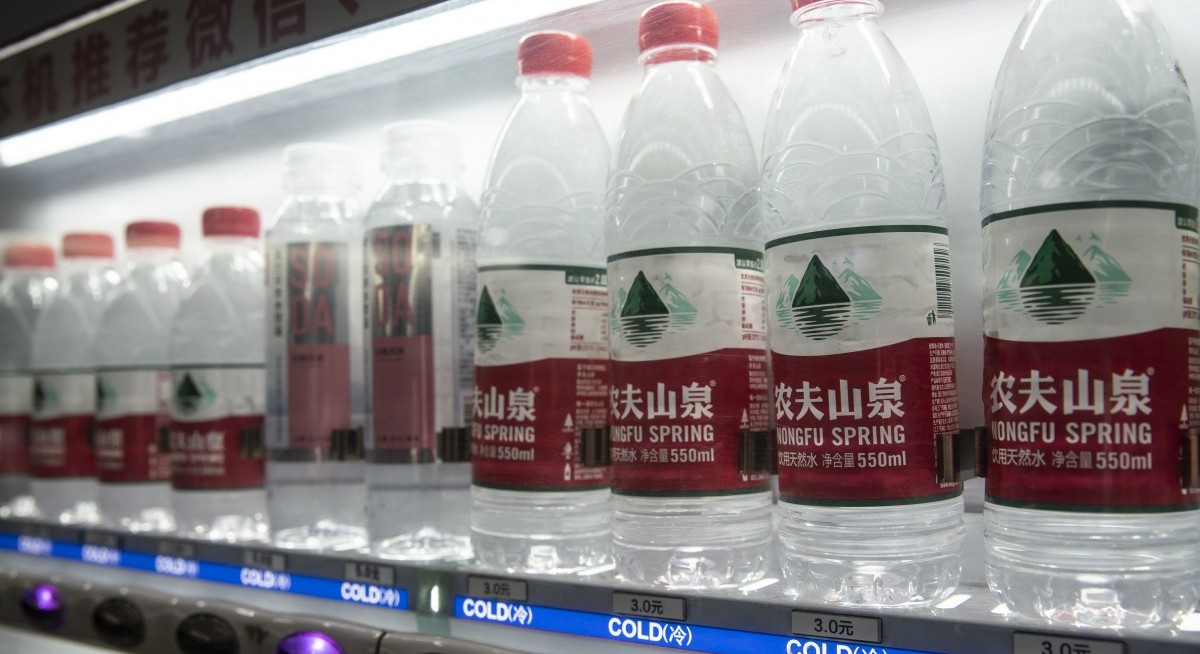
What actually occurs on the ground may be very different to what the research is telling you / Photo: Bloomberg
When a business decides to enter the Chinese market, it is always backed by extensive research and planning that cover the usual metrics. Before entering the market, it has decided how to position and price its products.
As the military will tell you, no plan survives first contact with the adversary. That’s the same for plans to expand into China. What actually occurs on the ground may be very different to what the research is telling you. What becomes more important is how you react to the unexpected, the opportunities China offers to develop your abilities and your ability to take a strategic perspective.
One of the best examples of turning success into failure came from a business delegation I had taken to a trade expo in Xi’an. The exhibitors’ business was in bottled spring water from deep ancient aquifers dating back to the time of the dinosaurs. Dinosaur Water distinguished the product from the already crowded bottled-water and spring-water space.
The main competitors were European bottled water brands and popular homegrown brand, Nongfu Spring. The plan was to position Dinosaur water as a premium foreign brand, targeting high-end fivestar hotels.
Dinosaur Water was a selling point in the West and in China, but not in the way he expected. In the West, the dinosaur concept was an interesting twist, but apart from branding, it offered no other benefit. In China, the idea of water dates back to the age of the dinosaurs and suggests it offered unique health benefits. When it was raised, the connection was rejected as unimportant.
One persistent enquiry of genuine interest came from the owner of a chain of hotels in tier-two cities. He was looking for a foreign brand to enhance the points of difference between his hotel and his competitors, which stocked either European waters or Nongfu in their room fridges. In the typical fashion of Chinese business speed, the hotel operator was prepared to place a substantial order immediately.
The offer was rejected. Dinosaur Water aimed to be a highend brand and would not be sullied by being placed in four-star hotels. This conclusion reflected the research, which was limited to high-end hotels rather than the broader, rapidly expanding Chinese hotel industry.
The business opportunity was missed because the Dinosaur Water plan was based on breaking into
the already saturated five-star hotel market. The business had its heart set on this market niche and was not prepared to consider other opportunities. It was a narrow-minded approach based on sound market research.
Dinosaur Water’s inflexible planning meant it went the way of the dinosaurs, disappearing from the market. Over the next few years, the four-star chain expanded and built five-star properties. Square bottles of Fiji water filled the room fridges.
Your export planning for China needs to build in flexibility so it can adjust to take the China offer even if it’s not quite what was in your original plan. China’s conditions and opportunities change quickly. If a door opens in China and you don’t walk through it, the next time you come back, it will likely be sealed shut.
Or, as the English say, never look a gift horse in the mouth.
Technical outlook of the Shanghai market
The Shanghai Index gapped below the well-established support level near 4,025.
The 4,025 level quickly failed as support when the market fell, diminishing its effectiveness as resistance. The rapid rebound confirmed this lack of influence.
The rebound rally moved above 4,025 and the short-term downtrend line. The rally moved quickly to the next resistance level near 4,100.
The 4,100 level is particularly powerful, as it has frequently acted as both support and resistance for many months. In a very broad sense, the market has oscillated around this level with 3,900 as downside support and 4,300 as the upper edge of a broad trading band.
The Guppy Multiple Moving Average (GMMA) relationships capture changing trend pressure. The longterm group remains compressed but is moving up. This narrow compression suggests that investors have regained confidence in the market. The long-term average group indicates investors’ behaviour.
The short-term GMMA group of averages indicates how traders are thinking. The very rapid compression captured the rally recovery from the low of 3,925. A wider separation among these averages is needed to confirm that traders are fully supporting a potential trend change. However, the move above the short-term downtrend line provides further evidence that this rally may continue above 4,100.
The short-term GMMA remains well below the lower edge of the longterm GMMA, but an upturn and compression could push it rapidly above the long-term GMMA.
This, and a break above 4,100, sets an upside target near the previous high of 4250 and a longer-term trading band target near 4,300.
Daryl Guppy is an international financial technical analysis expert. He has provided weekly Shanghai Index analysis for mainland Chinese media for two decades. Guppy appears regularly on CNBC Asia and is known as “The Chart Man”. He is a former national board member of the Australia China Business Council.
Key Words: Water, China, Business
























































































 京公网安备 11010802037854号


