Commentaries
Your Present Location: Teacher_Home> Daryl Guppy> CommentariesRenminbi offers a way out of US trade weaponisation
Renminbi offers a way out of US trade weaponisation
Source: Edge Singapore
Update: Mar 20th, 2026, 6:20 PM
Business relations with China have been almost totally obscured by the Israel and US attack on Iran, the apparently unexpected blockade of the Strait of Hormuz by Iran and instantaneous global fuel shortages.
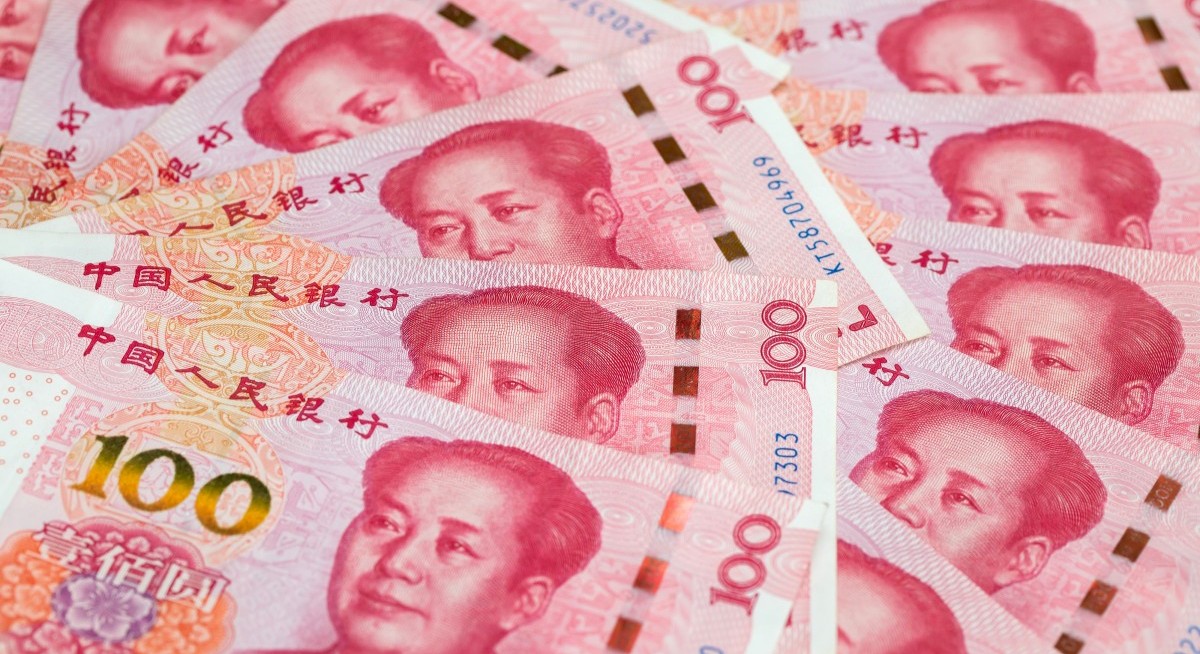
Confidence in renminbi-denominated trade and China’s role in the global trade system is increasing. Photo: Bloomberg
However, on a broad scale, there is a need to look beyond the fog of war to explore what this means for global trade and trade settlement.
Iran has permitted passage through the Strait for Chinese-flagged ships. This is no different to the free passage afforded to neutral-flagged ships in World War II.
More significantly, Iran has granted free passage to companies that agree to settle their oil purchases with the renminbi. India is the first country to take advantage of this offer. This is part of a wider trend.
Most of Australia’s iron ore producers have accepted China’s new renminbi-based iron ore pricing reference methodology and many are now settling with the renminbi. BHP, one of Australia’s largest iron ore miners, has not accepted this and, as a result, has found its shipments limited and contracts not renewed.
Both situations signal increased confidence in renminbi-denominated trade and China’s role in the global trade system. Understandingly, China is growing increasingly worried about the potential for US perfidy regarding trade settlement in US dollars.
They are not alone in this worry. The US has shifted from weaponising the Swift trade settlement system to the outright freezing of sovereign reserves held in US dollars. Many are worried that it is just a matter of time before there are selective defaults on US Treasury holdings or a freeze on withdrawals.
These are not just issues for the government. There are issues for businesses, large and small. The basic question is: “How do I get paid for my business in China? How do I get my money out?”
If Trump decides to halt US dollar Swift transfers originating in China, then US dollar-denominated Chinese contracts become very difficult to settle. While unlikely, this is not beyond the bounds of possibility given Trump’s erratic and vindictive approach to trade.
If businesses are forced to accept settlements in renminbi and conduct other transactions in renminbi, how will this impact operations? How easy will it be to convert the renminbi into Singapore dollars, given that any Swift process may be hijacked by the US? Several Singapore banks have direct renminbi exchange and settlement procedures in place, but are they robust enough to handle a surge in transactions? It is an open question, and the answer also depends on what action the US takes to block any major shift to yuan settlement.
This is perhaps our more immediate problem for those who export to both China and the US.
This is not to say that these scenarios are highly likely, but where once they were unthinkable, now they fall within the bounds of possibility. Businesses would be wise to start thinking about their responses and develop a plan for the inevitable disruption that would flow from this corruption of global trade settlement.
Technical outlook of the Shanghai market
The Shanghai Index has slipped below the lower edge of the long-term group of averages in the Guppy Multiple Moving Average (GMMA) indicator. This is the first of several bearish signs suggesting a trend change is developing.
The GMMA captures the activity of traders and investors in the market.
We noted last week that a nervous market would be accompanied by compression in the long-term GMMA as investor buying activity slowed. This is beginning to develop.
The second feature is the way the long-term GMMA has turned down and started to compress. This shows that some investors are becoming sellers. This compression may quickly accelerate as the sell-off continues.
The third feature is that the lower edge of the short-term GMMA is at the same level as the lower edge of the long-term GMMA. Additionally, the short-term GMMA is rapidly expanding. This shows traders have become strong sellers.
This relationship is bearish. Despite the rebound shown on the chart, the overall market pressure is down. Any rebound has significant resistance near the 4,100 level. This is also close to the upper bound of the long-term GMMA. The two features combine to create a significant resistance feature.
On the downside, there is a weak support level near 4,020. This has served as a rebound point in the past, but only in the context of a rising trend.
The strongest historical support level is near 3,900. This must now be considered as a reasonable target if there is a sustained close below 4,020.
Key Words: Renminbi, US trade weaponization, Business























































































 京公网安备 11010802037854号


