LATEST INSIGHTS
Your Present Location: LATEST INSIGHTS-

Economic Interests Attract China to Russia, Not Edgy Policies
With its invasion of Crimea and intervention in eastern Ukraine, Russia invited condemnation and sanctions from the West and had little choice but to tighten ties with China. Stronger Sino-Russian relations prompt some analysts to compare China and Russia.
2015-02-05 -

Sanction game against Russia doomed to fail
EU Foreign ministers in Brussels on January 29 extended the Russian blacklist for six months, promised to add extra names, and began preparations for a fresh round of economic sanctions. The new names - individuals and entities - are to be added by February 9 at the latest. The EU called the snap meeting after a rocket attack on Mariupol which killed 30 civilians.
2015-02-03 -

Bank Scam
A farmers`cooperative in Nanjing that posed as a commercial bank has duped depositors out of their money. It is far from an isolated case, and experts have said that more focused regulation of the cooperatives is needed.Carefully designed to resemble a State-owned bank, a fake bank in Nanjing, capital of East China`s Jiangsu Province has cheated about 200 depositors out of more than 200 million yuan ($31.8 million).
2015-01-29 -

China is not a lone hero
Despite many concerns about the future of world economic development in 2015, The Davos World Economic Forum will try to give more confidence to the world, and China as usual is becoming more important factor in the recovery of the global economy.
2015-01-22 -

S.Asia forum delayed by India’s self-interests
The 18th summit of the South Asian Association for Regional Cooperation (SAARC) concluded in Nepal`s capital city of Kathmandu on November 27 with the adoption of the Kathmandu Declaration. Heads of South Asian states also signed a framework agreement on energy cooperation, the biggest achievement of the two-day summit. The energy deal indicates that South Asian countries expect to strengthen interconnection and that SAARC is making gradual progress.
2014-12-10 -

New Delhi-Beijing cooperation key to building an ‘Indo-Pacific Era’
In recent years, the geopolitical concept of the "Indo-Pacific" has gained currency. The concept was first developed by Australian scholars and promoted by Americans after the Obama administration put forward the strategic rebalance toward the Asia-Pacific.Now, more and more scholars and officials have begun to use this term, fleshing it out from their own perspectives.
2014-12-01 -

G20 summit overcomes tough obstacles
The ninth G20 summit concluded its two-day meeting in Brisbane, Australia Sunday. Sustaining growth, creating jobs, promoting development and buoying confidence were the central task of the gathering, attended by government heads from 20 countries.
2014-11-24 -

Beijing offers manufacturing lesson to Delhi
The "Make in India" campaign, launched by Indian Prime Minister Narendra Modi with the purpose of turning India into a new global manufacturing center, now has come into full swing.Regarding India`s ambition, what Beijing needs to do is make concerted efforts to upgrade its products and the quality of "made in China" commodities to march toward the high end of the value chain.
2014-11-24 -
Successes of China`s economic diplomacy
2014-11-19 -

G20 summit overcomes tough obstacles
The ninth G20 summit concluded its two-day meeting in Brisbane, Australia Sunday. Sustaining growth, creating jobs, promoting development and buoying confidence were the central task of the gathering, attended by government heads from 20 countries.
2014-11-19 -

Mutual trust a priority for Beijing-Tokyo ties
The four point agreement that China and Japan reached right before the leaders from the two sides met on the sidelines of the Asia-Pacific Economic Cooperation (APEC) Economic Leaders` Meeting on November 10 took many by surprise. Not long before the agreement, the Japanese government took a host of assertive actions, including denying the 1993 Kono Statement and claiming it has no agreement with China preventing the prime minister from visiting the Yasukuni Shrine.
2014-11-19 -

Sustainable development doesn’t suit all
The annual APEC Economic Leader`s Meeting kicks off on Monday in Beijing, and this event will surely focus on global economic recovery.Many people all over the world have expected new approaches that would be worked out by top world leaders to strengthen the global economic growth.
2014-11-13 -

Indian business leader: China not India`s competitor
A veteran business leader said at a seminar in Beijing on Friday that China and India should work as collaborators to change the world.R. Gopalakrishnan, who has been a professional manager with Unilever for 31 years and with Tata for 15 years, is now a director of Tata Sons, chairman of Tata AutoComp Systems and Rallis India, and the vice chairman of Tata Chemicals.
2014-10-21 -

Bright future for emerging economies
"The emerging economies will continue to provide two-thirds of global growth despite less dynamic performance in a more demanding financial context," says Magarinos, the honorary global chairman of the Global Alliance of Small and Medium Enterprises, based in Shanghai, as well as senior fellow at Chongyan Institute for Financial Studies of Renmin University.
2014-09-26 -
US professor: China more efficient than the West in Africa
China acts more efficiently in African development than western countries, said Dr. Patrick Mendis, a distinguished senior fellow and affiliate professor at George Mason University`s School of Public Policy, on Sept. 17 in Beijing.
2014-09-18 -
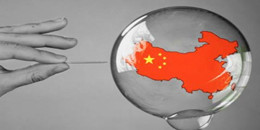
The collapse of `China collapse` theory
Many people, including some Chinese scholars, have been pessimistic about China`s future since the global financial crisis broke out in 2008. In my view, many predictions about the Chinese economy over the past 20 years have been wrong, especially those theories forecasting the collapse of China.
2014-08-28 -
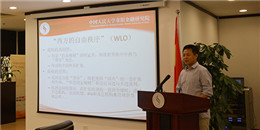
Will China revive the G20?
As the G20 Summit is gradually losing its charm for most developed countries, China is expected to shoulder accountability by hosting a 2016 summit to revive its influence, said Pang Zhongying, professor of International Politics at the International Relations School of Renmin University in Beijing.
2014-08-22 -

Chinese think tanks strive for global influence
China`s think tanks, which have received little exposure in the past, have recently enjoyed significant attention from the media and policy makers, although they still have a way to go before they become influential on the global stage. At the end of June, the Chongyang Institute for Financial Studies, Renmin University held a think tank forum themed "The Silk Road Economic Belt Construction and Future" in Beijing.
2014-07-17 -

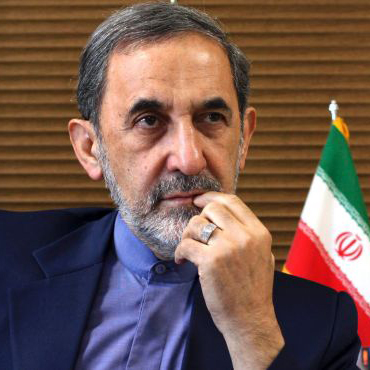
Sino-Iranian ties may thrive on new Silk Road
Iran is embracing Chinese President Xi Jinping’s proposal to revive the old land Silk Road, which used to connect ancient civilizations like China and Iran, Dr. Ali Akbar Velayati, president of the Center for Strategic Research in Iran, said on Friday during a tour to Beijing.Velayati, also the former Foreign Minister of the Islamic Republic of Iran, made his remark in a forum on "Economic Cooperation between China and Iran and the Future Prospects" held by the Chongyang Institute for Financial
2014-06-23 -

A New Wave of Opportunities
Economic restructuring is never an easy task. The once aggressively expanding economy now needs to experience a gear shift, which will certainly give rise to a cluster of anxieties and concerns, such as criticisms of the problems arising from explosive economic growth in the past, panics concerning the gloomy real estate market and its deceleration, and worries over how to find new growth drivers. At the moment, what China needs most is composure.
2014-06-11











































 京公网安备 11010802037854号


