LATEST INSIGHTS
Your Present Location: LATEST INSIGHTS-
China’s July social financing below forecast
While China's July financial statistics showed the real economy is being supported by increased money supply, monetary policy cannot be the ultimate solution to economic pressures, said experts.
2018-08-14 -
John Ross: US sanctions against Iran, no bully is respected
In an effort to achieve "world peace," Donald Trump has decided to re-impose "the most biting" sanctions against Iran. The US has urged all its allies to cut off oil deals with Iran, the world's fifth largest oil producer, by zero this November.
2018-08-13 -
Danilo Turk: In search of balance, Intellectual property and technology transfer
This June the EU issued a formal communication following the dispute settlement procedures of the World Trade Organization. The EU is requesting consultations with China relating to Article 64 of the Agreement on Trade-Related Aspects of Intellectual Property Rights. The EU alleges China imposes restrictions on foreign intellectual property rights holders, who, because of restrictions, cannot freely negotiate market–based contractual terms of licensing and other technology-related contracts. The
2018-08-13 -

Ding Gang: Street vendors economy unsustainable
The development of emerging Asian economies is entering a bottleneck due to the structure of employment. On the surface, boosting employment is the main challenge, but in essence, the existing employment structure is unstable. This jeopardizes sustainable development.
2018-08-13 -

Danilo Türk: Three key messages of China's 40-year reform and opening-up
The past 40 years have witnessed one of the most spectacular changes in history. Not only was China - in its period of reform and opening-up - able to lift more than 800 million people out of poverty, it has also influenced, in a very positive manner, the global economic development.
2018-08-13 -
Liu Zongyi: Foreign policy key for Modi in 2019 elections
Various political parties are gearing up for India's general elections slated for the first half of 2019. Apart from the fierce competition with opposition parties, there are internal conflicts within the incumbent Bharatiya Janata Party (BJP). Opposition parties, notably the Congress party, are anxious to defeat Prime Minister Narendra Modi and his BJP, while Modi's own party members are trying to replace him. It seems that the focus of the struggle is on Modi. So, have his domestic and foreign
2018-08-13 -
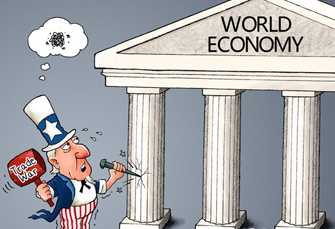
John Ross: A trade war will cut US living standards
The U.S. media is aware that the Trump administration has only a narrow window of opportunity to attack China in the "trade war" before the situation in the U.S. worsens. The Trump administration aims to use the normal upswing of the U.S. business cycle in 2018 to disguise the pain that U.S. tariffs are causing for the U.S. population, companies, workers and farmers – before a downturn of the U.S. business cycle in 2019-2020 makes that pain more severe.
2018-08-10 -

William Jones: How Many Soybeans Can the Europeans Eat?
A trade deal between the European Union and the U.S. is said to be in the works, causing a temporary relaxation of tensions between the two.
2018-08-03 -

Ding Gang: China and sustainable modernization
During my recent trip to Japan, a friend told me that the elevators in the building of a Chinese institution in the country had been used for nearly 20 years and never had a malfunction. Maintenance personnel come to inspect and maintain the elevators regularly.
2018-08-02 -
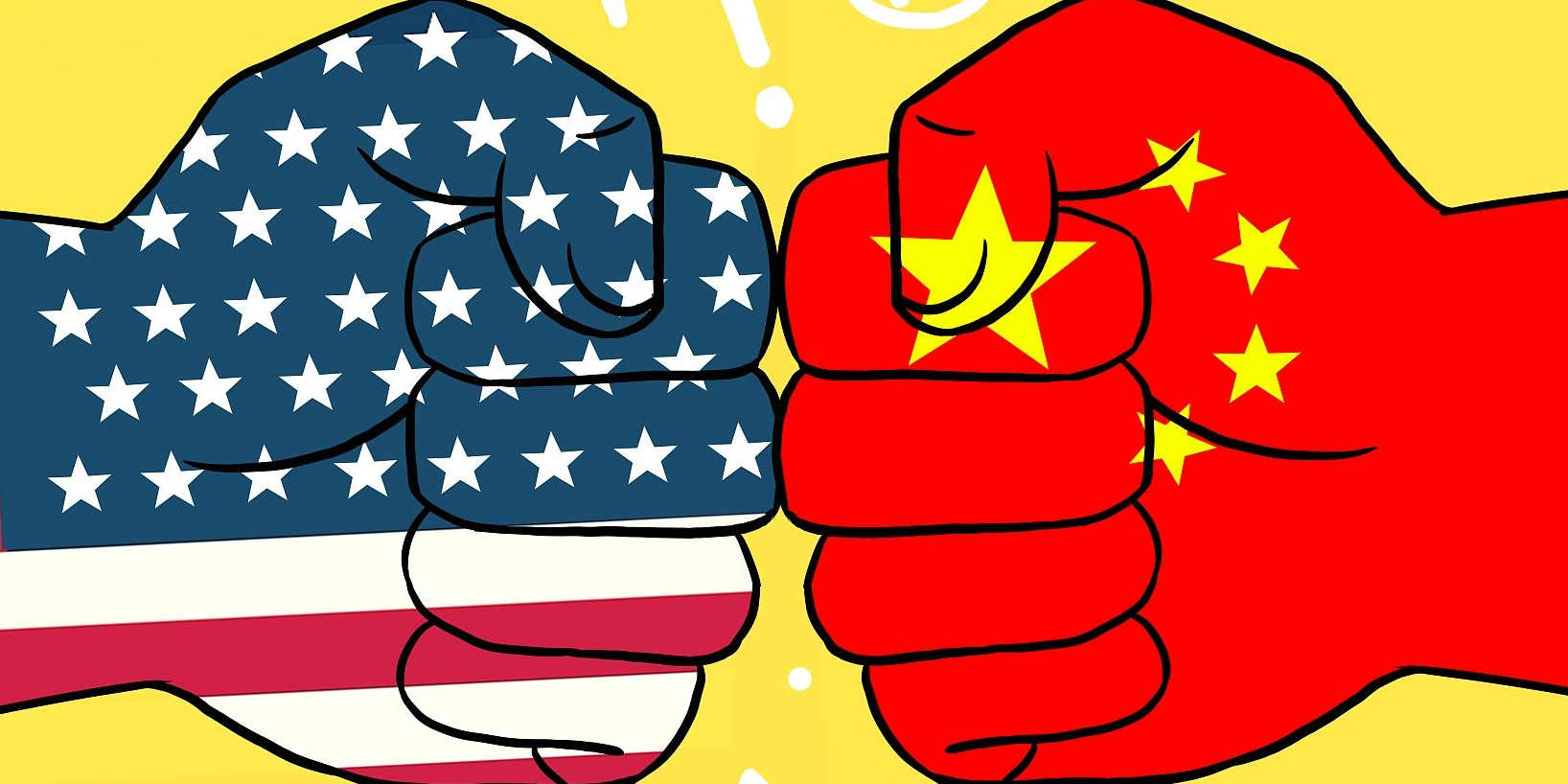
Liu Zhiqin: China must fight firmly against 'trade dictatorship'
The US administration is said to be gearing up to unleash another "trade bomb" to scare China: increase tariffs on 200 billion US dollars' worth of goods from China from 10 percent to 25 percent, thus igniting chaos and concern in the world market.
2018-08-02 -

John Ross: Outcome of Brexit process vital for China-UK relations
The visit to China by Jeremy Hunt, the British Foreign Secretary, has raised hopes that the 'golden age' of China-UK relations, established under former UK Prime Minister David Cameron, will be maintained. During that period Britain sought excellent economic relations with China, took independent steps in foreign policy such as joining the Asian Infrastructure Investment Bank despite US opposition, and minimized provocative attempts to interfere in China's domestic affairs in Hong Kong and elsew
2018-08-01 -
China's policy boost for real economy can offset trade pressure
The key to boosting domestic demand is to develop the real economy, which the government is supporting with the launch of new financial and fiscal policies, experts said on Tuesday.
2018-08-01 -

Zhao Minghao: US, allies distort China in South Pacific
US Secretary of State Mike Pompeo said during the 2018 Australia-United States Ministerial Consultation meetings that he was confident South Pacific countries would choose the US over China, despite the Asian power's move to make economic and strategic advances at small island nations. The remarks have caused concern that the South Pacific region is becoming the stage for new cold-war strategic competition between China and the US.
2018-07-31 -
China won’t budge as Germany plans to veto takeover
China and the EU should pursue in-depth industrial cooperation that takes a long-term view and Chinese companies should not halt their steps in going global due to acquisition setbacks, experts told the Global Times on Monday.
2018-07-31 -

Jia Jinjing and Lin Xuefen: Why is “inclusive growth” important?
For a long time, the traditional pattern of development has significantly promoted economic growth and globalization. On the other hand, it has also faced many challenges.
2018-07-30 -
China supports US-EU deal with caution
China on Thursday voiced support for an agreement reached by the US and the EU to put new tariffs on hold while officials negotiate a potential trade deal, but urged the US and the EU to adhere to WTO rules and nondiscrimination principles in any bilateral deal.
2018-07-30 -

Liu Zhiqin: China never manipulates its currency
That “China is a currency manipulator” is a lie spread out by the US for many years. We found it very interesting that whenever the US met economic problems it used to blame China as a currency manipulator and even threaten to impose punishment on China.
2018-07-30 -
John Ross: BRICS dependent on free trade for development
The leaders of the BRICS countries – Brazil, Russia, India, China and South Africa – meeting in their annual summit this year in Johannesburg represent 41 percent of the world's population. This by itself makes it a key international event – a type of equivalent of a G7 for developing countries. But BRICS represents a greater proportion of world economic growth than the advanced G7 economies.
2018-07-27 -

Liu Zongyi: BRICS should close ranks against protectionism
The 10th BRICS Summit kicked off Wednesday in Johannesburg, South Africa. Under the theme "BRICS in Africa: Collaboration for Inclusive Growth and Shared Prosperity in the 4th Industrial Revolution," the summit has designed an extensive outreach program that engages chair countries of various African organizations based on the BRICS-plus mechanism proposed by the Xiamen Summit last year. Countries including Rwanda as chair of the African Union, Angola as chair of the SADC Organ, Namibia as incom
2018-07-27 -

US multinationals rely more on global markets than Chinese ones
Globalization has boosted trade as well as investment. Most multinationals increasingly rely on a global market for profits rather than their parent country. Analysts call American multinationals economic pioneers and say they're the biggest beneficiaries of globalization as they move to reduce the impact of ongoing trade wars.
2018-07-27










































































 京公网安备 11010802037854号


