LATEST INSIGHTS
Your Present Location: LATEST INSIGHTS-
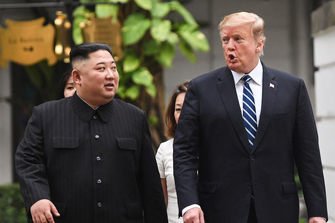
What the Hanoi result means for the world
U.S. President Donald Trump just met with Democratic People's Republic of Korea (DPRK) leader Kim Jong Un in Hanoi, Vietnam on February 27. Unlike the optimistic forecast, the summit failed to reach an agreement.
2019-03-01 -
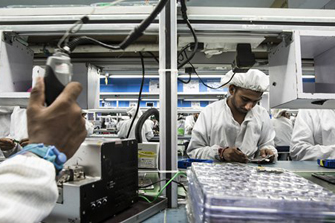
India's slow industrialization shows failure to grasp globalization
While there have been discussions surrounding how India's industrialization will affect China in the future, one realistic question currently faced by India is whether the country can achieve industrialization at all.
2019-03-01 -
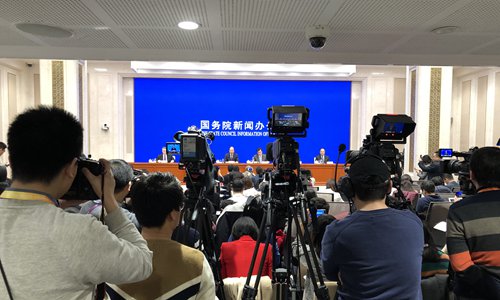
China’s new sci-tech board gets special attention at CSRC chief’s media debut
China's science and technology (sci-tech) innovation board, which will feature a pilot registration system for listed companies, took central stage as the new China Securities Regulatory Commission (CSRC) Chairman Yi Huiman greeted the media for the first time on Wednesday afternoon.
2019-03-01 -
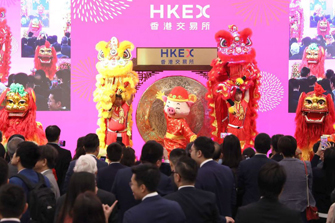
Significant boost imminent for financial ties in key region
Financial ties among Guangdong, Hong Kong and Macao will be further strengthened through promoting cross-area trading connections and financial innovation, said analysts, after the central authorities issued a comprehensive development plan for the Greater Bay Area.
2019-02-28 -
What’s behind extended Sino-U.S. trade talks?
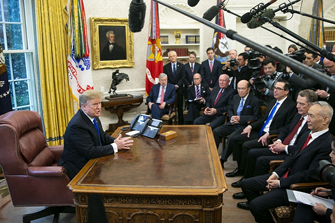
Chinese negotiators will extend their stay in Washington by two days in an effort to end the seven-month trade war. “The fact that they [Chinese representatives] are willing to stay for quite a bit longer… means something,” U.S. President Donald Trump reportedly said.
2019-02-28 -
Liu Ying: Economy can resist external pressure
The International Monetary Fund recently lowered its global economic growth outlook amid international trade conflicts. Combined with this, the economic structural adjustment in China has created new and some difficult challenges for the Chinese economy.
2019-02-27 -
Middle East powers seek ties with China
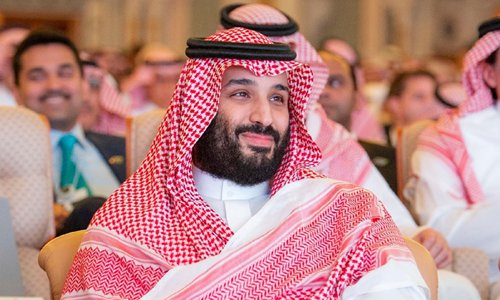
Saudi Arabia Crown Prince Mohammed bin Salman bin Abdulaziz Al Saud is scheduled to visit China from Thursday to Friday after his trip to Pakistan and India, in a sign that Chinese observers said shows the kingdom is seeking to diversify its diplomacy rather than merely rely on the US.
2019-02-27 -
Wang Peng: BRI not meant to counter US Indo-Pacific strategy
Since its inception, the "Belt and Road" initiative (BRI) has been gaining partners around the world. The international community's attitude toward the BRI has gradually changed from initial incomprehension, suspicion and fear to one of understanding, acceptance, and participation.
2019-02-27 -

E-waste is both "huge" and golden "opportunity"
Humankind's insatiable demand for electronic devices is creating the world's fastest-growing waste stream and opportunities at the same time, according to an article jointly published Thursday by two heads of UN agencies.
2019-02-26 -
Tariff may be temporary but dispute is not
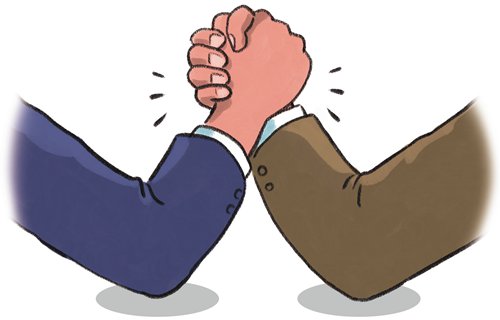
After several rounds of talks, the US and China seem to be heading toward a deal over the thorny issue of tariffs. US President Donald Trump said Monday that he will hold a summit with Chinese President Xi Jinping to conclude an agreement to end the year-long standoff. What does it mean? How will bilateral relations develop in the future? Three experts shared their views with the Global Times.
2019-02-26 -
Wang Yiwei: Europe must choose wisely on Huawei for digital future
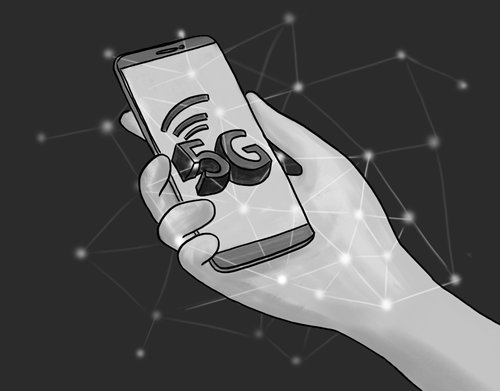
The UK's National Cyber Security Centre recently concluded that any risk posed by using Huawei 5G networks can be managed, according to unnamed sources cited by the Financial Times. Some Western media have said that this shows the UK and other European countries haven't followed the US on the so-called outright ban on Huawei's 5G equipment. Instead, they are cautiously taking a relatively balanced view based on their own interests. The UK is part of the intelligence-sharing group known as Five Eyes, and its approach on the issue is likely to set an example for other European countries to address security concerns involving Huawei and to purchase Huawei's 5G equipment.
2019-02-26 -
Mastercard JV plan in line with China’s opening-up policy
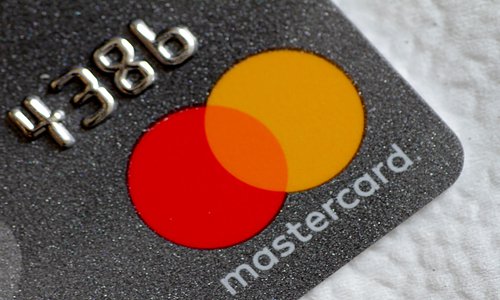
A reported attempt by Mastercard to form a joint venture (JV) with Chinese online payment clearing house NetsUnion Clearing Corp (NUCC) is in line with China's opening-up effort in the financial market, analysts said.
2019-02-25 -
China's ties with Iran and Saudi Arabia are fair and square
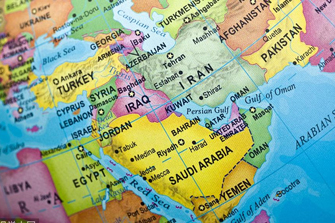
Saudi Arabian Crown Prince Mohammed bin Salman paid a two-day visit to China from Thursday to Friday, during which the two sides signed a series of deals on political cooperation and investment in energy and other sectors. Bin Salman met with Chinese President Xi Jinping on Friday, just three days after Iranian Parliament Speaker Ali Larijani's visit with Xi.
2019-02-25 -

Being single is the new norm and China is no exception
Once perceived as a path to a lifetime of happiness, marriage is now being crossed off the to-do list of people across the world.
2019-02-25 -
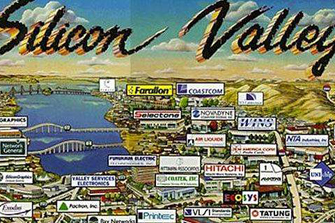
Silicon Valley to Be Left Without Chinese Money?
According to Zhu Min, the desire of Americans to squeeze Huawei out of the market, as well as new legislative initiatives to control investments in the technology sector, will reduce to zero the presence of Chinese venture capital in the United States.
2019-02-22 -
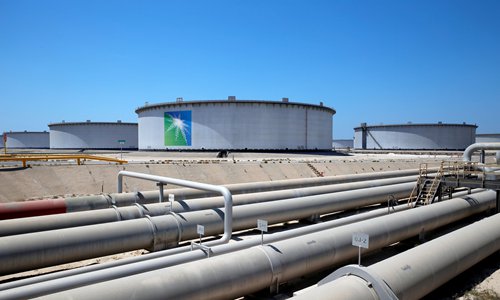
Energy, third-party market cooperation with China highlight Saudi crown prince's visit
Saudi Arabian Crown Prince Mohammed bin Salman Al Saud's two-day visit to China scheduled to start on Thursday is expected to boost bilateral trade and economic relations, with joint cooperation in third-party markets and yuan-denominated crude trading expected to be highlighted.
2019-02-22 -
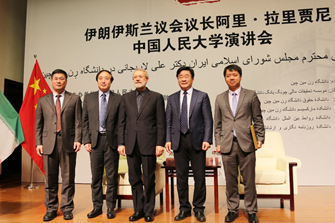
Wang Peng: China-Iran to deepen strategic trust and cultural exchanges
At this strategically meaningful moment, a luxury high-ranking delegation came to Beijing from Teheran directly. This 40-top-official team includes Iranian Islamic Parliamentary Speaker Dr. Ali Larijani, Foreign Minister Mohammad Javad Zarif and a dozen of ministers and vice-ministers in energy, petroleum, transportation, finance, the CEO of Iranian central bank, and so forth.
2019-02-22 -
Ding Gang: Huawei’s uphill battle in going global
Whether Huawei is a Chinese company or a global corporation is a question worth pondering. Started as a Chinese company, Huawei aimed to go global, but never lost its national identity. Being global means the company's investments, technology, human resources, products and services as well as profits are derived from the international market.
2019-02-21 -
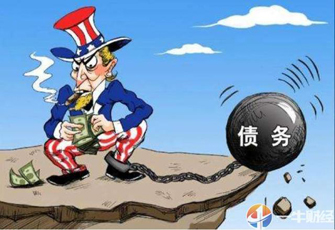
Wang Wen: The US can’t let debt cast shadow on its economy
In the long run, debt expansion propels favorable policies that stimulate the economy. The fiscal deficit is a persistent problem with a protracted history. Since former president Ronald Regan, US presidents have all adopted expansive fiscal policy. The US government has to borrow new debt to pay back the old, creating rollover risks. The country's low savings and high consumption model has also driven the US to keep large amounts of debt.
2019-02-21 -
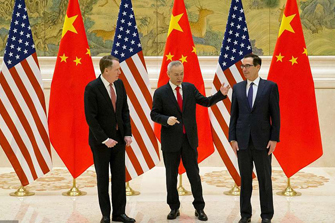
Liu Zhiqin: Countries need to work together to 'CURE' world illnesses
The recent trade talks between China and the United States ended on February 15 in Beijing. The outcome of this round of negotiations has attracted much attention from the international business community. As expected by most experts, the talk yielded a positive result. And it was announced that further talks will be held soon.
2019-02-21



























 京公网安备 11010802037854号


