LATEST INSIGHTS
Your Present Location: LATEST INSIGHTS-
China can deal with the US: scholars
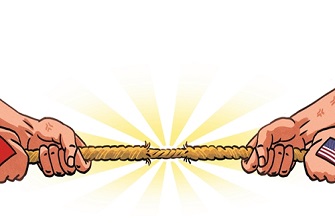
Niall Ferguson and other well-known American scholars have recently published articles contending that a new cold war has broken out between China and the US. What do Chinese scholars think about this issue? The research group on China-US people-to-people exchanges at the Chongyang Institute for Financial Studies, Renmin University of China recently conducted a telephone questionnaire that surveyed 100 Chinese scholars. Here are the results exclusive in the Global Times: Of all the surveyed Chinese scholars, 62 percent believe that the US is indeed waging a new cold war against China. But more than 90 percent believe that China is capable of coping well with the new cold war offensive by the US.
2020-07-07 -
【AMEINFO】"Over 200 million at risk of unemployment": Notable Chinese academic highlights COVID-19 risks
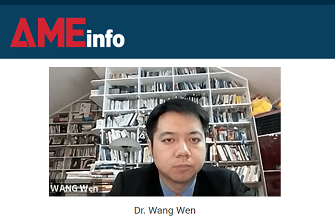
More than 200 million people are at risk of unemployment as human civilization faces a new world war in the form of Covid-19 that can only be stopped by global cooperation, a Chinese expert said while addressing a symposium here on Tuesday. Dr. Wang Wen, Executive Dean of Chongyang Institute for Financial Studies, and Vice President of Silk Road School at Renmin University of China (RUC), also said there is a significant risk of conflict because of social breakdown and instability.
2020-07-07 -

Zhao Xijun: HSBC investing in China driven by interests, not politics
HSBC recently announced it plans to further boost investment in the Chinese mainland, despite the escalating number of critics it faces from Western politicians and media due to its support for the National Security Law for the Hong Kong Special Administrative Region (HKSAR). The company has signaled new investment of introducing demand-driven and customized wealth management and insurance services empowered by digital technologies. In interviews with the Global Times, two Chinese economists noted that the investment move was essentially driven by the firm's demand of business expansion in promising markets, rather than Western media's skewed notion of a political gesture to flatter China.
2020-07-07 -
Liu Zhiqin: Has Europe been naive about its foreign policy toward China for 40 years?
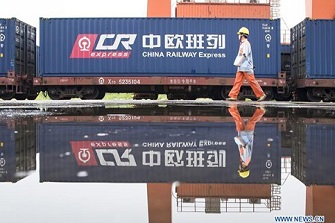
Certain European politicians and scholars have been repeatedly using the word "naive" to describe Europe's foreign policies toward China, defining China as a "systemic rival" and claiming that the EU's naive era is over. Such a notion also reveals a trace of helplessness, self-pity and even frustration over its ignorance, with the words between the lines reading Europe's judgment on China has been wrong.
2020-07-06 -

99 years on, CPC leads China's evolution on world economic stage
BEIJING -- Turning 99 this week, the Communist Party of China has much to be proud of. The largest political party in the world has transformed a weak, war-torn nation into an economy with one of the fastest growth rates in recent decades.bYet for the rest of the world, the CPC has offered more than economic miracles and growth locomotives. Under the CPC's leadership, and moving ever closer to the world's center stage, China has evolved from a follower and learner into a champion and contributor of multilateralism and globalization, one that is always willing to share ideas and solutions to address common concerns, especially in times of pandemic and recession.
2020-07-06 -

【Albilad Daily】Chinese academic highlights Covid-19 risks at TRENDS E-Forum
ABU DHABI, July 1 – More than 200 million people are at risk of unemployment as human civilization faces a new world war in the form of Covid-19 that can only be stopped by global cooperation, a Chinese expert said while addressing a symposium here on Tuesday.
2020-07-06 -
【Gulf Today】Human civilisation faces new war
More than 200 million people are at risk of unemployment as human civilisation faces a new world war in the form of Covid-19 that can only be stopped by global cooperation, a Chinese expert said while addressing the e-symposium organised by Trends Research & Advisory, Abu Dhabi. Dr. Wang Wen, Executive Dean of Chongyang Institute for Financial Studies, and Vice President of Silk Road School at Renmin University of China (RUC), also said there is a significant risk of conflict because of social breakdown and instability.
2020-07-06 -

William Jones: Fourth of July celebrations in the shadow of the virus
As the American people prepare to celebrate Independence Day on July 4, the increased spread of the coronavirus throughout the country will cast a dark shadow over the celebrations, whatever reduced form they may take this year. While there may have been some hope in the early spring that a certain amount of normalcy would have returned to the country by July, the abortive attempt to "reopen" the country before COVID was under control, and without the necessary warnings of maintaining a modicum of protection, such as social distancing, masks, etc., has led to a resurgence of the epidemic in those reopened states.
2020-07-06 -
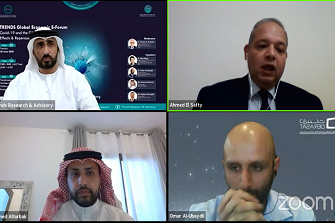
【Arab News】Wang Wen: New ‘world war’ can only be stopped by global cooperation
More than 200 million people are at risk of unemployment as human civilization faces a new world war in the form of COVID-19 that can only be stopped by global cooperation, a Chinese expert has told symposium in Abu Dhabi. Dr. Wang Wen, executive dean of Chongyang Institute for Financial Studies, and vice president of Silk Road School at Renmin University of China (RUC), said there is a significant risk of conflict because of social breakdown and instability.
2020-07-03 -
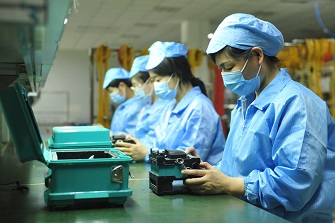
Liu Yuanchun: Insufficient demand now biggest challenge facing business vitality
The recovery of the Chinese economy from the COVID-19 pandemic has entered a new stage as boosting market demand has replaced supply-side support as the top policy priority. As the government pushes business resumption and policy assistance to help market entities overcome difficulties, China's economy has rebounded at a faster-than-expected speed from the impact of the novel coronavirus contagion.
2020-07-03 -
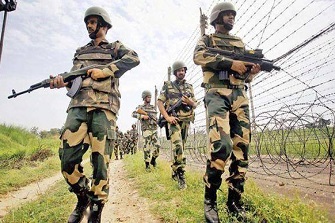
Liu Zongyi: Why did the bloody Galwan clash taken place?
The Galwan Valley border clash was an unfortunate incident. Liu Zongyi, secretary-general of the South Asia and China Center of the Shanghai Institutes for International Studies, argues that a repeat is inevitable if Delhi cannot shake off the specter of Nehru, originator of the “offensive defense” border policy, and reconsider its relations with Beijing.
2020-07-03 -

Law breathes new life into Hong Kong
Law-abiding businesses won't hesitate to welcome the newly adopted national security legislation for Hong Kong, as a stable political environment is conducive to their business operations, local companies and market analysts said. The city has been scarred in 2019 by social unrest, seriously damaging its business climate, while the new law, which took force on the eve of the 23rd anniversary of Hong Kong's return to the mother land on Wednesday, breathes much-anticipated new life into wide-ranging businesses traumatized by the year of tumult.
2020-07-02 -
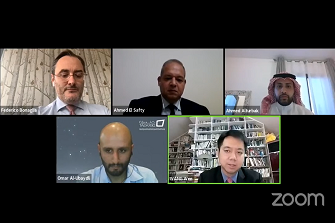
Wang Wen: Without unity, the world might be in a "Dark Age"
Actually facing this unknown, unexpected disease, China launched a very big battle to COVID-19 for five months and control basically COVID-19 spreading since the end of the February. But the problem is that in the past four months, there are no infections in most parts of China. But most of people who live in China still wear masks to prevent the transmission of COVID-19. On June 15th, Beijing, my living city, the capital of China, reported new domestically transmitted COVID-19 cases, there are about 10 daily new confirmed cases now, since the middle of this month. And this further makes us realize that the pandemic is turning into a protracted war. No one can relax. Even, as you may know, in China totally in the last five months only below 9000 cases.
2020-07-02 -

Indian ban on Chinese apps will backfire on tech sector
Analysts said that the Indian government's ban on 59 apps developed by Chinese companies will hurt India's technology and internet start-ups as they lose Chinese investment. On Monday, India announced it would ban the apps over national security concerns. "The compilation of these data, its mining and profiling by elements hostile to national security and defense of India, which ultimately impinges upon the sovereignty and integrity of India, is a matter of very deep and immediate concern which requires emergency measures," read the statement, which came after the latest standoff between China and India.
2020-07-01 -
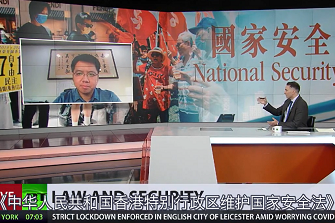
Wang Wen Interviewed by RT on National Security Law on June 30, 2020
Editor's Note: Wang Wen, the Executive Dean of Chongyang Institute for Financial Studies at Renmin University of China (RDCY), interviewed by Russia's top international media "Russia Today" (RT) and shared his opinions on National Security Law on June 30,2020. The following is the full text of the interview.
2020-07-01 -
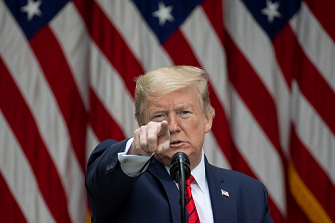
Zhao Minghao: Washington's 'narrative warfare' on Beijing
In their latest move, U.S. National Security Adviser Robert O'Brien, and Secretary of State Mike Pompeo attacked China's domestic and foreign policies as well as its political system in harsh, unmerited rhetoric. In the coming weeks, U.S. Attorney General William Barr and several senior Trump administration officials, are also expected to deliver tough speeches on China, to highlight the so-called "China threat" in trade, technology and ideology.
2020-06-30 -

Wang Wen: Will coronavirus bring world to dark age?
When the novel coronavirus broke out about five months ago, people thought the virus would be something like SARS - a terrifying infectious disease that hit them hard in 2003. It was unthinkable for almost everyone that COVID-19 would become such a severe pandemic. As of press time, there have been over 10 million confirmed cases of COVID-19 around the world with more than 501,000 deaths. As a comparison, a total of 8,098 people worldwide became sick with SARS during the 2003 outbreak, and 774 of them died. Moreover, due to some countries' loose handling of COVID-19, the downward inflection point in terms of worldwide cases has yet to come.
2020-06-30 -

Liu Zhiqin Interviewed by CRI on China's Economy
Profits of China's major industrial firms rose 6 percent year on year to 582.3 billion yuan (82.28 billion U.S. dollars) in May due to the easing of cost pressures on producers and gradual recovery of market demand, data from the National Bureau of Statistics (NBS) showed Sunday. Liu Zhiqin, a senior fellow at Chongyang Institute for Financial Studies, Renmin University, interviwed by Biz Today and shared his opinion.
2020-06-30 -

Wang Wen: Making Polarisation? China Can, but Won’t
US scholars proposed the concepts of “G2” and “Chimerica” a decade ago. At present, the total GDP of China and the United States exceeds 40% of the world’s total, their combined military expenditures exceed 45% of related global spending, and they account for more than 65% of the world’s R&D investment. According to the assumptions of those US scholars, a pattern of G2 or polarisation has already emerged. But the fact is that the Chinese government and the nation’s academic circles have not yet affirmed the emergence of a G2, and are even more reluctant to move towards a polarised global paradigm with the United States.
2020-06-30 -

Lin Minwang: India lifting arms rules at border endangers its own security
India has reportedly reset the rules of engagement with Chinese troops along the China-India border. The Indian Army gave their troops "complete freedom of action" to handle situations. More specifically, they are permitted to do this with "any aggression by China" at the tactical level. Field commanders will also be allowed to use firearms in "extraordinary" circumstances on the Line of Actual Control, according to Indian media reports.
2020-06-29














































































 京公网安备 11010802037854号


