LATEST INSIGHTS
Your Present Location: LATEST INSIGHTSIndonesia and China Enter New Stage of Strategic Cooperation
Indonesia and China Enter New Stage of Strategic Cooperation
Source: Jun 5th, 2026 6:39 PM
Update: Voice of Indonesia
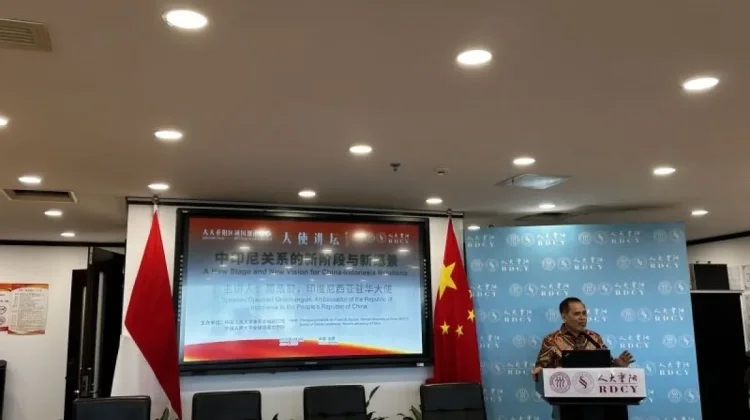
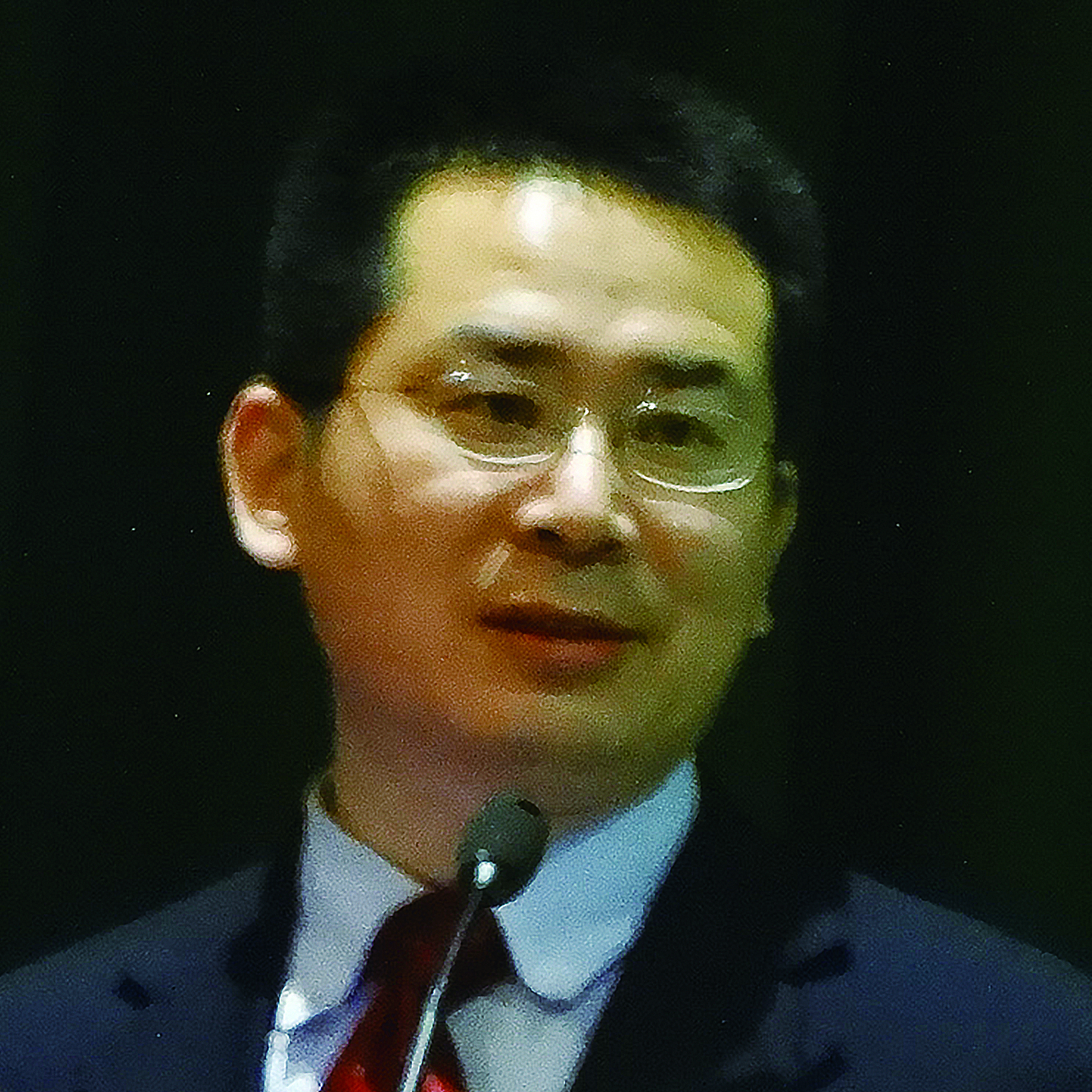
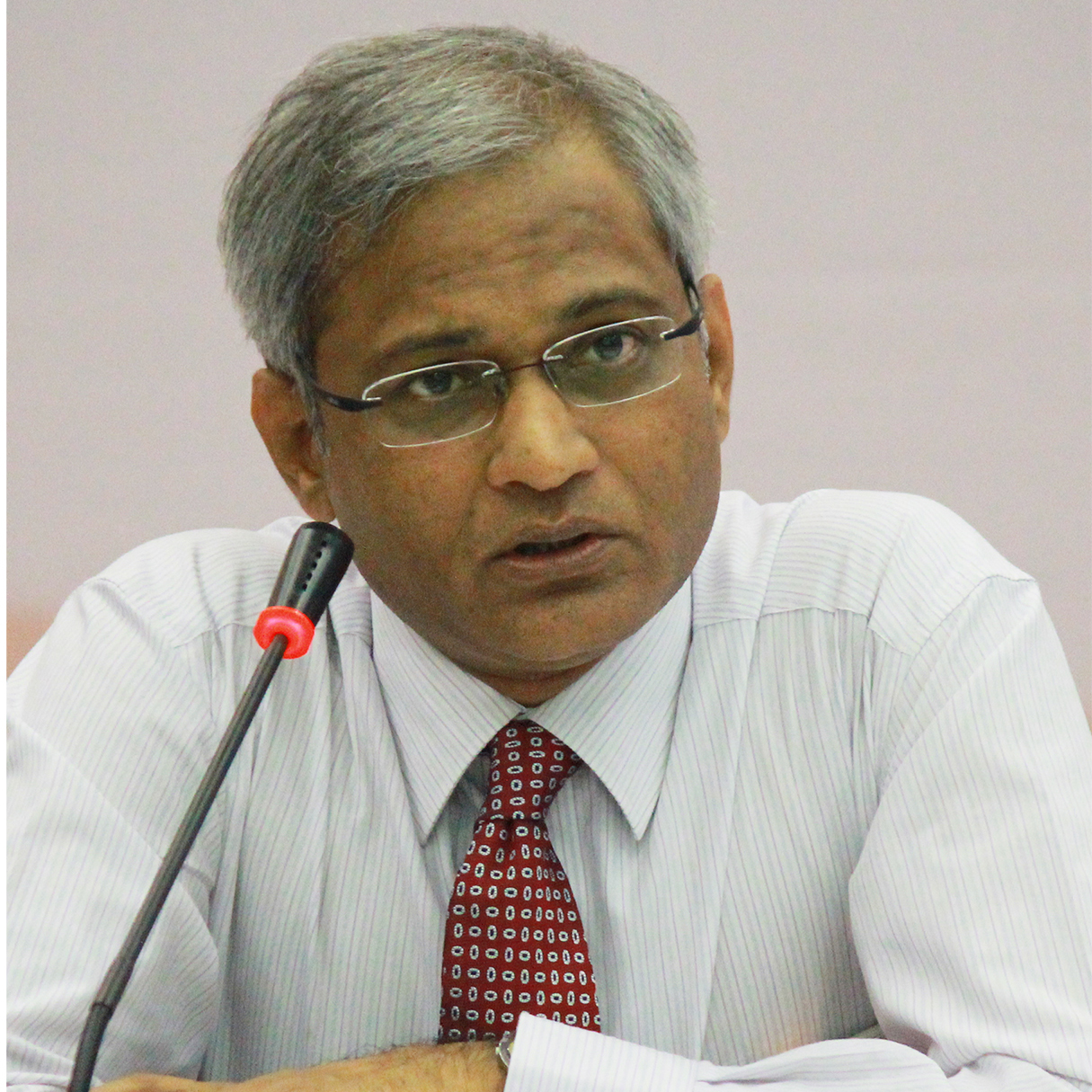
Indonesian Ambassador to China and Mongolia Djauhari Oratmangun speaks at a discussion forum at Renmin University, Beijing, on Thursday, June 4, 2026. (Photo: Antara/Rizki Dwi Wibawa)
RRI.CO.ID, Jakarta - Indonesia is setting its sights on a new chapter in relations with China, with four key areas identified as priorities: artificial intelligence (AI), energy security, food security, and human resource development.
The focus was outlined by Indonesia’s Ambassador to China and Mongolia, Djauhari Oratmangun, during the 18th Ambassador Forum hosted by the Chongyang Institute for Financial Studies (RDCY) and Renmin University’s School of Global Leadership in Beijing on Thursday, June 4, 2026.
Ambassador Djauhari emphasized that AI is becoming increasingly vital as governments worldwide face fiscal pressures and rising demands for public services. He noted its potential to support healthcare, education, disaster management, social protection, and smart city development.
“AI sovereignty is becoming more important as it enables governments to deliver better services with limited resources,” he said, as quoted by Antara.
On energy security, Ambassador Djauhari highlighted Indonesia’s unique advantages as the world’s largest palm oil producer and a country with 40 percent of global geothermal potential. These strengths, he argued, could complement China’s leadership in renewable energy.
“Every data center, smart factory, and digital platform ultimately depends on reliable electricity supply. Indonesia has unique strengths in this area,” he added.
Addressing food security, Ambassador Djauhari pointed to climate change as a challenge that opens opportunities for collaboration. He underscored the role of AI-driven agriculture, smart irrigation, and precision farming in boosting productivity.
He also linked Indonesia’s Free Nutritious Meal Program to rising domestic food demand, which could strengthen agricultural supply chains and create direct benefits for communities.
The fourth priority--human resource development--involves joint research, internships, vocational education, university exchanges, and AI-related curriculum development. Ambassador Djauhari stressed that nurturing talent is essential for sustaining long-term cooperation.
Beyond these focus areas, Ambassador Djauhari highlighted the depth of Indonesia-China economic ties. China has been Indonesia’s largest trading partner for over a decade and consistently ranks among the top three sources of foreign investment.
In 2025, bilateral trade reached USD 167 billion, while Chinese investment in Indonesia stood at USD 7.5 billion. Over the past decade, trade has tripled and investment has grown twelvefold.
He cited the Jakarta-Bandung High-Speed Rail, Southeast Asia’s first, as a symbol of South-South cooperation. Ambassador Djauhari also emphasized Indonesia’s commitment to industrial downstreaming, particularly in nickel, a critical raw material for electric vehicle batteries and the global energy transition.
“When I first arrived in China, there were no Chinese EV brands in Indonesia. Last year, there were 16 companies. This shows the investment climate in Indonesia is improving,” he remarked.
Reflecting on his nearly eight years in Beijing, Ambassador Djauhari said his proudest contribution was fostering a “habit of dialogue” between leaders of both nations.
“No matter how strong the challenges we face, as long as dialogue remains a habit, relations between Indonesia and China will stay rational in differences, constructive in challenges, and optimistic about the future,” he said.
He concluded by stressing that cooperation must go beyond economic growth and technological advancement. “Technology has value when it improves human life. Development has meaning when it expands opportunities. And cooperation succeeds when it serves humanity."
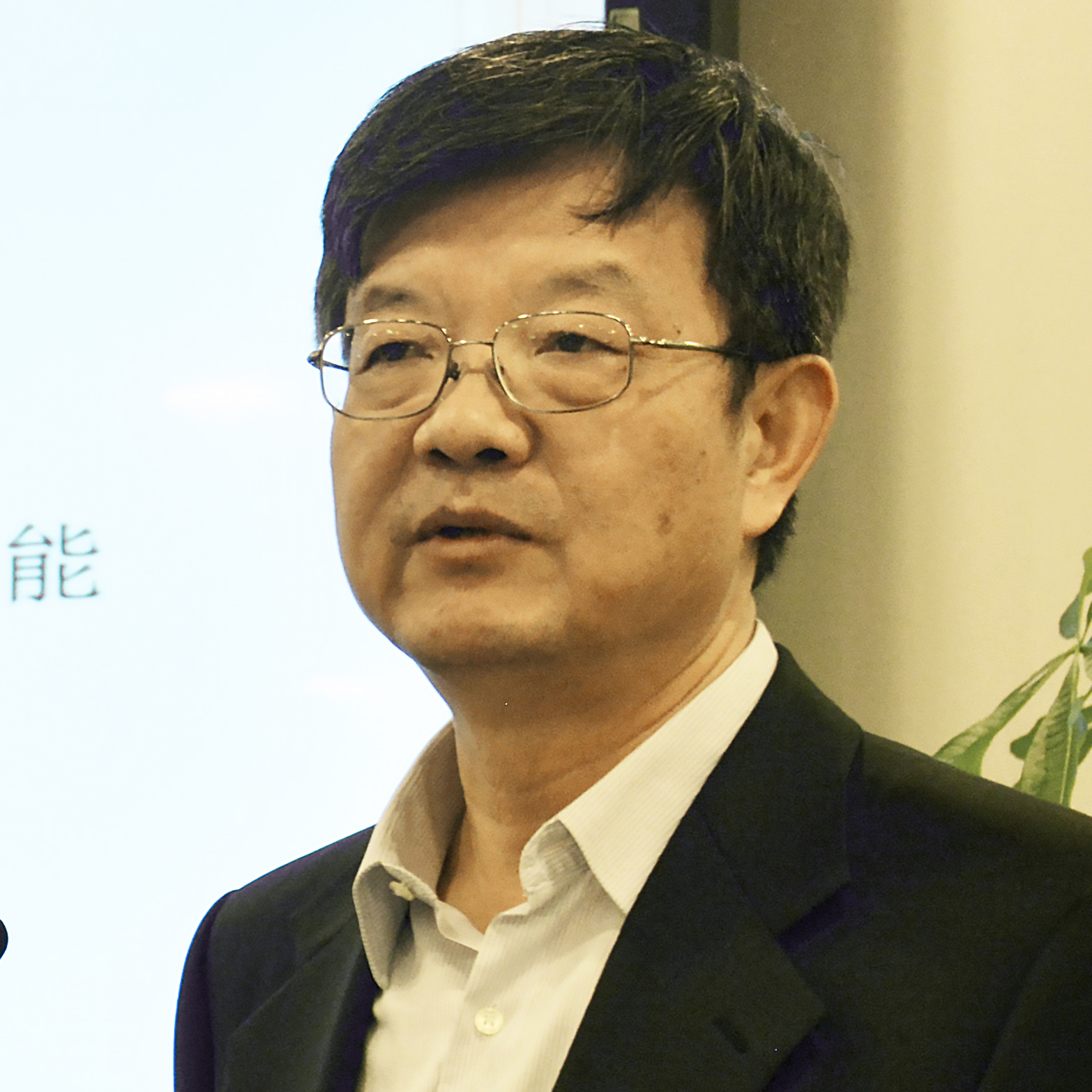
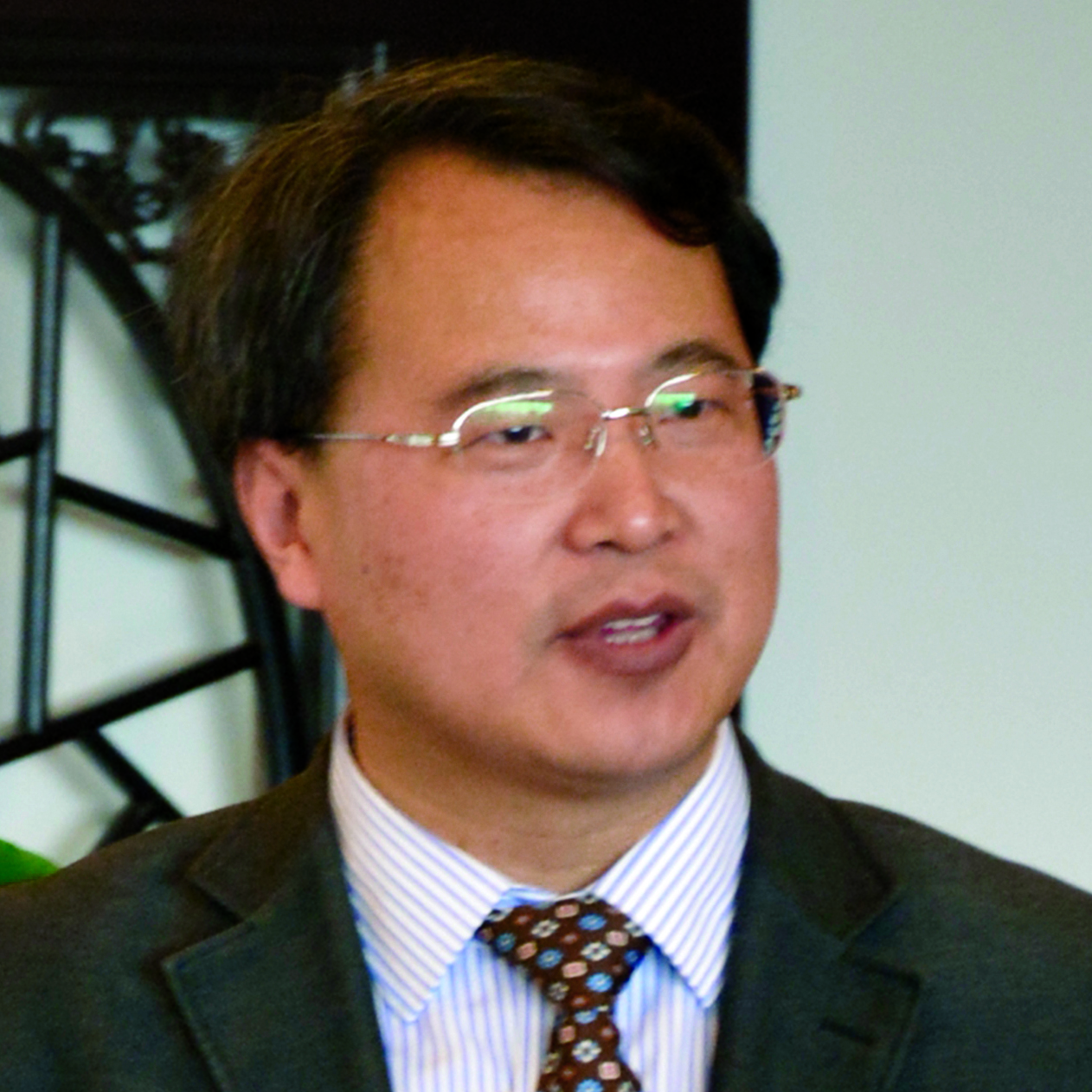
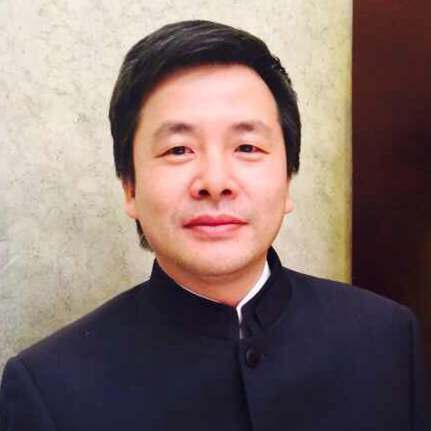
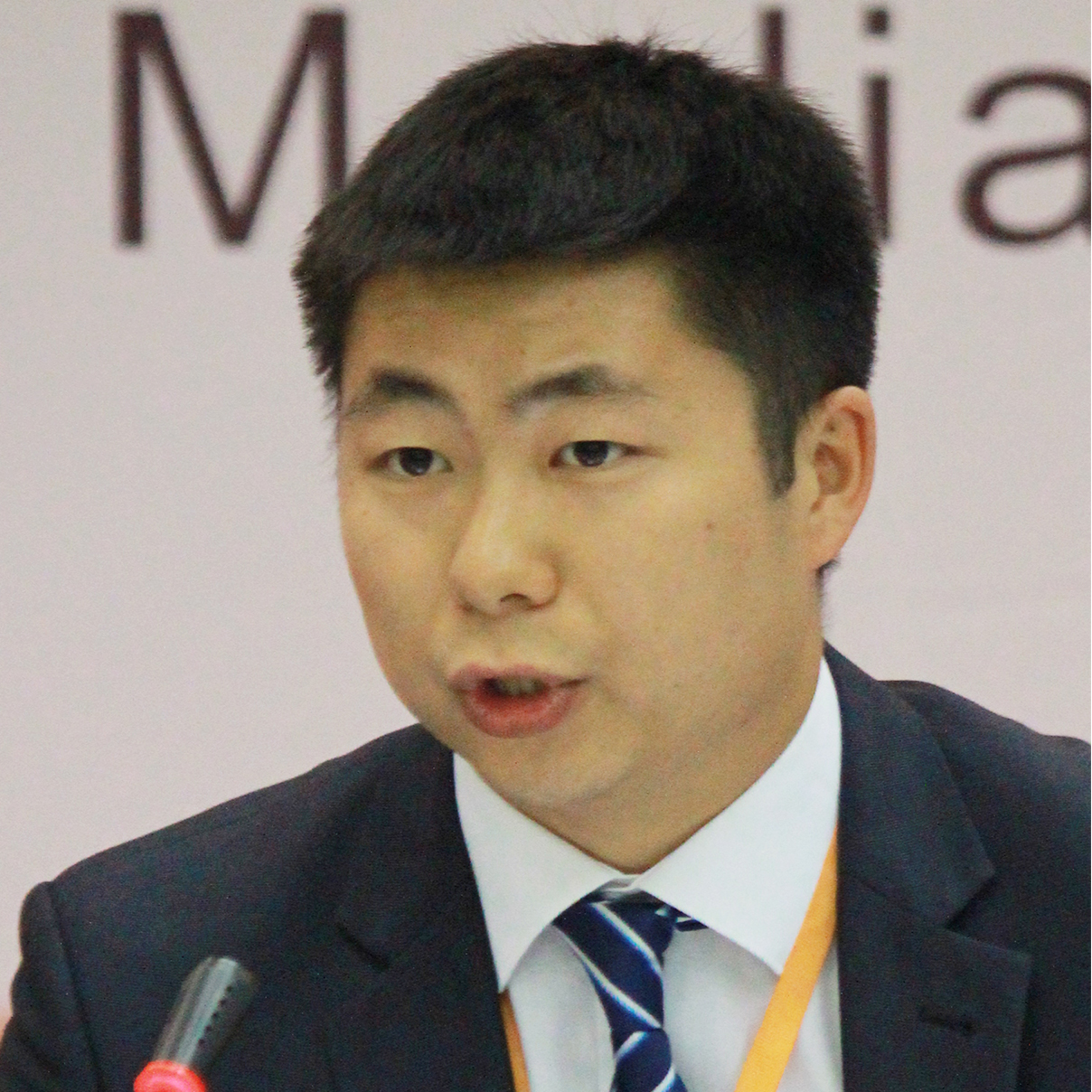
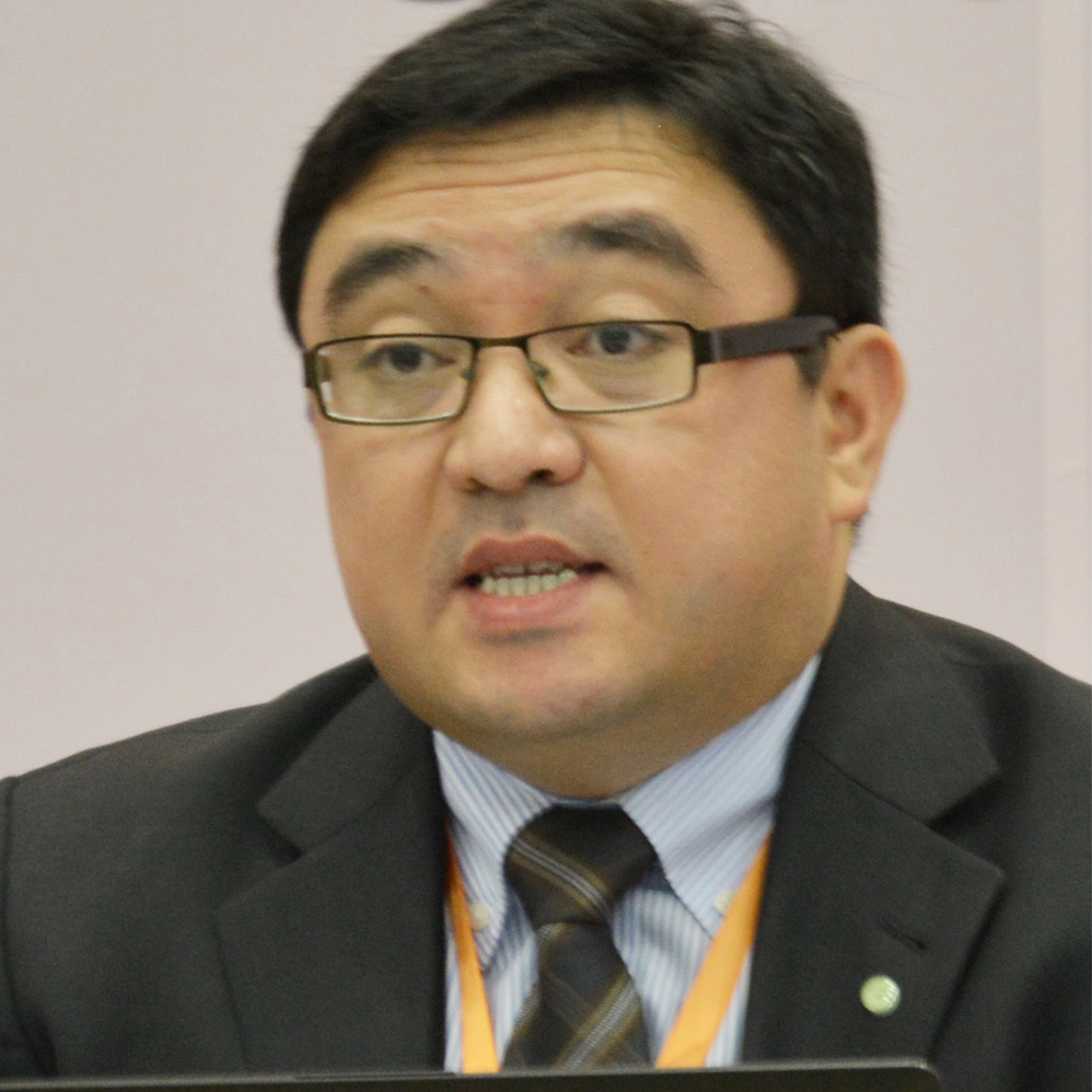
The forum also featured insights from Liu Zhiqin, senior researcher at RDCY, and Luo Yongkun, Executive Director of the Southeast Asia Studies Center at the Shanghai Academy of Social Sciences.
Key Words: Ambassador, Indonesia, China

























































 京公网安备 11010802037854号


