LATEST INSIGHTS
Your Present Location: LATEST INSIGHTSSingapore and China have ‘common interests’ in safeguarding global order, says ambassador
Singapore and China have ‘common interests’ in safeguarding global order, says ambassador
In Beijing, Peter Tan Hai Chuan says two countries built ties based on sovereign equality and respect, not just cultural or ethnic links
Source: South China Morning Post
Update: Mar 4th, 2026, 5:00 PM
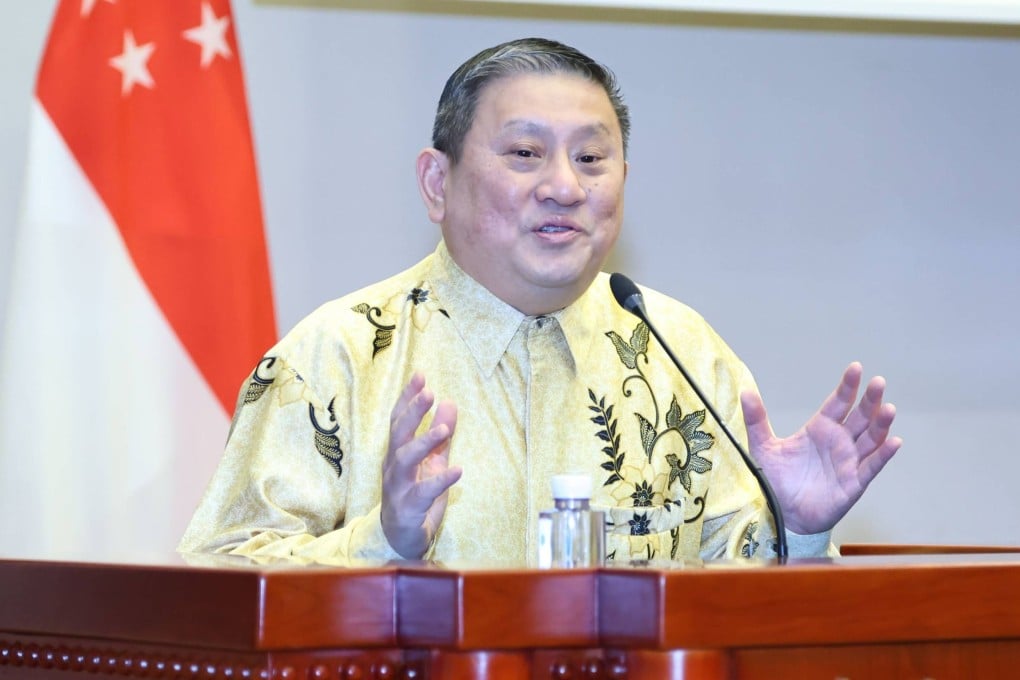
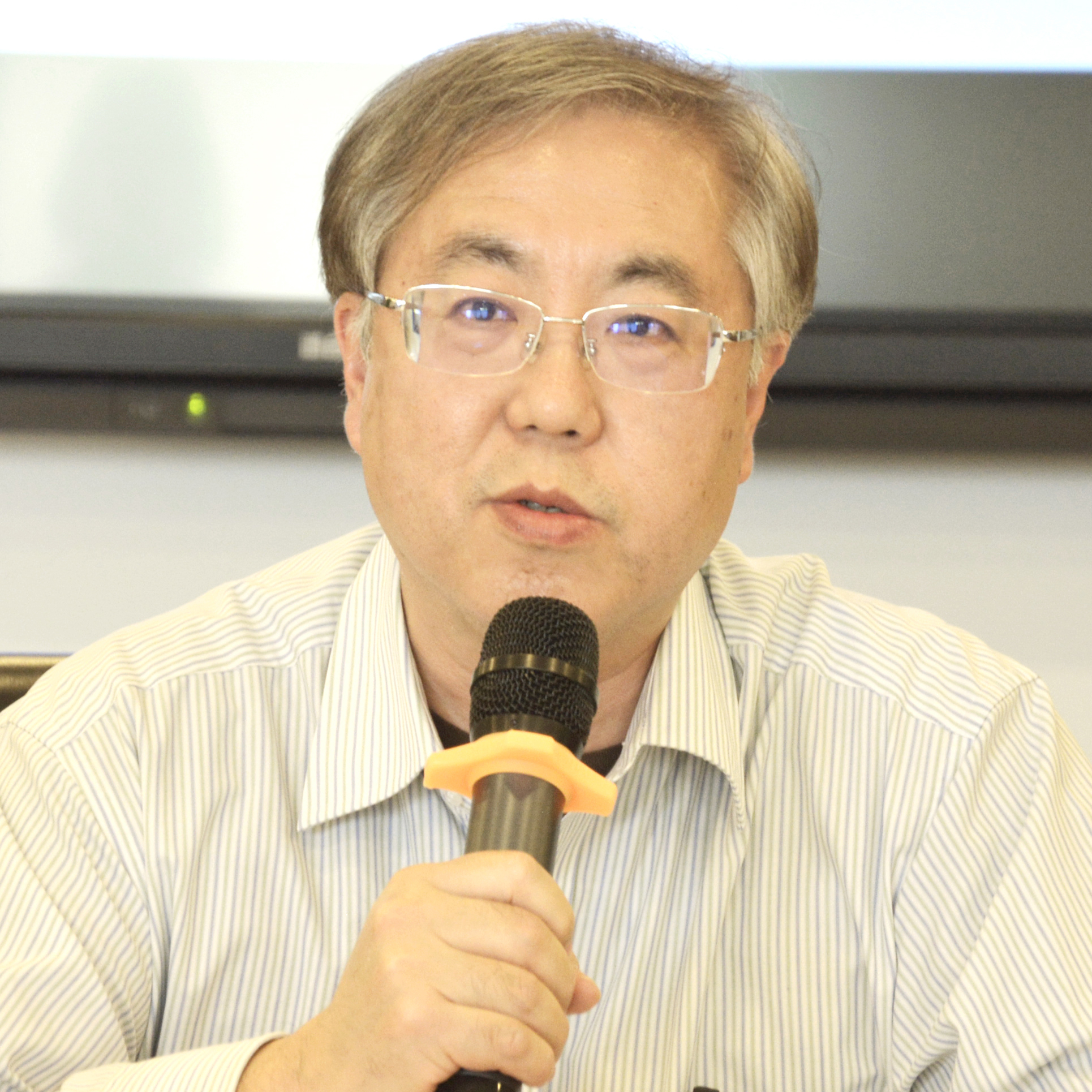
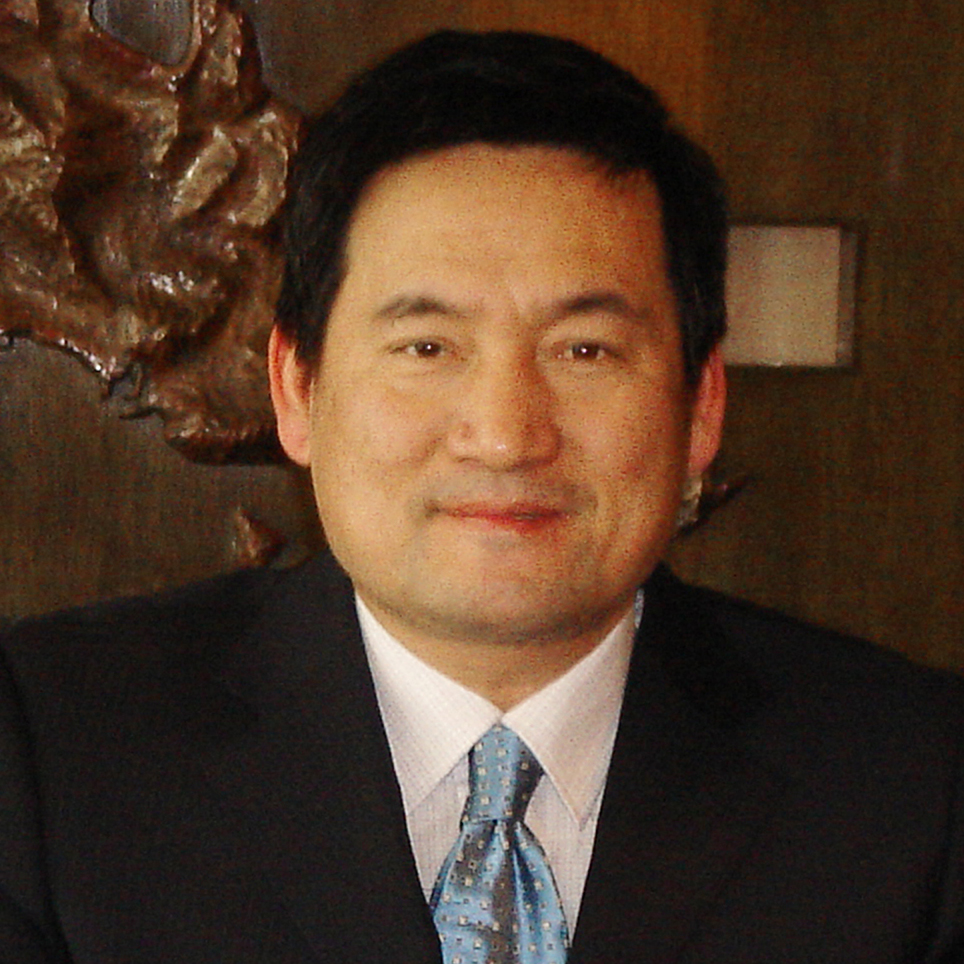
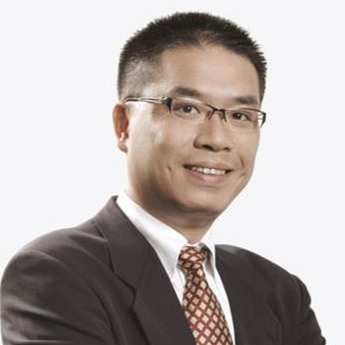
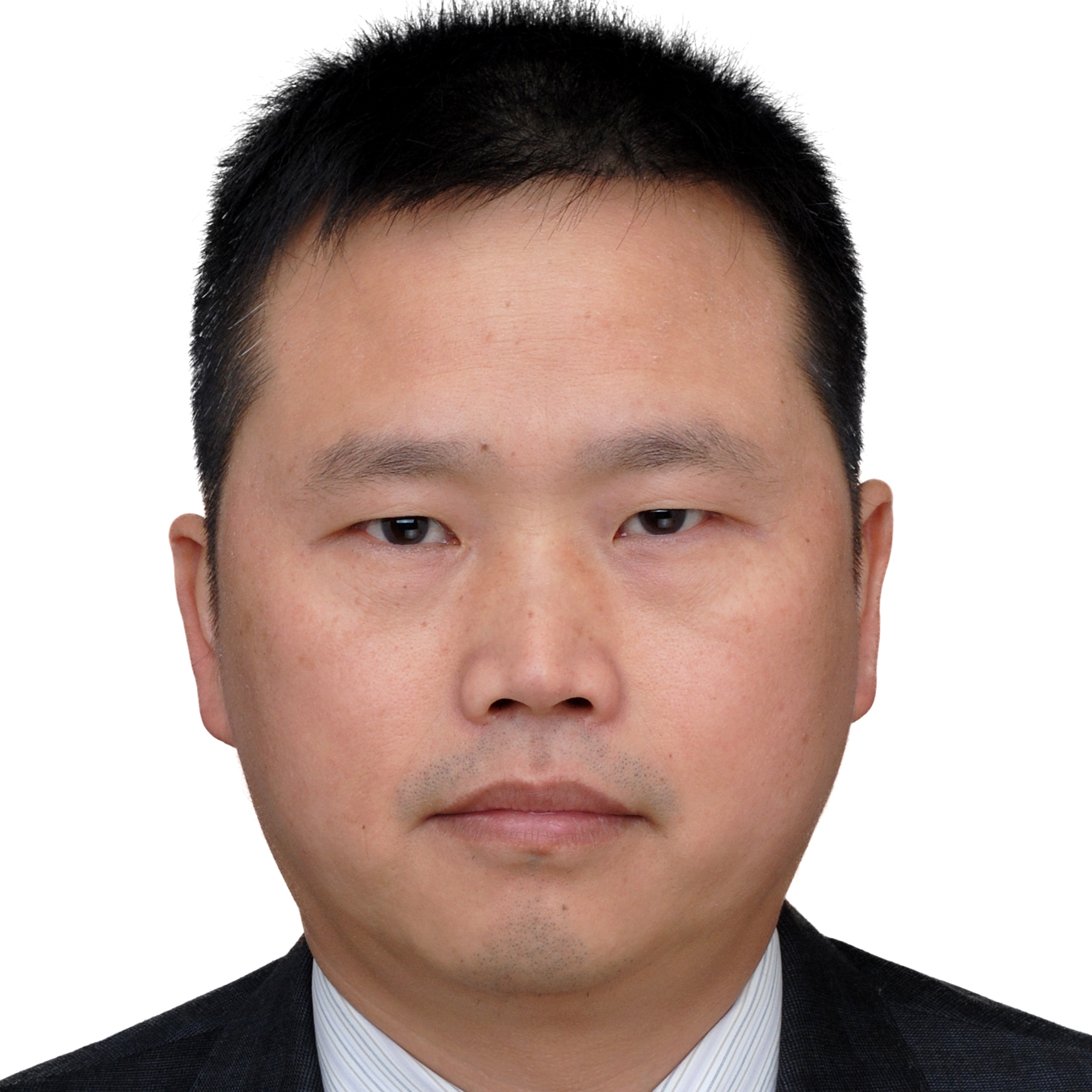
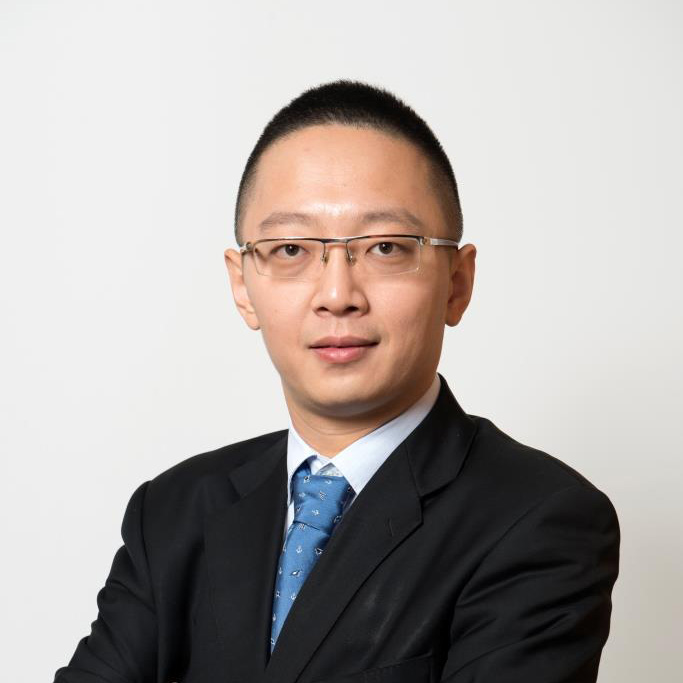
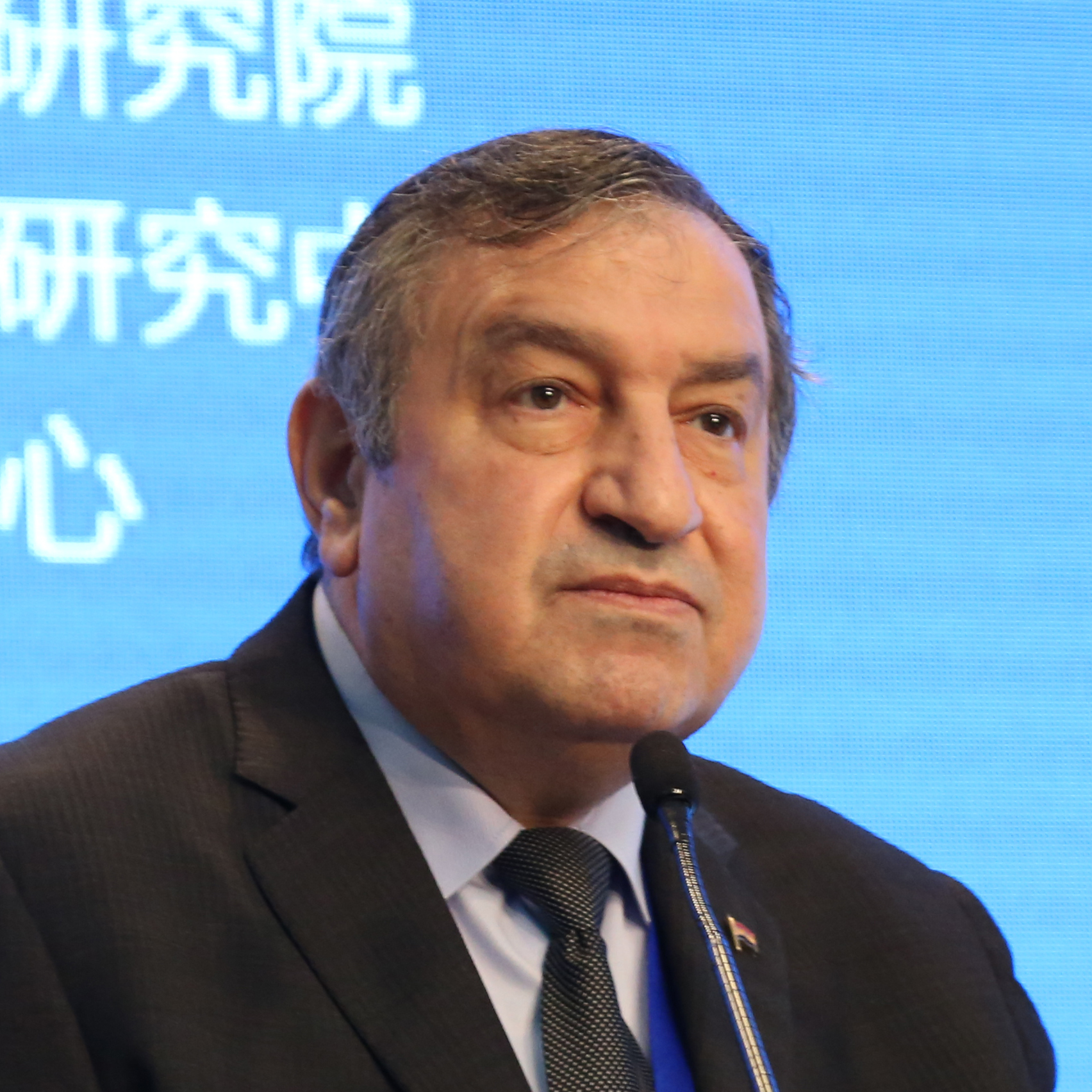
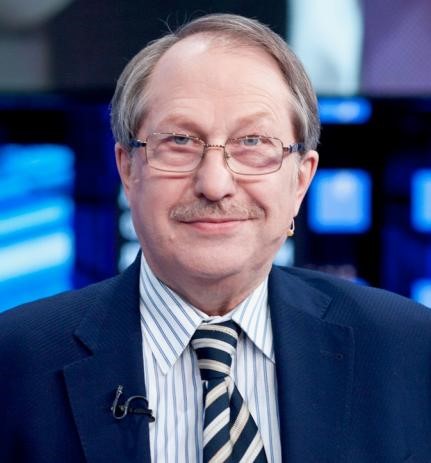
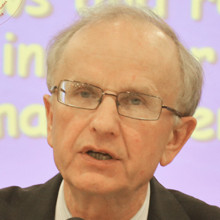
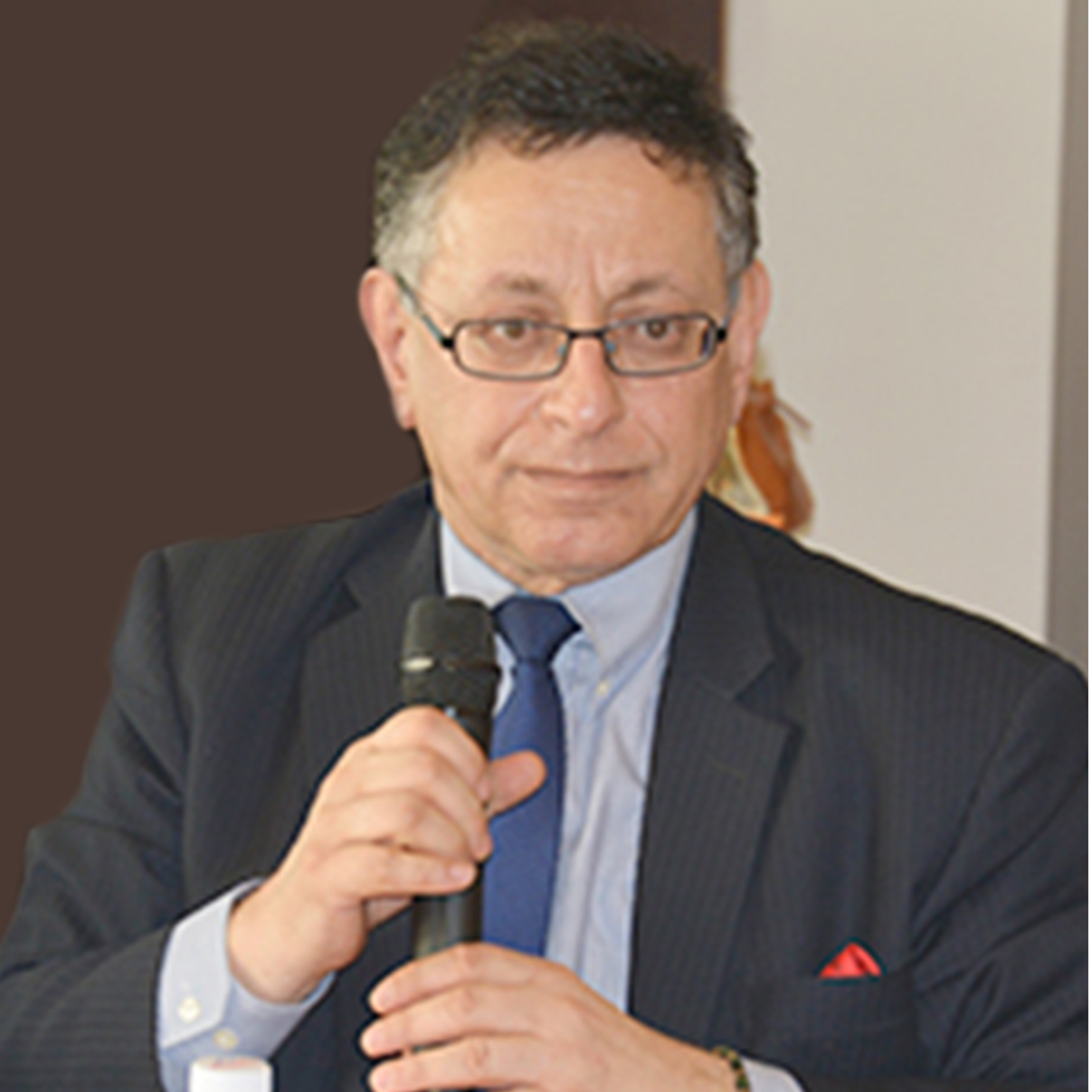
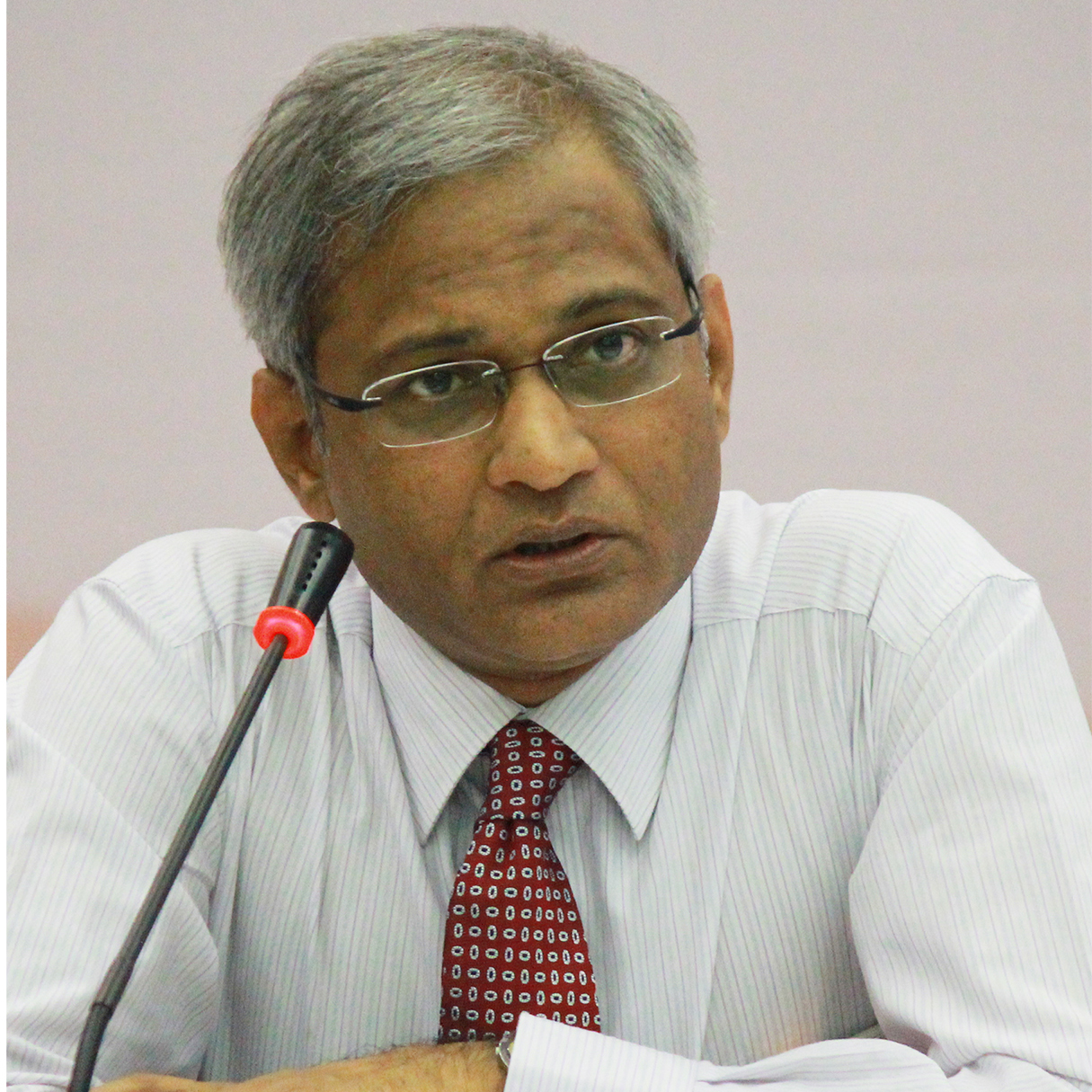
Peter Tan Hai Chuan, Singapore’s ambassador to China, says: “An open, connected, and cooperative region serves our common interests.” Photo: Handout
The world has faced increased challenges, with huge pressure on multilateralism, free trade, and openness since the beginning of last year, Peter Tan Hai Chuan, Singapore’s ambassador to China, warned at an event at Renmin University in Beijing on Tuesday.
“But Singapore and China have common interests – upholding the rules-based international order,” he said at the event hosted by the university’s Chongyang Institute for Financial Studies.
“Small countries need stability and large countries need predictable development.
“An open, connected and cooperative region serves our common interests.”
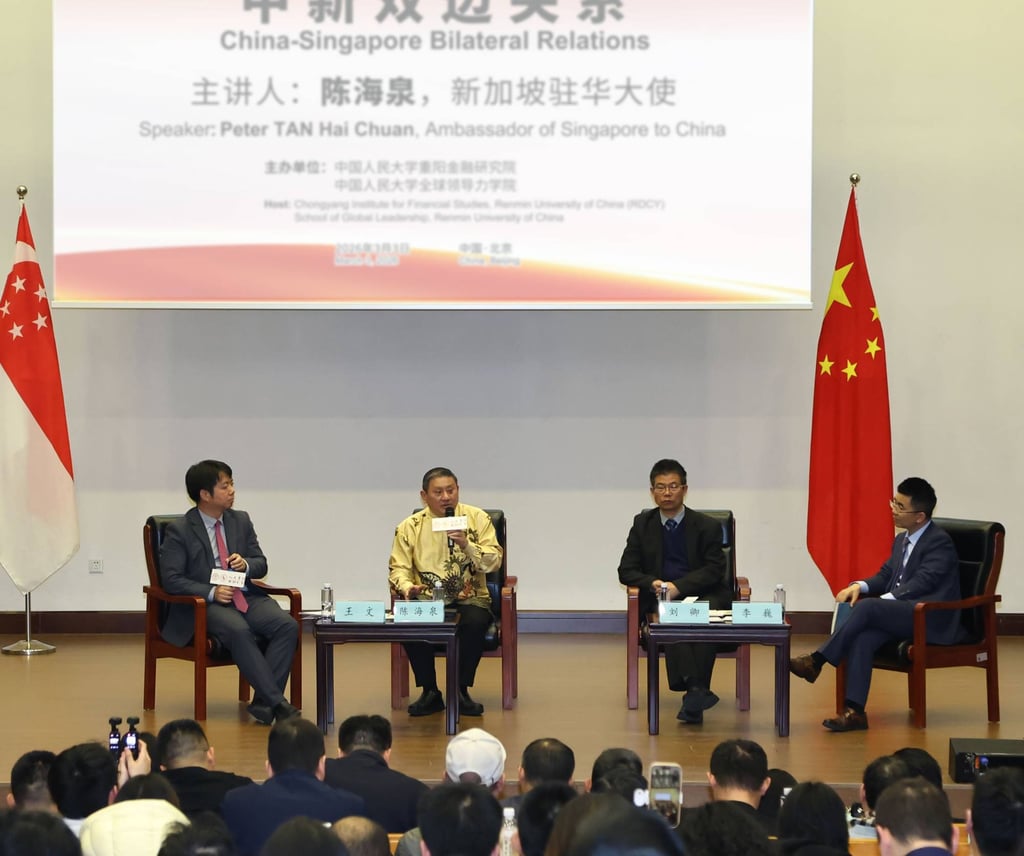
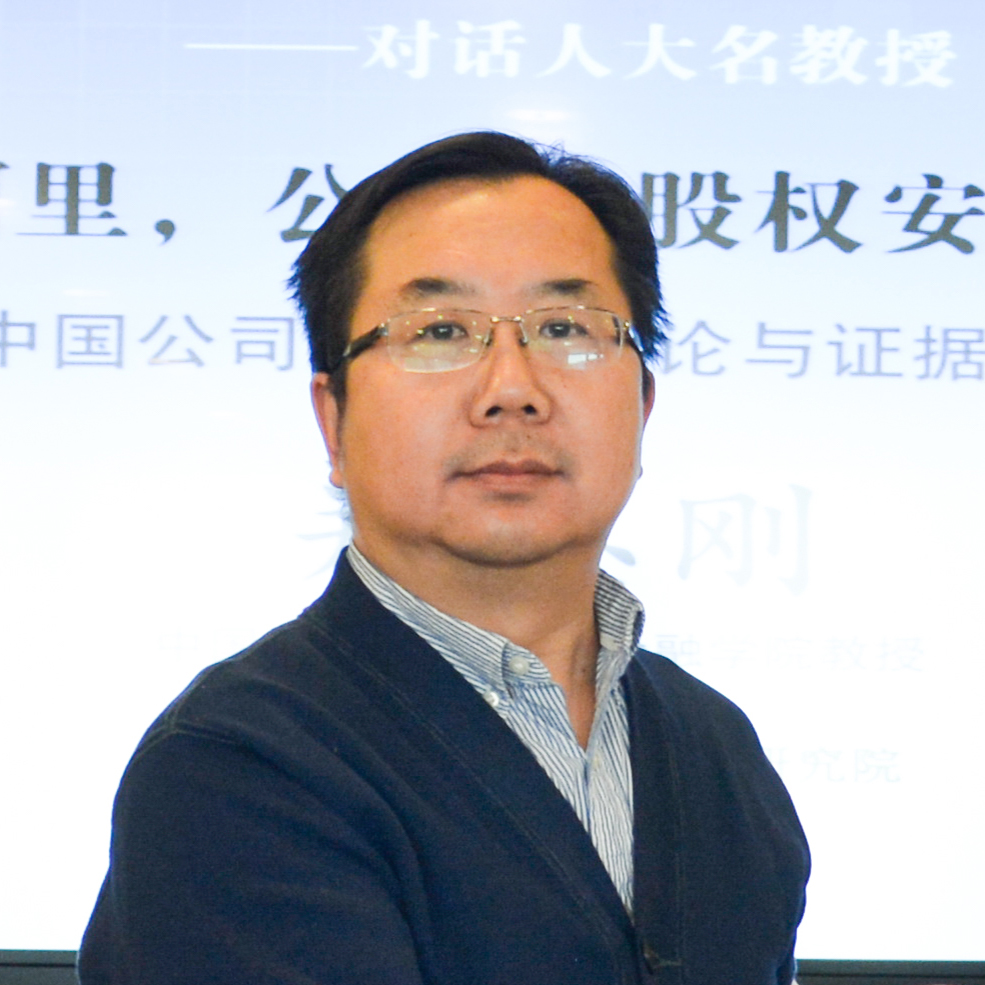
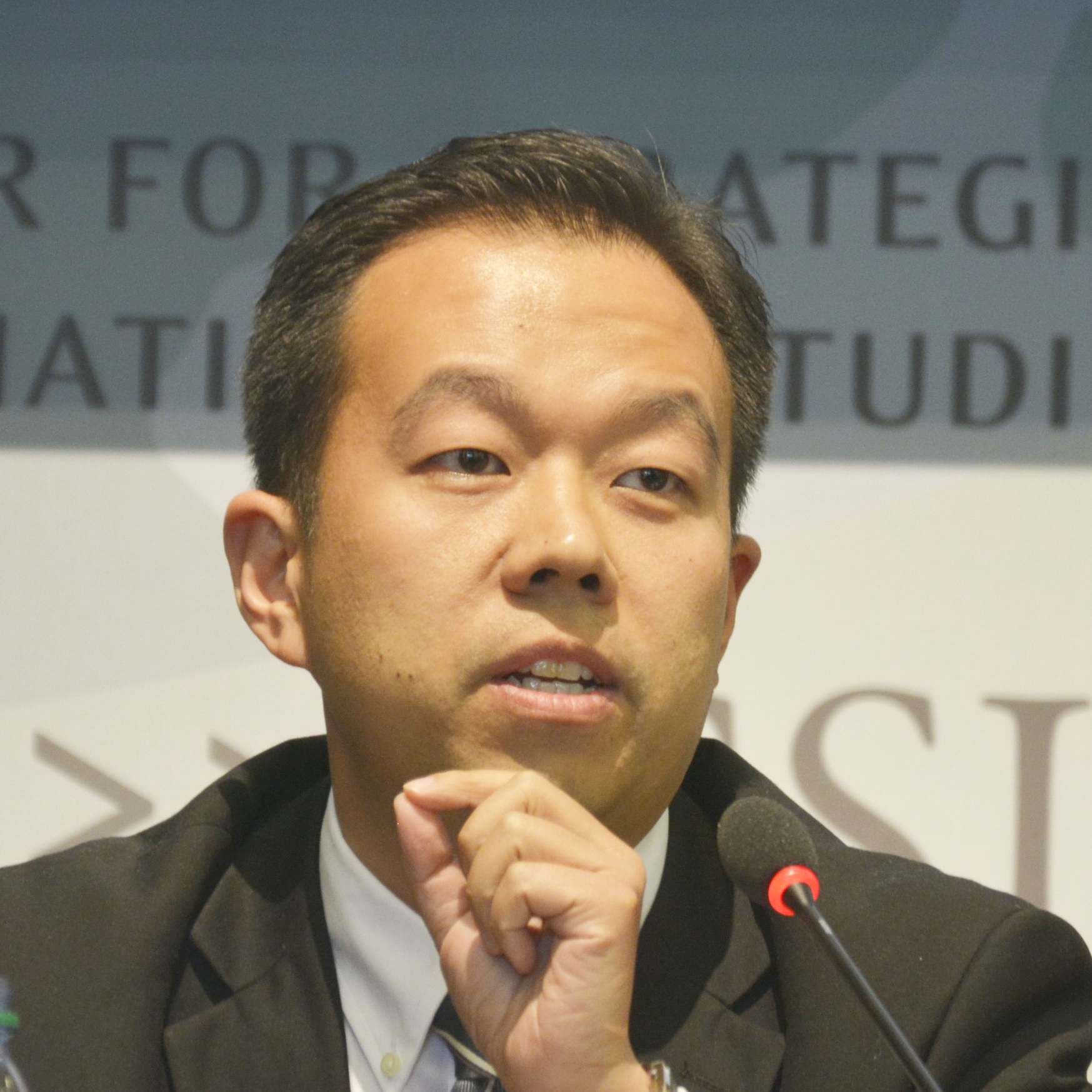
The world has been subjected to huge pressure on multilateralism, free trade, and openness since the beginning of last year, Peter Tan Hai Chuan, Singapore’s ambassador to China, told an event in Beijing on Tuesday. Photo: Handout
Still, Beijing has not officially endorsed the concept of the rules-based international order and has been widely accused by the West of challenging it.
China has long advocated “the international system with the United Nations at its core and the international order based on international law”.
“Cooperation between Southeast Asian countries and China is also crucial,” he said, adding that Singapore and China were working together to build a “more integrated and prosperous” Asia.
He highlighted that over the past 35 years since establishing diplomatic ties, the two countries had built a “unique, solid and dynamic” bilateral relationship, which was based on sovereign equality and mutual respect rather than merely cultural or ethnic links. Singapore is often considered the only sovereign country besides China with a majority Chinese population.
“Looking ahead, may we always remember that true friendship is not about being identical, but about respecting differences, being sincere and growing together,” Tan said.
While the United States is Singapore’s largest foreign investor and a major security cooperation partner, China is the city state’s largest trading partner in goods.
Singapore has been China’s largest source of new foreign investment since 2013, according to Chinese government data.
When asked about China-US trade competition at the event on Tuesday, Tan said that Singapore, as a trade-dependent country, was watching developments “very closely”.
“We need to preserve the multilateral system of open trade and free trade, and that’s what we will continue to do,” he said.
“As all of us try to navigate the complex global changes that have happened for the past 12-13 months, that is key.”
“On platforms like Apec, we will continue to promote multilateralism, openness and free trade based on international rules,” Tan said.
At the same event on Tuesday, Liu Qing, vice-president of the China Institute of International Studies, which is affiliated with the Chinese foreign ministry, called for China and Singapore to cooperate in maintaining the existing international order amid looming “law of the jungle” in the international arena.
“We must clearly oppose bloc politics and ‘small circles’, and work together to safeguard regional peace and prosperity,” Liu said.
Key Words: Singapore, Ambassador, Renmin University



















 京公网安备 11010802037854号


