LATEST INSIGHTS
Your Present Location: LATEST INSIGHTSFinding the signal in the noise: pay attention to copper
Finding the signal in the noise: pay attention to copper
It is not just a ‘commodity’; it is the load-bearing metal of the modern world
Source: The Business Times
By Daryl Guppy
Update: Feb 3rd, 2026, 4:05 PM
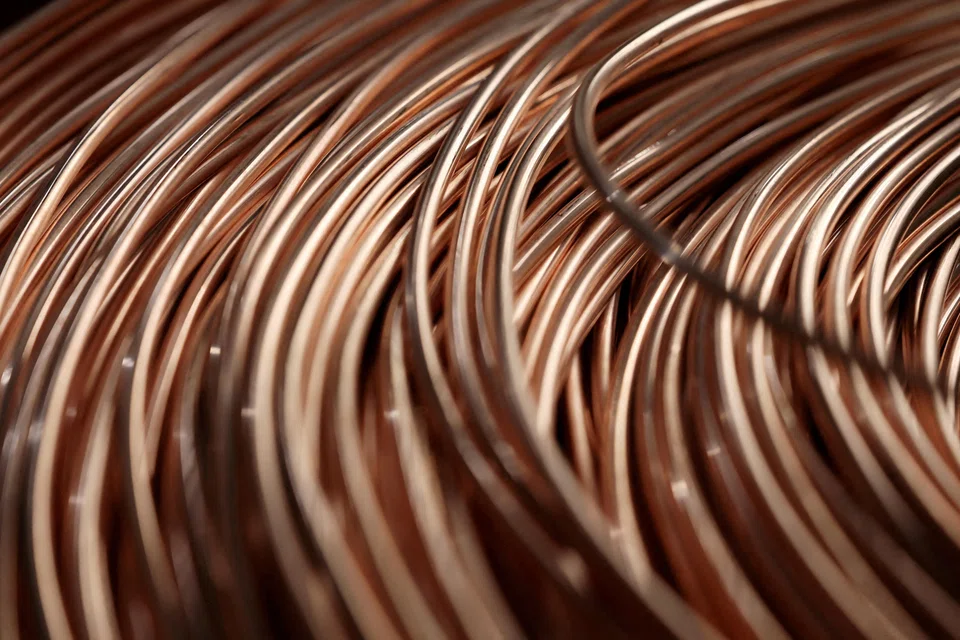
The picks and shovels of AI run on copper, not code or chips. A single 10-gigawatt data centre needs around 50,000 tonnes of copper. PHOTO: REUTERS
DEPENDING on your vantage point, every day brings a new triumph or tragedy from US President Donald Trump. From kidnapping a president to threatening an invasion of Greenland or ICE (US Immigration and Customs Enforcement) shootings, the political noise is deafening.
But is there a signal hidden among all this background chatter? Here are a few of the potential signals extracted from the noise.
Trump’s attacks on Venezuela and, potentially, Iran are designed to cut China off from its oil suppliers, and so destroy the economy. Believing this means means you would sell China and buy America.
Trump’s proposed takeover of Greenland is designed to create a stranglehold on strategic metals and rare earths. That stranglehold means price controls to avoid the US being “ripped off”. If you believe this, you buy rare earth producers, but remain ready to sell as price controls are applied.
If there was no need to settle all oil trades in US dollars, then the US dollar would lack the compulsory purchase foundations that sustained it for decades. If you believe this, you would buy gold and silver and sell US Treasuries.
Those who place their faith in the future of artificial intelligence (AI) ignore the turmoil and buy the picks and shovels of AI, which runs on copper, not code or chips.
A single 10-gigawatt AI data centre needs around 50,000 tonnes of copper. Global AI demand is pushing towards hundreds of gigawatts. Hence, copper is not just a “commodity”. It is the load-bearing metal of the modern world.
In order to find the signal, you need to identify the tripwires that trigger a need for action. These tripwires are trend lines, support and resistance levels, and a handful of significant chart patterns.
Unlike gold, copper comes in a confusing variety of grades and trading instruments. Copper can be traded as commodity futures or more simply as an exchange-traded fund (ETF) that bundles together global copper miners, which replicates the price behaviour of the physical commodity. As a starting point for analysis, we use the Wire ETF as a proxy for copper.
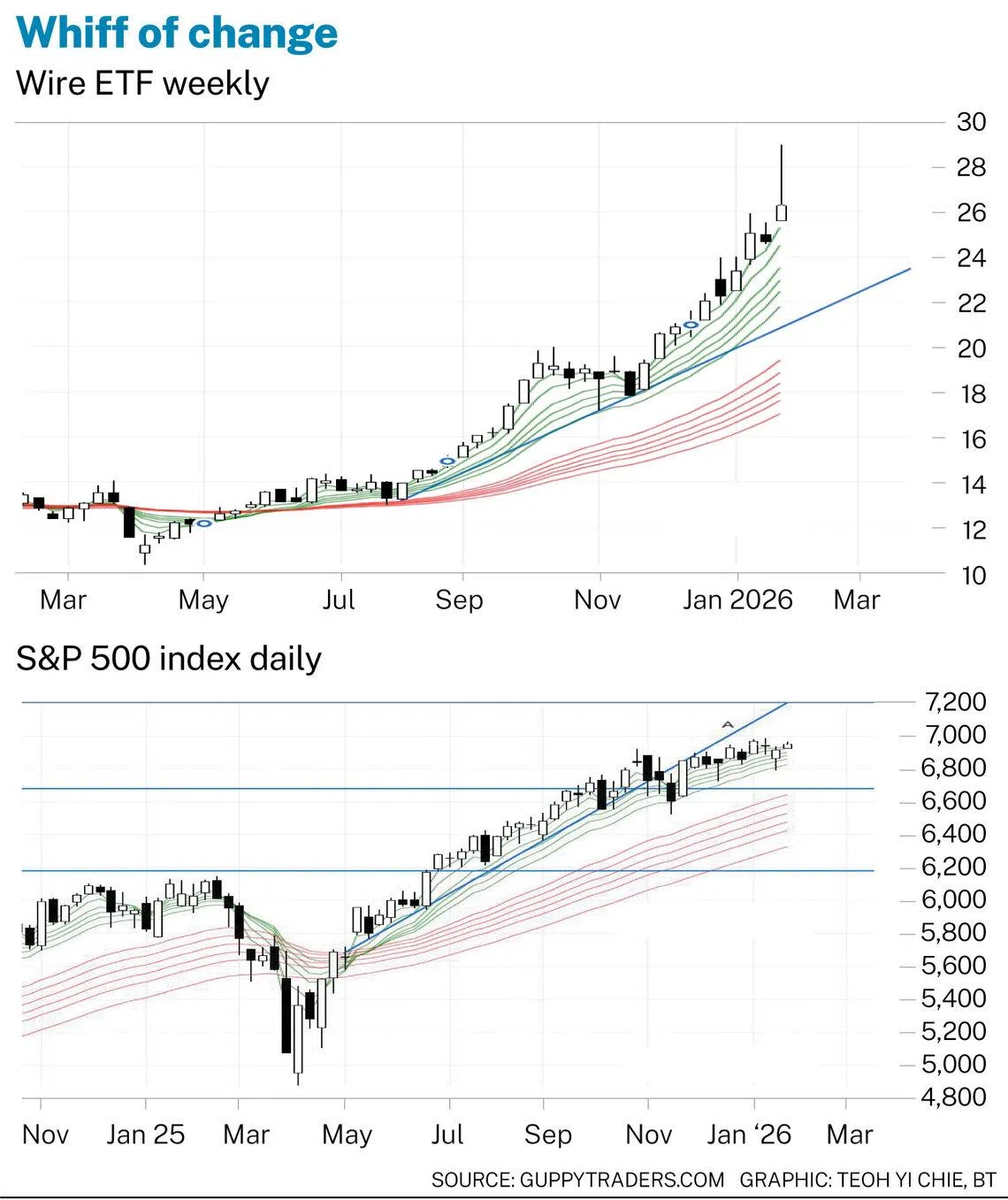
The trend breakout on copper started in June 2025 and has doubled in price in seven months. It is a fast-moving trend and not a rally. A rally is a price move unmarked by retracement activity. A trend includes major retreats, such as that seen in October to November 2025. These retreat-and-rebound points provide anchor points for a longer-term trend line.
Both the first and second legs of this uptrend have clustered along the upper edge of the short-term group of averages in the Guppy Multiple Moving Average (GMMA) indicator. This indicator tracks the behaviour of investors and traders.
Trader behaviour is shown by the short-term averages. This group is well separated, showing strong trader support for the trend. The long-term group is also well separated, showing strong trend support for investors. This is a strong and well-established uptrend with little chance of a major trend change.
Price could pull back to the value of the uptrend line and still remain consistent with the uptrend. This would offer a buying opportunity.
There is no pattern of behaviour that sets a new price target, but previous trend behaviour suggests an increasing probability of a temporary consolidation retreat. This develops where price could move between 30 and 40 per cent above the previous consolidation point.
The tripwire is a compression in the short-term group of averages.
The S&P 500 shows no signs of ending its uptrend behaviour, but there is a whiff of change in the air.
First is the slowing down of momentum shown by line A. This is not a trend line. In the first section of the line, the index is above the line. Then it moves below the line and slowly loses momentum. It is a trend slow-down signal.
Second is the index relationship with the group of short-term moving averages. From May to November, the index hugged the upper edges of the short-term GMMA averages. Now, it makes greater use of the lower edge of the short-term GMMA as a support feature. This confirms the loss of trend momentum as the S&P nears its projected target level of 7,200.
The chart shows projected target levels using trading band calculations. The index moves quickly from 6,200 to the target level near 6,680. However, the move towards the next target level near 7,200 has been slower, and this is often associated with end-of-trend behaviour.
The key feature to watch is the long-term group of averages. When they begin to compress, it shows that investors have become less bullish and less willing to support the uptrend. This was shown in the November 2024 to March 2025 behaviour.
The S&P 500 tripwire is the value of the lower edge of the short-term GMMA.
As anticipated, the parabolic trend in silver noted last month has delivered a sharp 30 per cent retreat as anticipated by this chart pattern.
The writer has an open position in Wire. He is a financial technical analysis specialist, equity and derivatives trader, as well as an author.
Key Words: Copper, ETF, Price
























































































 京公网安备 11010802037854号


