Focus
Your Present Location: HOME> Focus-

Wang Wen: Never underestimate awakening of Chinese people
I live in Wangjing, a quite internationalized area in Beijing. Many Fortune 500 companies are headquartered there, and 10 percent of the around 600,000 residents are expats. Every weekend, I take walks in Wangjing's many parks to exercise and watch the changes in the city.
2020-05-19 -

William Jones: US 'the beacon of hope' has lost its way, headed toward self-destruction
Many international observers have been shocked when they look at the US and see, in the midst of the greatest pandemic since last century, dumbfounding acts: university students romping on the beaches, demonstrators at state capitols without masks demanding an end to quarantine measures, and fake social media campaigns warning about the dangers of being vaccinated. Is this a society gone mad and plunging toward its own destruction?
2020-05-18 -

William Jones: Wuhan showed the way to beat the pandemic
The fundamental commitment of the authorities was to save as many lives as possible, and compared to the lives lost in the fight with the virus in other countries, not least of all, in the US, the cost for China in human life, while tragic, was far less. As the virus began to hit other countries, the "Wuhan model" became the paradigm. And as the fight subsided in China, Chinese teams were sent to other countries to aid them with equipment and with sound advice on combating the spread.
2020-05-15 -
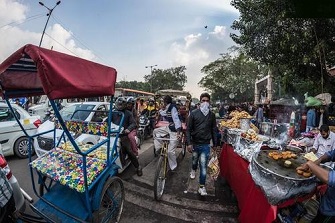
Lin Minwang: Vitriol in Indian media can only poison relations with China, at a time when cooperation is needed in coronavirus fight
The World Health Organisation has praised India’s lockdown measures at an early stage. Nevertheless, the government is facing a storm of media criticism, including accusations of unreliable data on infection numbers and the death toll, and on the measures’ adverse impact on daily-wage workers. The harshest criticism has been aimed at New Delhi’s handling of the hate propaganda against minority groups, specifically Muslims.
2020-05-14 -

John Ross: Why countries should learn from China’s fight against COVID-19
Faced with COVID-19’s onslaught, not one single life will be saved in any country by propaganda, politicization of the crisis or similar diversions. On the contrary, many lives are lost as a result of these – because they obstruct the necessary lessons to fight the virus’s attack. As bluffing will not stop the coronavirus, only correct actions will, it is therefore vital every country learns lessons from China’s successful handling of this crisis.
2020-05-14 -
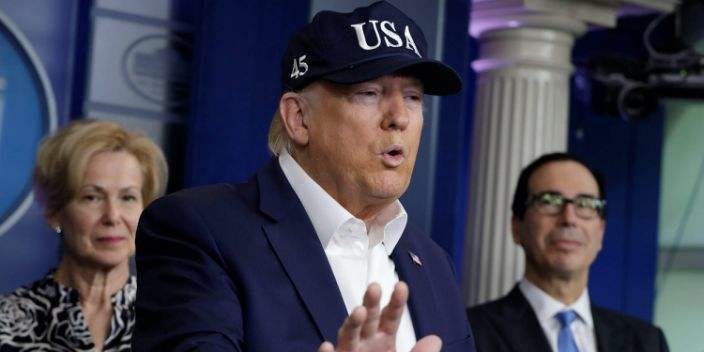
John Ross: Deadly US policy on Covid-19 will split the world in two and force countries to rethink old alliances
The Donald Trump administration’s failure to take the coronavirus seriously won’t only cause thousands of unnecessary deaths, it could change the global political map for good. The US is now a deadly threat to every person on the planet – that is the inevitable result of Washington’s decision to lift even its very limited lockdown despite the fact the virus continues to rage with full force within the American borders.Domestically, this will mean the death of tens of thousands more Americans, creating a casualty toll on US soil comparable only to the 1918 Spanish flu epidemic and the Civil War. But the international consequences will see the world divided into two zones.
2020-05-13 -

Wang Wen: Wake up world: Chinese youth wave coming
The other day, my son recommended me a piece of 8K music, which means music produced with a high-tech display resolution with superior clarity and depth. As I put on the headphones, it felt like I was surrounded by a full 360-degree wave cycle.
2020-05-12 -

He Weiwen: Wild Allegations vs. Facts
As the COVID-19 pandemic ravages the world, with total cases growing rapidly by the day, U.S. Secretary of State Mike Pompeo has been busy blaming China with unsupported “lab conspiracy” claims and calling the coronavirus the “Wuhan virus.” He presumes to hold China accountable for the origin of the virus and a purported “cover-up.” The attorney general of the state of Missouri filed a lawsuit seeking compensation from China. President Donald Trump shared the allegations. Similar charges and threats against China have come from a few people in European countries, India and Australia, demanding reparations.
2020-05-11 -
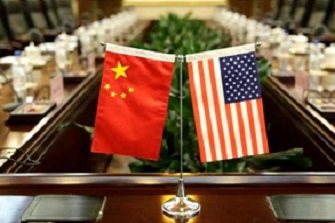
Zhao Minghao: Can China, U.S. Emerge Unscathed?
As COVID-19 sweeps across the world, its multifaceted impact on China-U.S. relations is increasingly prominent. A view held in some strategic circles in the United States is that China is using the pandemic in a disinformation campaign designed to elevate its own global influence. As China leads the world recovery, this thinking goes, it will exploit the opportunity to shape the post Covid-19 world.
2020-05-07 -
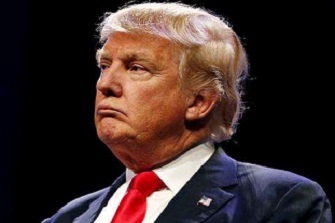
William Jones: Republican Senatorial Committee lays out clear path for Trump to lose the election
The dimwits in the National Republican Senatorial Committee have issued a clear path for Trump's electoral defeat in 2020. Their recommended election strategy to their colleagues is simple: "Attack China!" A 57-page memo issued by the Committee instructs Republican candidates not to defend President Trump (except for his travel ban from China), but to attack China for the "cover-up" of the coronavirus, leading to the deaths of tens of thousands of Americans.
2020-05-06 -

John Ross: The global supply chain will hold firm
The sudden outbreak of a new pandemic has dealt a severe blow to China and the world economy. Can the Chinese economy survive COVID-19? Will there be an impact on the global supply chain? John Ross, former director of economic and business policy for the Mayor of London and a senior fellow at the Chongyang Institute for Financial Studies under Renmin University of China, shares his views with CGTN.
2020-05-06 -
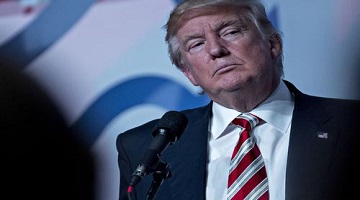
Wang Wen: Trump team is driving US to ‘failed state’ status
It's unthinkable that US media outlets would call their own country a "failed state." The term was once used to describe US adversaries such as Iran and Iraq.
2020-04-28 -
Jia Jinjing: BRI cooperation vital in fight against virus
A patchwork of approaches adopted by governments across the world in the fight against the coronavirus have led to differing results, proving that isolating and quarreling are pointless and harmful in the face of a global crisis, and only through cooperation can we defeat our invisible enemy. The Belt and Road Initiative (BRI) is a global cooperation mechanism that has proven capable of saving lives from the deadly virus and bringing more opportunities for the world's economic recovery.
2020-04-28 -

Zhao Minghao: The world after COVID-19: What a leadership test will bring
As the novel coronavirus continues to spread globally, the question around "how the pandemic will shape the world" has received much attention. As UN Secretary General Antonio Guterres said, this is the greatest test for humanity since WWII. So far, the disease has represented an overwhelming public health challenge, likely to trigger an economic recession and social unrest – all of which constitute a complicated crisis which has far-reaching implications for the world order.
2020-04-28 -

Danilo Türk: Cooperation, leadership vital to defeat pandemic
There is no doubt that the current, unprecedented global economic slowdown caused by the novel coronavirus pandemic requires unprecedented measures of global cooperation. However, the current global action is sadly insufficient and the future looks uncertain.True, the Extraordinary G20 Leaders' Summit offered a glimmer of hope. Several good proposals were made, but they were not given adequate attention in the international media and in the work of decision-makers. Many are focusing on other themes, mainly revolving around the statistics of the pandemic and its victims, and on measures taken at the level of countries.
2020-04-27 -
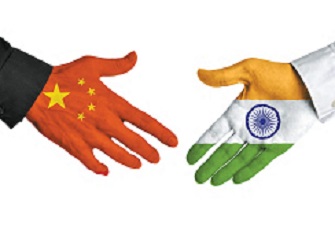
Liu Zongyi: China, India need common front to confront COVID-19
The coronavirus pandemic has severely impacted almost every country, and many of the world's leading politicians and scholars are now discussing world order after the crisis. The pandemic will indeed change many things, but for the international political and economic landscape, it will be more of a catalyst, accelerating or revealing political and economic processes that already existed but are not so apparent.
2020-04-27 -

John Ross: Most countries dismiss US' blame-shifting amid pandemic
The coronavirus situation in the US and Europe is now so serious that it is overwhelming the ability of numerous Western governments to develop strategic policies. Given the immense efforts and suffering the Chinese people put into fighting the coronavirus, it is difficult for them to imagine that the situation in the West is very many times worse than it was at the worst moment of the crisis in China. But this reality is proven by the facts.
2020-04-23 -
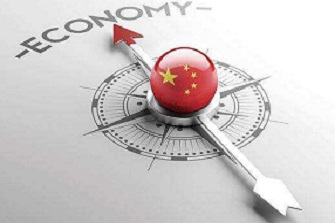
He Weiwen: Hit hard by virus, China still expected to be bright spot in global recession
China will maintain an average annual growth rate of 5.2 percent for 2020-2021. China has the chance to hit a growth rate higher than 1.2 percent in 2020. On the contrary, both the U.S. and Eurozone economies have been projected to grow by 4.7 percent in 2021, leaving the average annual growth rates at minus 0.7 percent and minus 1.5 percent, respectively. In other words, developed economies will recover to their pre-recession level by 2022.
2020-04-20 -
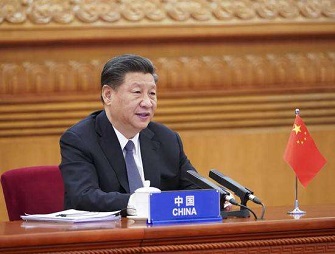
Xi: Cooperation, solidarity key to contagion fight
As the outbreak is spreading worldwide, posing an enormous threat to life and health and bringing a formidable challenge to global public health security, the article said, it is imperative for the international community to strengthen confidence, act in unity and work together in a collective way.Viruses respect no borders, and epidemics do not distinguish between races, it went on, adding that this global public health emergency has driven home the urgency and imperative need to build a community with a shared future for mankind.
2020-04-17 -
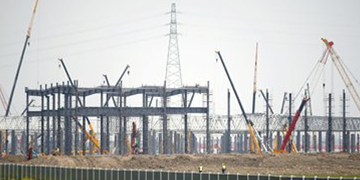
Liu Zhiqin: Shifting production out of China would be a big mistake for US, Japanese companies
The US and Japan seem to have forgotten the basic fact that their corporations' presence across the globe is the most important foundation stone for their international influence and tech advantages. If the US and Japan move their companies out of China, they will potentially lose the China market, and no other countries can import as many products as China. It will result in a decline in their international role.
2020-04-15























































































 京公网安备 11010802037854号


